The Spirit is Willing but the movie is dated

In case you were wondering, the meat cleaver is the murder weapon

In case you were wondering, the meat cleaver is the murder weapon

A romantic triangle in 1898 ends with all three lovers dead. And their ghosts go on to kill people and drive them insane. It’s a comedy, don’t you know? The Spirit is Willing claimed in its advertising to “face the biggest problem of our times: the sex life of ghosts!” Yep, Bo Derek and Ghosts Can’t Do It (1989) was not the first. But Spirit was filmed in 1966, which means we’re in for a family-friendly look at the sex life of ghosts. Sort of like the way a triple murder is the foundation for a comedy.

I dimly remember a lot of movies from my youth. The Spirit is Willing was one of them. I probably saw it on TV sometime in the early 1970s. Somehow its treatment of ghost sex hung on with me. And now you’re getting clued into why this blog has the type of stories it has, eh? So when I had the chance, I sat down to watch it again for the first time in forty years, to see whether it was worth remembering. The answer? Maybe.

What IS it with hot librarians?

What IS it with hot librarians?

The movie itself, taken on its own merits as a B-comedy, is quite enjoyable. People with bad character traits get punished. Our put-upon teenage protagonist is eventually forgiven for the sins he didn’t commit. And his parents come out of it with their relationship presumably stronger than before. Even the ghosts do better, with the spurned lady getting a new lover. (That she has to kill someone to do this . . . eh, well, he’s quite an obnoxious bastard and deserves it.) John Astin does an amusing turn as a ridiculous psychiatrist. About the only person not to come out ahead is the librarian, a single woman lusting unsuccessfully after a man. It’s all family-friendly fun.

Sort of.

No, you did not just lose your virginity to me; you lost it to my look-alike ghostly ancestress!

No, you did not just lose your virginity to me; you lost it to my look-alike ghostly ancestress!

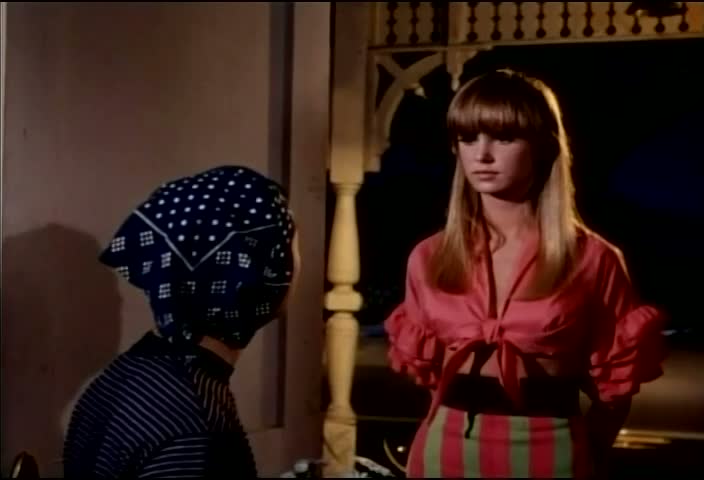
Hollywood in the 1960s had a problem. It wanted to portray sex, but couldn’t officially do so under the Hays Code, and the eventual solution, the rating system, wasn’t in place until 1968. So film makers tried to work around the letter of the Hays Code. Spirit is an example of how this was done. The married couple sleep in twin beds. However, the twin beds are immediately side-by-side, and the couple actually drag both their mattresses to the floor, side-by-side. Something more than sleep is going on there. Our teenage boy, instead of welcoming advances by two attractive girls, reacts in confused bewilderment. Yet it’s quite clear that the attractive female ghost successfully seduces him (off screen) near the end of the film. Happy birthday, Steve!

Apart from sex, the film’s an amusing period piece. Sid Caesar is the father, playing a neurotic pessimist who’s afraid he’s going to be fired. Vera Miles looks gorgeous as his wife, though her role is limited to making unsuccessful advances on her husband and getting insanely jealous over an imagined relationship between him and the librarian. Jill Townsend must have had some fun getting to play the sexpot librarian (yep, that idea goes back at least that far), as well as the librarian’s still lusty but not so forward younger flower child sister and the seductive ghost of the maid. Toss in 1960s cars, fashions, and prices. $300 for a car, anyone?

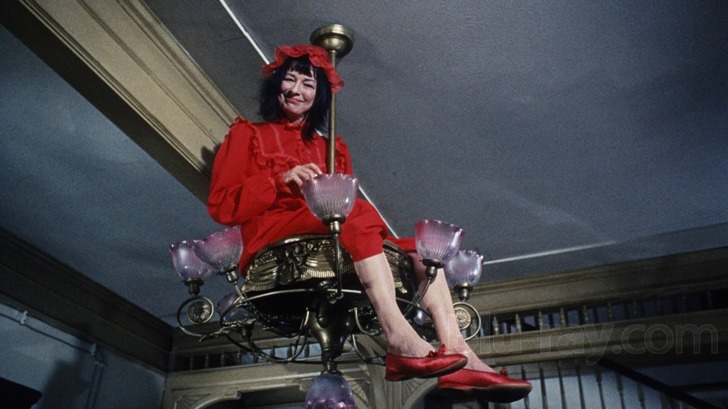
Spurned female ghost. Chandelier. Vandalism has its humorous aspects.

Spurned female ghost. Chandelier. Vandalism has its humorous aspects.

And the ghosts? They switch back and forth between being transparent images, poltergeists, and solid corporeal bodies (apparently). Do not look for consistency in their portrayal or any explanation for their varying natures. Just know that they want love and companionship, just as much as living people. And if they can’t get it from each other, they’re willing to find it among living people . . . sometimes by killing them!

Posted in Reviews | Tagged , , , , , , , , , , | 6 Comments

Planet of the . . . absurd

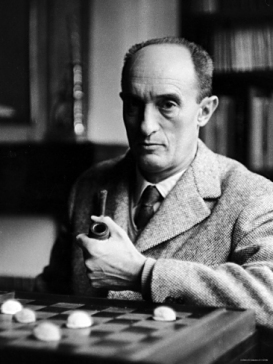
Boulle c. 1968 (credit: Wikipedia)

Boulle c. 1968
(credit: Wikipedia)

Who knew that the author of Planet of the Apes (1963) was a Frenchman who was also author of The Bridge Over the River Kwai (1952)? Pierre Boulle (1912-1994) had a sense of the absurd which led him to depict men and apes changing places, and a British officer working for the enemy out of a mistaken sense of pride. So it is not surprising that he also wrote a collection of seven short stories entitled (in translation) Because It is Absurd (On Earth as in Heaven), published in 1971.

This is good news?

This is good news?

Reader and fellow blogger Judy sent me this volume because I’d posted a humorous take on Genesis recently. Boulle’s own treatment of Genesis examines what would have happened if Eve hadn’t eaten the apple. We might expect this means Paradise Eternal for Mankind, but in keeping with his sense of the absurd, Boulle maintains it would have been a disaster! Indeed, the Fall is necessary!

Sharing a similar sense of irony, in “His Last Battle,” Boulle shows us a man, whom I will call A.H. (so I do not attract the wrong kind of reader), who fled Germany after the Second World War. In the company of his old colleague M.B., he comes to grips with his greatest failure. Only it’s definitely not what you think!

These, along with “Interferences,” are the best of this collection. The others are lesser, lacking some of bite of those three. Still, there is a common theme running through all these stories. As Boulle sees it, the morality and value of intentions do not guarantee commensurate moral and valuable results. Sometimes this should lead us to question our values and our reasoning. But at other times, as in “The Heart and the Galaxy,” all we can do is laugh.

It’s a pity Because It is Absurd is out of print, because it’s a book that can make you think. And laugh. I’m now rather tempted to go track down his more famous novels and read them, instead of relying on the films made of them. I want to see how deep Boulle’s sense of the absurd runs.

Posted in Reading fiction, Reviews | Tagged , , , , , , , | 5 Comments

Henching at Boston Comic Con, 2015

For those of you who don’t already know it, I should mention my girlfriend, E. J. Barnes, is a cartoonist. So she often goes to comic book conventions to sell her wares. Since this involves carrying enough luggage to give a hernia to an elephant, and requires the cartoonist either to not need to use the bathroom or to have a slave to cover for her when she does, I get to be her henchman at many of these affairs. Why, just this weekend, we were at the Boston Comic Con, just across the river in good ole Beantown, U.S.A.

A major comics convention, such as this one, is a mélange of different peoples coming together for what is not actually a common purpose. Comics convention culture embraces other (usually marginal) aspects of popular culture, especially science fiction and fantasy TV series and movies.

No, Doctor Who is not going sexy; this is Billie Piper as the call girl

No, Doctor Who is not going sexy; this is Billie Piper as the call girl

Case in point: Billie Piper. Who, you ask. Well, who, indeed. Billie Piper was there because she once played a companion on the BBC fantasy series Doctor Who, where she became so popular and so beloved by the Doctor and fans that she somehow developed supernatural powers in another dimension or something so she could still sort of be of service to the Doctor, instead of, you know, doing the normal human thing and having sex with him, usually a no-no in Doctor Who. (Which may explain why she next starred in Secret Diary of a Call Girl.) Well, she was at the convention signing autographs and having her picture taken with the fans for $60 a pop. This is standard procedure at comics conventions, where you’re likely to see a lineup of present-day and has-been celebrities cropping up to capitalize on their moment in the sun or the glow of nostalgia. I remember seeing James Doohan of Star Trek at one convention in his last years of life. For that matter, I’ve seen Tanya Roberts of Charlie’s Angels show up at one, which shows you how elastic the definition of comics convention culture can be.

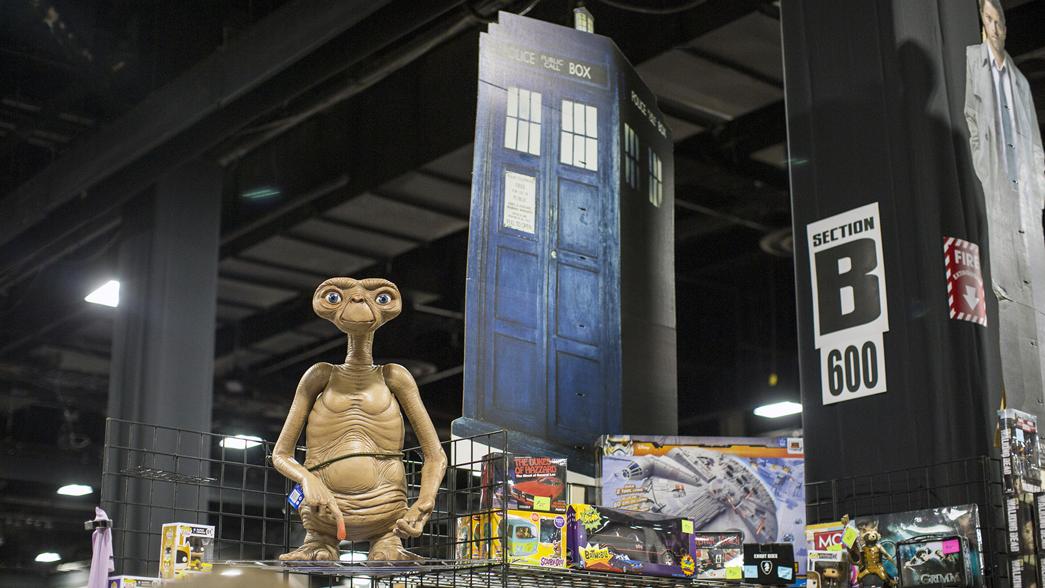
Some merchandise at this year's con (Photo: Boston Globe)

Some merchandise at this year’s con
(Photo: Boston Globe)

But celebrities are not the only people in attendance. There are the major comic book publishers, and sometimes the media companies that own them, trying to heighten interest in their present and future wares. There are the stores and dealers, who sell present-day and old comics as well as merchandise. Want to buy a Dalek toy from Doctor Who? There are zillions of them at cons these days.

Then there are the customers, the fans. It is surprising just how many there are. It’s also surprising just how much money they will spend to buy stuff, whether it be comics, videos, merchandise, a chance to get the autograph of a beloved celebrity . . . or art work about all these things.
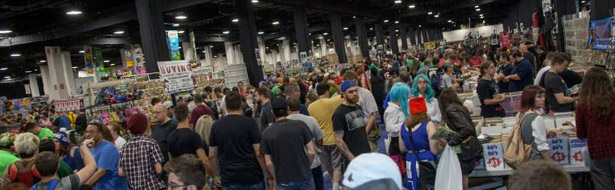
A scene from last year's con

A scene from last year’s con

There’s a whole section of the conventions called “artists’ alley” where artists hawk wares ranging from their own superhero comic books to (often unauthorized) art featuring comics culture heroes, or even drawing you as a costumed hero. Some of these artists are big names, who are steadily employed by the major publishers, and do this for publicity, fan relations, and to pick up a few bucks. The majority are struggling artists who hope to “make table” and then some while trying to make a career out of their talents.

One of the sad aspects of artists’ alley is that there are a lot of talented artists there, who are trapped into doing superhero or other pop culture art because that’s what sells. Not that they all hate it; many started as fans trying to realize their own vision of these characters, and are happy to keep doing so. But it seems such a waste to see so many artists working in such a limited range. I often wish I could free the more talented ones to pursue their own visions. And suggest to the least talented ones not to get their hopes up.
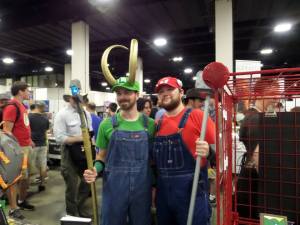
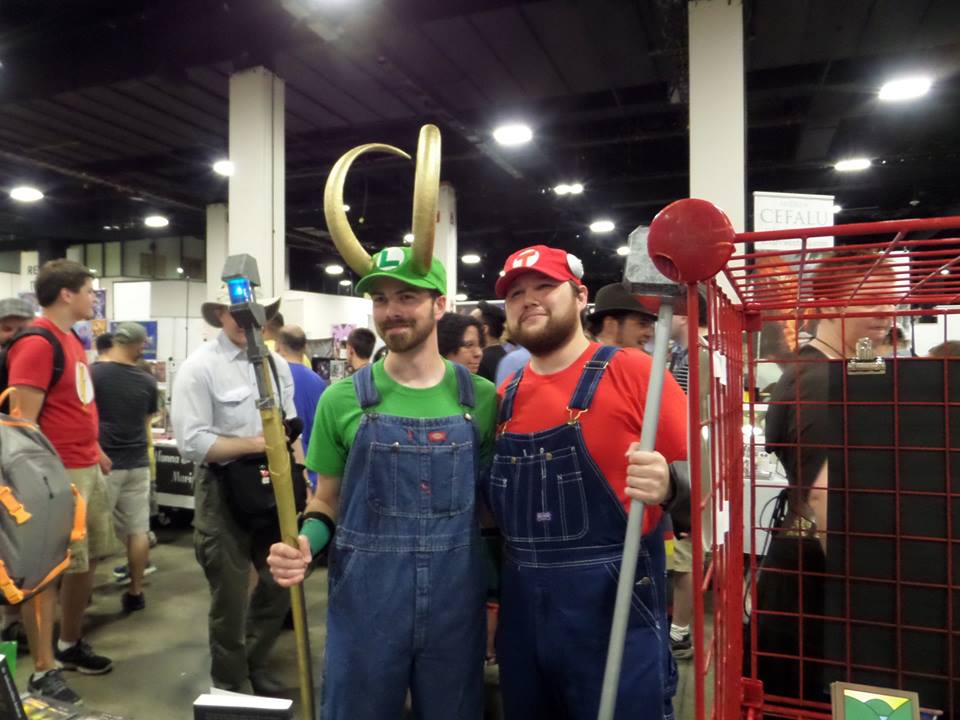
Cosplayers as Thor and Luigi (photo: E. J. Barnes)

Cosplayers as Thor and Luigi
(photo: E. J. Barnes)

Just like sci-fi/fantasy conventions, one of the attractions is cosplay, fans dressing up in costume as their favorite characters, both to compete and to just have fun being someone else for a few days. This is the part of any comics convention that gets the most media play (outside of San Diego’s Comic-Con, which is the biggest of all). You can tell a lot about contemporary pop culture by which costumes show up the most. I remember over a decade ago that conventions swarmed with teenage girls dressed in camisoles in tribute to Buffy the Vampire Slayer. This year, E.J. noted a great many women wearing red hats and blue suits, which suggests that Agent Carter, a Marvel-related TV series, has a firm fan base. I noticed a large number of women apparently portraying Daenerys Targaryen, the “mother of dragons” from Game of Thrones. And there were a fair number of females dressed up as Poison Ivy or Harley Quinn, two villains from the Batman franchise. I didn’t notice any particular trend among males, except perhaps a few more incarnations of the Doctor from Doctor Who. But I admit this may be because female cosplayers often show a lot of skin, and that sometimes distracts me. (WARNING: conventions have strict “do not harass the cosplayers” rules for that very reason.)

E.J. had a table in artists’ alley. The table to her right had a woman who professionally does fan art, often by “mash-ups” of characters from multiple sources. The table to the left was held down by a man who writes superhero novels for the young adult market. Most of the people across from her table were people doing fan art, as I say, often of impressive quality.

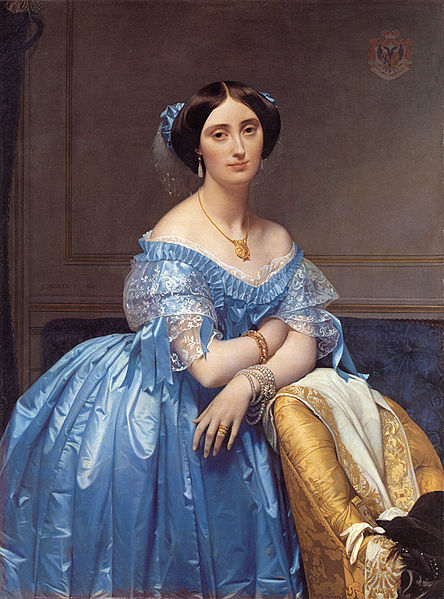
One woman chose to be portrayed as the subject of this Ingres painting

One woman chose to be portrayed as the subject of this Ingres painting

You might wonder what E.J. is doing at this kind of show. Her comic books these days tend to historical themes (not just due to my evil influence). That’s an ongoing problem for her and other artists like her who don’t do superhero comics, trying to find the right venue. E.J. does comics shows, craft shows, and small press shows, as well as being a panelist at a sci-fi/fantasy convention. None is a perfect fit for her talents and work. Still, a big show like Boston Comic Con brings in so many fans that she’s sure to snag the interest of a few. They may not have come to the con for a comic portraying a satirical poem by Jonathan Swift, but they may end up buying one once they see it. And this year she added commissioned portraits as a service to customers. Unlike many artists, who will portray you with or as a superhero, E.J. would produce a colored pencil drawing of your face on a famous work of art. Want to be the face of the Mona Lisa? Or be portrayed as Lord Byron? She got several customers, each of whom picked a different work of art.
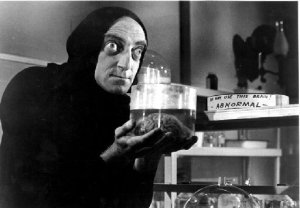
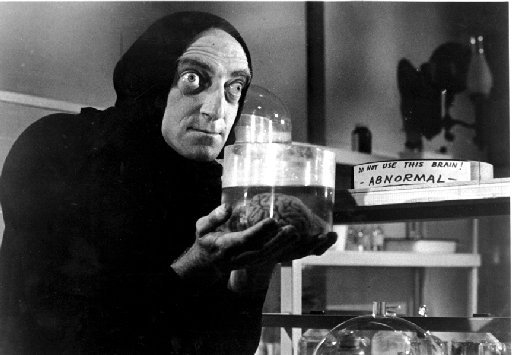
All henchmen model themselves on the best: Young Frankenstein's Igor

All henchmen model themselves on the best: Young Frankenstein’s Igor

My job at these conventions is to be a henchman. (I prefer “art enabler,” but that involves a pay raise and health insurance benefits, so it ain’t coming soon.) I help set up and take down, get her beverages, cover the table when she needs to take a break, and assist her in making her pitch to customers or handling the money while she signs the book. There are a few things I can’t do for E.J., such as bathroom breaks. And while E.J. can ask passing girls ages 4-12 if they’re interested in comics and want to read a comic about a lady astronomer (Caroline’s Catalog), I don’t do that out of fear of being viewed as a child molester if I tried.

Comics conventions often run Friday through Sunday, from late morning to early evening. It can be fun. It can be tiring. Friday usually has a rush when the convention begins, and then after 5 when people get off their regular jobs. Saturdays are typically the busiest days. Sundays tend to be lackadaisical. Often the artists will spend much of the afternoon talking to each other and swapping books, rather than stay chained yet one more day to their tables attending the few customers circulating around. Boston Comic Con never got that quiet Sunday. So it was with a great sigh of relief that we closed up after 6 P.M. and rode the MBTA home. It was time for a beer.

Posted in Reviews | Tagged , , , , , , , , , , | 11 Comments

Concluding Summer of the Netherfield Witch and taking a break

It’s been quite a summer for Jane Harris. She’s survived a death curse and a crush on her stepfather. She’s met a talking dog and a dragon. And now all of her problems are solved. Right? Well, “There’s always a loose end or two,” as chapter 26 of Summer of the Netherfield Witch demonstrates.

So the story’s over. It’s not what I planned; so much for authorial control! Somewhere after the Mall of Lost Souls, the story took a different turn than I expected. In some ways that was a good thing. I suspect the original structure would have been elephantine. And yet it therefore did not become quite the comedy I wanted it to be, despite the fates of the characters at the end.

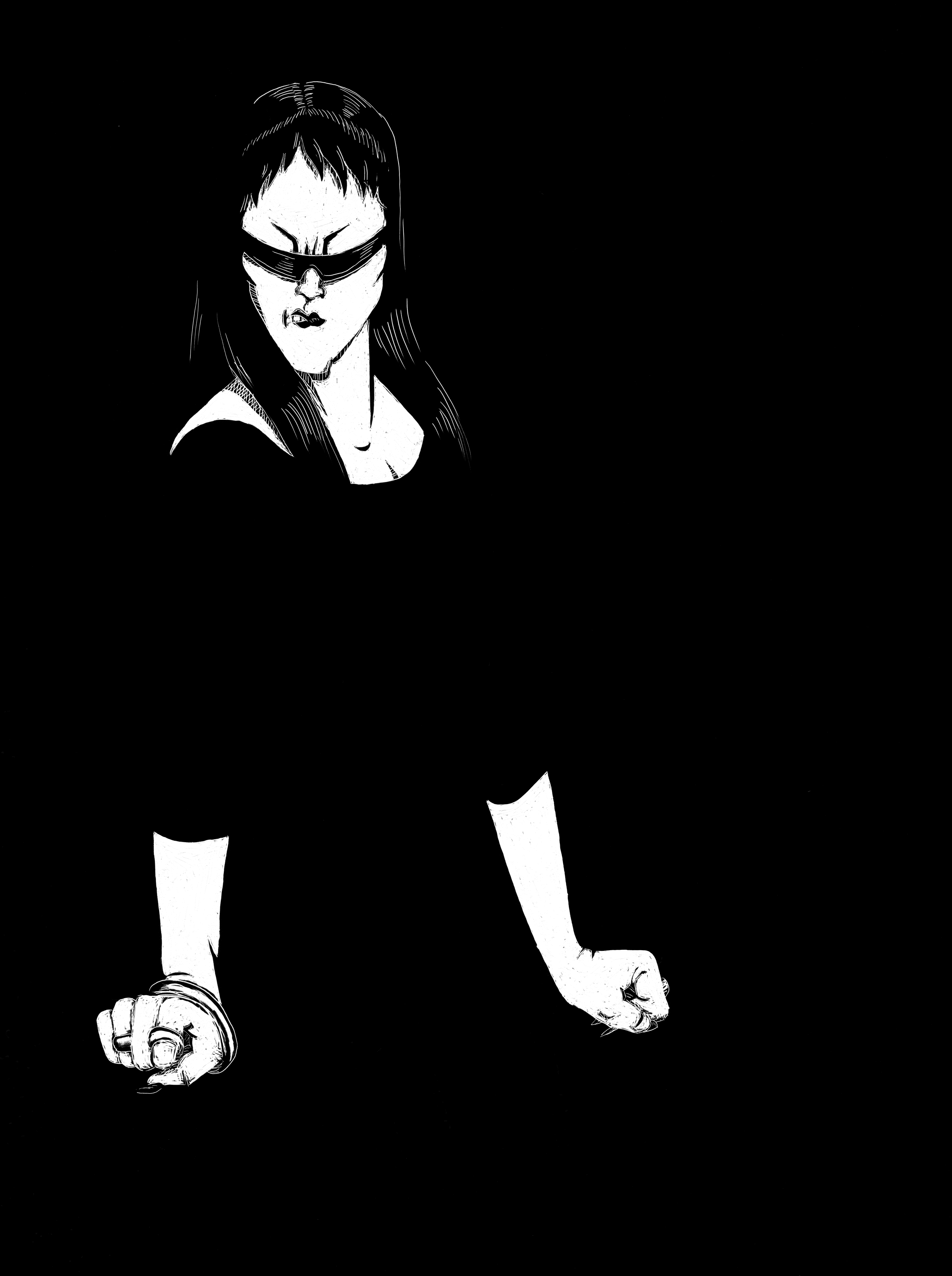
Miranda Milan II: Miranda Furiosa (Art by E.J. Barnes, all rights reserved)

Miranda Milan II: Miranda Furiosa
(Art by E.J. Barnes, all rights reserved)

Miranda, difficult creature that she is, probably deserves another story some day. It’s impossible for her to stay out of mischief. And I could imagine another story or two about Rev. Honoria Blood. She works at what she is, without having extraordinary qualities, and yet ending up in extraordinary situations. Finally, I would like to know whether Jane ever becomes the glamorous character she may imagine she could be, or becomes a tougher person. It’s not clear to me which she really wants to be.

This blog will go off its regular schedule for the month of August. What comes next, I’m not quite sure. I have two stories in mind, but I don’t know if they’ll adapt well here. I’ll let you all know, certainly by the start of September!

Posted in Netherfield Witch, Writing fiction | Tagged , , , , , , | 1 Comment

Chapter 25 of Summer of the Netherfield Witch

The Rev. Honoria Blood may be young, but she is wise. Hestia Desroules, known in Netherfield as Jane Harris’s Aunt Tara, has been bound by a spell not to harm Jane’s family. Even so, Honoria fears Hestia will find a way to strike back at Jane.

Hestia's not big on proverbs

Hestia’s not big on proverbs

It is with great relief that Jane looks forward to Saturday and her evil Aunt Tara’s departure. And Aunt Tara will depart, but not before exacting “Hestia’s revenge” in chapter 25 of Summer of the Netherfield Witch.

Posted in Netherfield Witch, Writing fiction | Tagged , , , , , , | Leave a comment

Chapter 24 of Summer of the Netherfield Witch

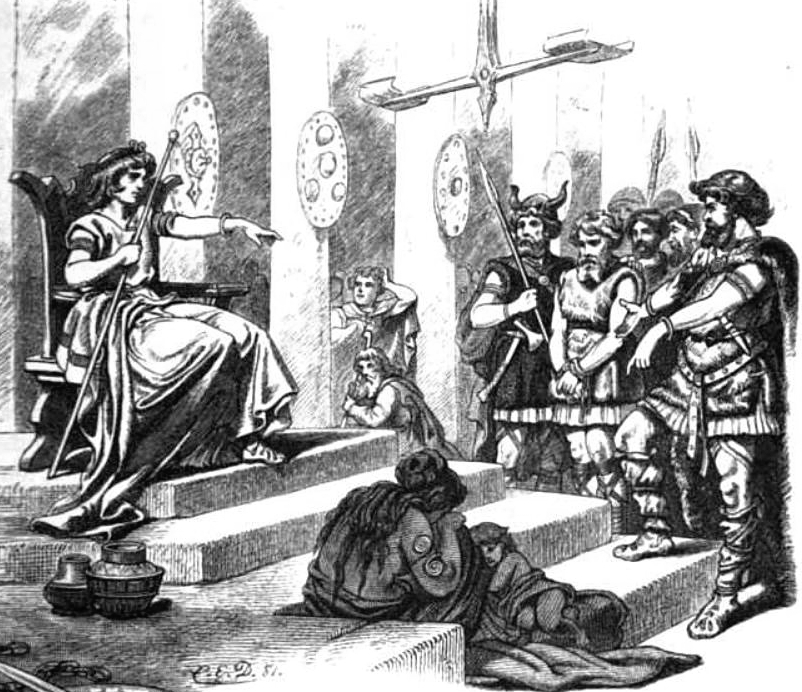
The witches have fought. The battle is over. Well, not really. Because sometimes it isn’t the fighting that settles things. It’s what happens when the fighting is over. And for Jane Harris, ex-victim of a death curse, it’s time to be “Passing judgment” in chapter 24 of Summer of the Netherfield Witch.

Forseti_zu_Gericht_sitzend

Posted in Netherfield Witch, Writing fiction | Tagged , , , , , , , | Leave a comment

Chapter 23 of Summer of the Netherfield Witches

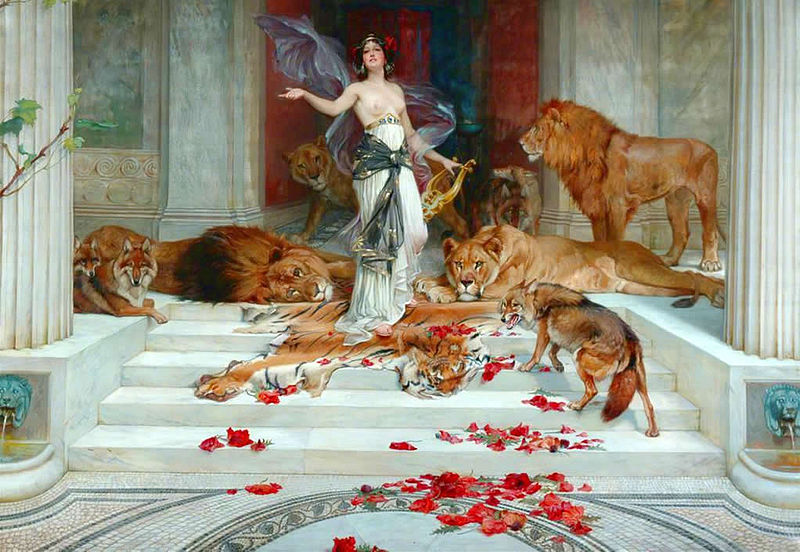
You’d think both being a minister and having martial arts training would make Rev. Honoria Blood the person to take down a witch like Jane Harris’s Aunt Tara. But it’s Honoria that’s slumped against a stone wall with a broken leg. There goes her career as an exorcist. Meanwhile, Aunt Tara is doing just fine, thank you, and has demonstrated the ability to mesmerize Jane with a look. But while Jane’s plan to outsmart her Aunt Tara has gone awry, she still has allies that can use magic to take on Aunt Tara. It’s time for the “Dueling witches,” in chapter 23 of Summer of the Netherfield Witch, right here, right now!

I could see Aunt Tara posing like this ("Circe" by Wright Barker (1864-1941)

I could see Aunt Tara posing like this
(“Circe” by Wright Barker (1864-1941))

Posted in Netherfield Witch, Writing fiction | Tagged , , , , , , | Leave a comment

Chapter 22 of Summer of the Netherfield Witch

Faced with a death curse put on her by her Aunt Tara, a witch and former porno star, Jane Harris has hatched a plan to defeat her aunt, save the day, and possibly usher in a new Golden Age. Hey, she’s fourteen: girl’s got to have some ambition. And when you’re fourteen, everything is about either saving the world or watching it crumble all around you. Just ask any teenager with a bad outbreak of acne. And a death curse is at least on par with acne when you’re a teenager. Yet as both Jane and Aunt Tara are going to find out, “Planning is important, but luck is essential” in chapter 22 of Summer of the Netherfield Witch.

Speaking of planning and luck, artist Salvator Rosa (1615-1673) planned this

Speaking of planning and luck, artist Salvator Rosa (1615-1673) planned this “Allegory of Fortune” as a satire on Papal corruption, and only escaped being jailed and excommunicated thanks to the lucky intervention of the Pope’s brother!

Posted in Netherfield Witch, Writing fiction | Tagged , , , , , | 5 Comments

Genesis: the unauthorized real lowdown

The story of the creation of Man and his expulsion from the Garden of Eden has been retold many times since its origin in Genesis. Some takes have been profound discussions of theology, while others have had a political bite. Mark Twain couldn’t leave the subject alone, writing multiple stories about Adam and Eve, such as “Eve’s Diary.” I like his posthumously published “Eve Speaks” (which I can’t find online, sorry), because it combines theology, humor, and poignancy. This is way beyond my abilities as a writer, so I’m just going to settle for satirical humor. I present, for your consideration, “Putting the Garden of Eden in Iraq is a bad idea.”

WARNING: This story has two advisory ratings.

It is rated DHC (Damned by Humorless Christians) and should not be read by such.

It is also rated WTF-14, meaning 14-year-olds will be disappointed by how little sex there is in it, while their parents will be relieved. (Why WTF? Think about it.)

Iraq, 4004 BC. Definitely a tourist destination back then. ("The Garden of Eden with the Fall of Man" by Jan Brueghal the Elder (1568-1625) and Peter Paul Rubens (1577-1640))

Iraq, 4004 BC. Definitely a tourist destination back then.
(“The Garden of Eden with the Fall of Man” (1617) by Jan Brueghel the Elder (1568-1625) and Peter Paul Rubens (1577-1640))

Posted in Writing fiction | Tagged , , , , | Leave a comment

Beginning part III of Summer of the Netherfield Witch

When chugging shampoo sounds like a good idea, it's time to give up that fourth cup of coffee

When chugging shampoo sounds like a good idea, it’s time to give up that fourth cup of coffee

It’s time for authorial ambiguity here, as Summer of the Netherfield Witch goes into Part III, “Jane Takes Control?” with chapter 21, “It’s time I ended this.” Sense some authorial ambivalence or uncertainty here, but you’re not sure which? Because uncertainty of uncertainty is meta-uncertainty, which is sort of meta-human, but not in a comic book way. Maybe it’s a profound metaphor for the relationship between readers, the author, and the characters in the story. Or maybe my morning caffeine high is out of control.

Anyhow, Jane’s got a death curse on her. Her best friend is in love with a dragon. Her next best friend at this point is a talking basset hound with what we might delicately call a skin condition. And she’s got a crush on her stepfather. The last is still recent, so it’s a really intense crush, but that’s as far as it’s gone. And as far as Jane is concerned, that’s as far as it will go. She’s quite willing to entertain some drastic ideas on how to end that crush of hers, and I do not mean killing her stepfather. Yet. Time for you to read chapter 21 while I go away and try to sleep off a sugar rush next.

But if you, you personally, are feeling sluggish and tired this morning, have I got a bargain for you! You can start this story all the way back at chapter one, and read it all the way through to the current chapter; they’re all hyperlinked together. And the next chapter will come out next week.

Posted in Netherfield Witch, Writing fiction | Tagged , , , , , , , , | 10 Comments