Chapter 23 of Prophecies and Penalties

Emily Fisher has escaped the spiritual hazards of Sacred Mountain. Now that she’s recovered from her ordeal, it’s time to return to more mundane concerns, such as solving Stephen Nash’s murder. But while she’s been convalescing in Lakeview, new developments among the Children of the New Revelation threaten to derail her investigation, and much, much more. “For all of Gabriel Fisher’s children are damned” in chapter 23 of Prophecies and Penalties, my weekly serial about a murder at a religious commune in Vermont. If you’re not following the story yet, you can start here.

Posted in Prophecies and Penalties, Writing fiction | Tagged , , , , , | Leave a comment

It is good to be the king

Others will never be royals, but I already am! (Credit: Hendrik Sendelbach)

Others will never be royals, but I already am!
(Photo credit: Hendrik Sendelbach)

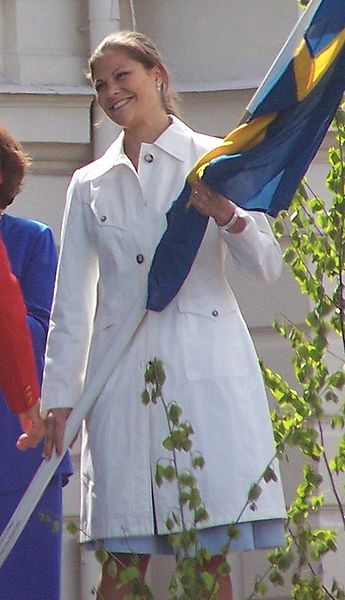
Today’s the 37th birthday of the heir to the throne of Sweden (Happy birthday, Vicky!) and tomorrow’s the 329th anniversary of execution of the would-be heir to the British throne, the Duke of Monmouth. Americans are rather ignorant of monarchies, not having one, Emperor Norton excepted, so here is a quick guide to monarchy.

Aren’t monarchs descended from a long line of previous kings stretching back to time immemorial?

It's who you sleep with that matters!

It’s who you sleep with that matters!

Only if you have a short memory. The current branch of the British royal family, the one Americans know best, only took the throne in 1714. And the Swedish royal family is descended from one of Napoleon’s ex-marshals, who married one of Napoleon’s ex-mistresses, and only took that throne in 1818.

Sorry, wrong legendary origin. They’re really great military leaders who hold their lands by right of conquest, right?

Try again. The current British royal family came to power by an Act of Parliament in 1701, and no British monarch had taken the field since George II in 1743. Ever wonder why his grandson George III never came over with the British Army to defeat George Washington? That’s because the British government remembered how poorly his grandfather did.

A lot of the other monarchies fared no better. Perhaps the most pathetic example is the Spanish monarchy, which was driven out of that country in 1931, and regained the throne only at the invitation of the winner of the subsequent civil war. Even then, they had to wait until he died in 1975.

At least it’s hereditary, father to son in an unbroken line, once they do come to power.

I could have been King of Sweden, or at least a Harry Potter clone! (Credit: Oskar Karlin)

I could have been King of Sweden, or at least a Harry Potter clone!
(Photo credit: Oskar Karlin)

You do know that the current monarch in Britain is a Queen? Not that women were eligible in Christian Europe until modern times. In fact, so venerable was the tradition of male rule that Sweden didn’t officially change the law to give women an equal shot at the throne until 1979. Crown Princess Victoria of Sweden wasn’t born the heir to the throne; she became the heir at the age of two, displacing her younger brother.

Besides being female, supposedly the other major disqualification was being illegitimate. That’s why the Duke of Monmouth was executed: he was the oldest son of the previous monarch, Charles II, but he was illegitimate, and when he tried to take the throne he was guilty of treason.

And yet . . . Queen Elizabeth’s own hereditary claim to the throne runs in part through a woman named Katherine Swynford (1350-1403). Katherine was mistress to the Duke of Lancaster, and her children were all illegitimate. But they were legitimized after the fact, which in the eyes of some still left them ineligible for the crown. So, the real rule is that illegitimacy counts against you, unless it doesn’t.

Oh, and some monarchies ignore the principle of primogeniture altogether. The Saudis pick the heir among their royal family according to family consensus, while one of the Princes of Andorra is the elected President of France!

Let’s forget about all that. So what does a monarch actually do?

The man currently pulling Queen Lizzie's strings (official portrait)

The man currently pulling Queen Lizzie’s strings
(official portrait)

To take one example, Queen Elizabeth II of the United Kingdom (shortly to be the Disunited Kingdom if Scotland secedes) summons Parliament, presents it with a program of measures she wants enacted into law, and dissolves Parliament when it defies her will.

Just kidding! Actually, it’s the Prime Minister who does all that. In these matters the Queen just does whatever she’s told, sort of like a puppet.

So what does Lizzie actually do? Well, she looks regal in ceremonies that require her presence. She administers her personal fortune, which is worth probably billions and had become largely tax-exempt. And one suspects she hopes to outlive her son to keep that tramp Camilla from ever becoming queen.

And that’s the state of most monarchies in the world, which are bound by constitutions and representative assemblies. The monarch is a figurehead. If they actually do something, it’s a Constitutional crisis. Though let’s give the previously-maligned Spanish monarchy credit: Juan Carlos I prevented the military from overthrowing a democratic constitutional government in 1981.

There are some absolute or near-absolute monarchies still around, in such places as Swaziland and Monaco. The only ones that matter are in oil-rich countries like Saudi Arabia and Brunei, where they help retard the nation’s progress.

Could we ever have a monarchy in the United States?

Not without completely changing the Constitution. The Constitution establishes the United States as a republic, and by a republic, the founders meant a nation whose government belongs to the people, as opposed to a monarchy, where the nation in theory belongs to the monarch. And, the Constitution guarantees a republican form of government to the states as well.

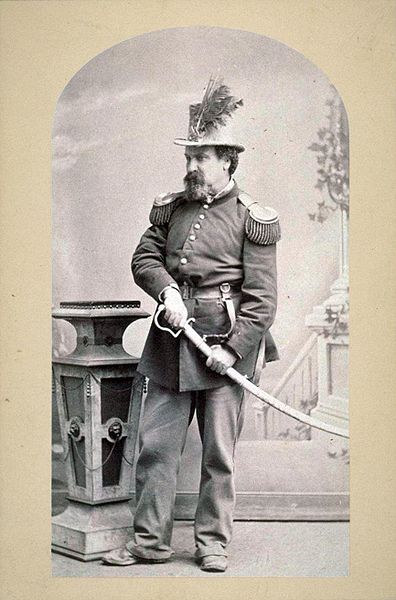
The one and only Emperor of the United States and Protector of Mexico (Don't recognize him? Go look up Joshua Norton (c. 1819 - 1880))

The one and only Emperor of the United States and Protector of Mexico
(Don’t recognize him? Go look up Joshua Norton (c. 1819 – 1880))

Posted in History | Tagged , , , , , , , , | 6 Comments

Chapter 22 of Prophecies and Penalties

Emily could wish her investigation was this simple

Emily could wish her investigation was this simple

Every step she takes, Emily finds her own past curiously intertwined with the murder investigation she is conducting. So she decides to engage in some spadework, to try to understand some of the strange phenomena she’s encountered by retracing her steps. But as she finds out, sometimes there’s nothing more dangerous than “Going where one has gone before,” chapter 22 of Prophecies and Penalties.

Posted in Prophecies and Penalties, Writing fiction | Tagged , , , , , | 1 Comment

For love of maps

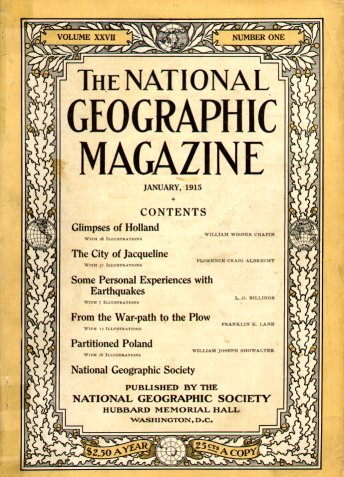
The cover design has become simpler and features a color photograph usually, but it's the same magazine

The cover design has become simpler and features a color photograph usually, but it’s the same magazine

I grew up a map fiend. No, this is not a statement of my spiritual status, but instead a proclamation of an abiding interest in maps. When I was a kid, we got many maps through National Geographic Magazine, which tended to include one about every other monthly issue or so. I pored over those maps and practically memorized the explanatory notes that came on them. As I’ve mentioned elsewhere, it was a note about the legal status of the Baltic countries of Estonia, Latvia and Lithuania that ultimately led me to taking a vacation there over a decade ago.

And then I added almanacs to my map study. To those who don’t know them, American almanacs in my youth were these thick volumes running hundreds of pages, packed full of information. Much of this was general-purpose reference information, covering everything from copies of the Constitution to a list of all the times major league baseball franchises had moved (a much shorter list in those days). And then there was the section on the nations of the world, with accompanying color inserts of all their flags and maps of each continent.

So I kept current with political developments, which led to one of the more amusing quirks of my childhood. I would examine maps and globes, and proudly announce how many “mistakes” they had, because they were out of date. People remember me for this.

Every gas station chain gave you free maps

Every gas station chain gave you free maps

I also took over reading road maps and providing navigation for our family when we went on vacations. My mother couldn’t read a map. My father would often wait until the last moment to give my mother directions, which would cause her to make the wrong turn. So I took over. It became an excellent experience in developing patience and planning skills. Not only did I have to mark out a route, I had to adjust it if my mother should happen to make a wrong turn despite my directions.

It's not "Rosebud," but it did play a role in my youth

It’s not “Rosebud,” but it did play a role in my youth

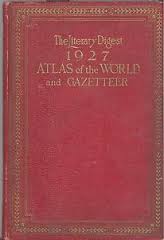
Not long after that began, my father let me use his copy of The Literary Digest 1927 ATLAS of the WORLD and GAZETTEER. Colonial empires, territories and boundaries subject to plebiscites, vanished kingdoms, mysterious vassal states, names that had changed for one reason or other . . . oh, I was in seventh heaven, let me tell you. I had so many, many questions that required trips to our (outdated) encyclopedia, not to mention bedeviling the staff of the public library in town. So my study of maps grew from geography to history.

Well, I grew up, and my appreciation of maps grew with me. And they could still set off all sorts of questions, and sometimes interesting quests that ran far from the library (or these days the Internet). For example, back in 1987, eastern Massachusetts was divided into two area codes for phone numbers. To explain this, the phone company put out a map, overlaying the area code boundaries with the municipal boundaries within the state. I took a look at that map, and realized that although I had lived almost my entire life in Massachusetts, there were still many towns I’d never set foot in.

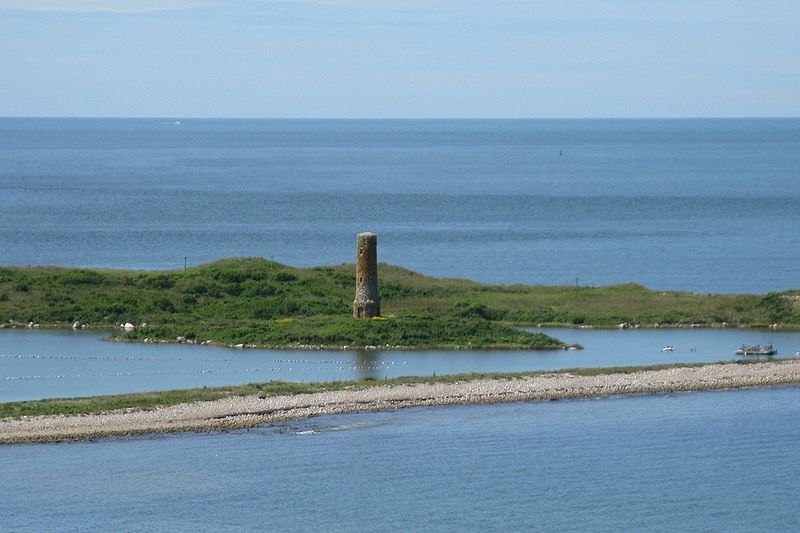
This is the Gosnold Monument on Cuttyhunk. It's on an island, so you can't walk up to it. I guess visitors are just supposed to admire it from afar. (Source: Wikipedia/John Phelan)

This is the Gosnold Monument on Cuttyhunk. It’s on an island, so you can’t walk up to it. I guess visitors are just supposed to admire it from afar.
(Source: Wikipedia/John Phelan)

So I decided to embark on a quest to visit every single city and town in the state. There are 351 of them. I had to make rules. Traveling through on a superhighway didn’t count. If possible, I had to find the town/city center, which for some towns is a challenge. That’s why I bought street maps of every municipality in the state, to find my way through and between towns, especially towns without state highways. (Yeah, today people would use GPS.) Complicating matters, several towns are on islands. So it took me until 1994 to finish, which I did by taking a ferry to the island of Cuttyhunk, part of the town of Gosnold.

My girlfriend, then and now, was with me on that trip. She’s quite proud of helping me finish the set. And she allowed me to talk her into that Baltic trip, another result of my map fascination. What can I say? Nerds of a feather.

Posted in History | Tagged , , , , , , , , , | 12 Comments

Chapter 21 of Prophecies and Penalties, whippings and prisons

A whipping? Emily Fisher has never attended one, and never meant to. But a man is being whipped because he spat on her, and the community expects Emily to witness justice. But it is not just the whipped man who is “Taking a beating” in chapter 21 of Prophecies and Penalties. And the results leave Emily wondering just what justice she will find among the Children of the New Revelation.

Whippings have gone out of style in this country. We see it as a cruel and barbarous practice. There was a major controversy in 1994 when an American citizen was sentenced by a Singaporean court to be caned, a related punishment. And yet it was a common enough punishment in the early history of the United States, and, at least according to Wikipedia, the last judicial flogging was only in 1952 in Delaware. No, they didn’t whip a corporation; instead, it was a wife beater, a case where the punishment may well have fit the crime.

One of the reasons public punishments such as whipping or the pillory dropped out of fashion in this country was the decline in community identity as people moved around a great deal, towns grew larger, and communities became more socially stratified. Since none of these things happened to the Children of the New Revelation, it is not surprising they retained whipping as a punishment.

Not that our prison system is exactly a humane replacement for whipping. Many of our prisons are overcrowded, leave inmates vulnerable to aggressive gangs of other inmates, and may actually increase the chance that an inmate will commit crimes again when released. Our problems with prisons can be traced back to our uncertainty over whether to use them for rehabilitation or punishment, and our desire to do either or both on the cheap.

The problem of prisons got some attention back in the 1960s and 1970s. There were numerous prison riots, and a great deal of talk about what reforms were needed. Joan Baez once actually performed a song about razing prisons to the ground at Sing Sing Prison in 1972. But as the prisons learned more sophisticated techniques to prevent riots, people’s interest in reforming prisons died out.

Today, the United States has the largest prison system in the world, and incarcerates more of its citizens than any other country. But there is little debate among the general public about the prison system as such. (The issues of racial incarceration rates and the use of private companies to run prisons do get discussed from time to time.) We don’t seem to be interested in asking the important questions. Does our prison system make us any safer? Does it protect us from criminals? Is it humane? Is there something better we could do?

Posted in History, Prophecies and Penalties, Writing fiction | Tagged , , , , | 8 Comments

The middle of the year

This was in 2011, but you get the idea (Credit: Wikipedia/Arrto)

This was in 2011, but you get the idea
(Credit: Wikipedia/Arrto)

Tomorrow is July 1, 2014. Summer officially began with the equinox on June 21. Midsummer Night, June 23, I sometimes sit back with a good drink and read Shakespeare’s A Midsummer Night’s Dream. I have to admit I didn’t do it this year, nor back in 2003 when my girlfriend and I went to the Song Bowl in Tartu, Estonia, and watched thousands of people eat sausage, drink beer, dance, sing, and gather around a bonfire without anyone getting so drunk as to start a fight! And tomorrow I go off for my annual physical with my medical doctor. So it seems like a good time to stop and take stock of things for a moment.

This blog, Sillyverse, has been running now for almost two years. I’ve told three long stories and am in the middle of a fourth. It’s been a good way of forcing myself to write — in the case of Nightfeather: Ghosts at breakneck speeds. Despite now having over 300 followers (some of which aren’t real), and having taken up several blogs to read last December, this remains a modest operation. Thanks to the way I’ve set this up, I can reliably track how many people are actually reading my fiction, how many stop by to read my posts, and how many just drop in looking for information on one topic.

Musn't forget THAT walking stick

Musn’t forget THAT walking stick

It’s been a good run. I think my writing has improved; I can certainly look back on The Dragon Lady of Stockbridge and see how it could be improved. (This is even more true for earlier pieces I haven’t put up here, as some of my readers know.) I’ve had wonderful comments from readers who have praised and even criticized me, both in ways that have made me a better writer. Some have become friends; some will be happy to stay just fellow bloggers who read each other’s work. I’m grateful to you all.

However, one of the goals when I started this blog was to figure out how to publish my work, and that I have made very little progress toward. I’m going to have to spend more time on it now, and, thanks you, blog, and my charming blog readers, I have more and better material to bring to publishers. Prophecies and Penalties will continue on schedule, that much is certain. But what else will this next half year bring? We’ll have this meeting again in December to find out.

Posted in Writing fiction | Tagged , , , , , , | 7 Comments

Chapter 20 of Prophecies and Penalties

For Emily Fisher, bumping into people has ceased to be a figure of speech. She’d tell you it’s not her fault; she’s not normally clumsy, but between being shot at and taking paths that defy geography, her life has become rather confusing. And this is before she runs into Hannah Wyatt, self-styled Instrument of the Divine, purveyor of romantic advice to lovesick teens, and, as Emily is about to find out, amateur alchemist. Emily’s day takes a turn into the Children’s religious practices in “Better living through chemistry,” chapter 20 of Prophecies and Penalties.

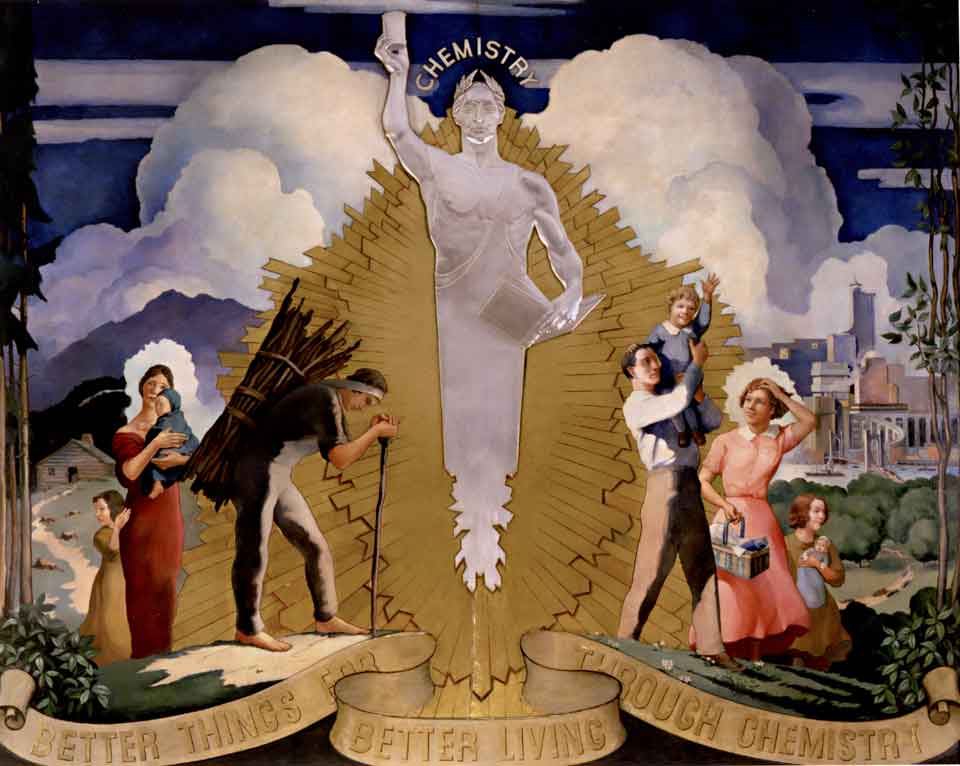
The phrase “better living through chemistry” has become so common that I suspect many people don’t realize it originated as a public relations and advertising slogan for the DuPont Company (E. I. du Pont de Nemours and Company) back in 1935: “Better things for better living . . . through chemistry.” Quite appropriate, coming from a company that began by making gunpowder and in the 20th century was one of the leaders in plastic. No doubt when Mr. McGuire advised Ben Braddock in The Graduate (1967) to go into plastics, he was thinking of firms such as DuPont. Unfortunately for DuPont, the phrase started to take on a satirical and sinister meaning starting in the 1960s. Books such as Rachel Carson’s Silent Spring (1962) pointed out the adverse effects of the new chemical pesticides on wildlife. The rapid rise of valium as a prescription tranquilizing drug following its introduction in 1963 spawned an image of drugged-out housewives that was embodied in the Rolling Stones’ song “Mother’s Little Helper” (1966). Finally, the popularity of psychoactive recreational drugs by the late 1960s gave DuPont’s slogan an entirely new meaning, one which the company no doubt disliked. Even so, they didn’t change the slogan until 1982.

The future looked bright for DuPont and chemistry in 1939

The future looked bright for DuPont and chemistry in 1939

Posted in History, Prophecies and Penalties, Writing fiction | Tagged , , , , , , , | 6 Comments

A Mary Wilkins-Freeman twofer

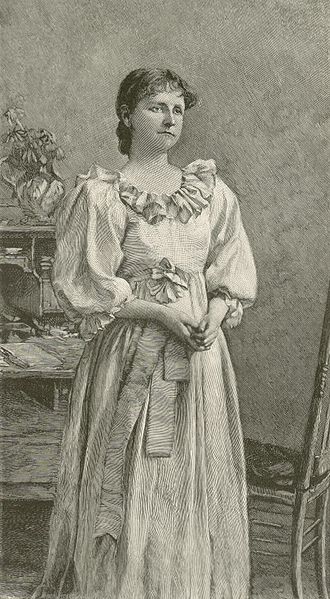
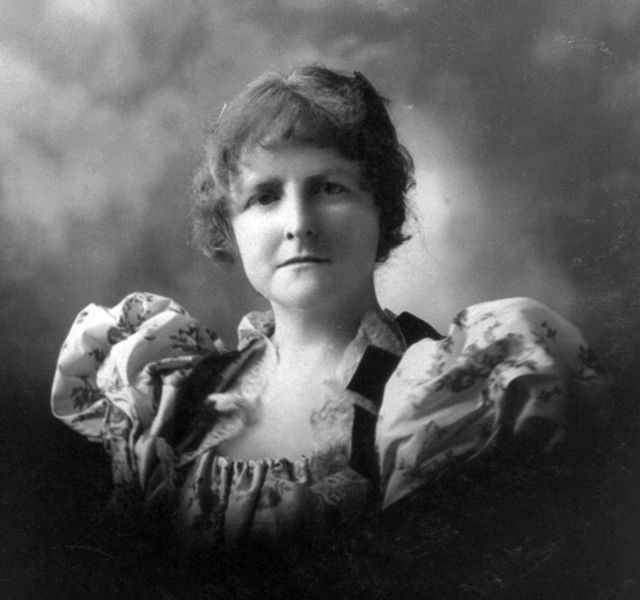
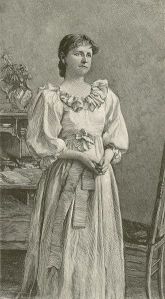
I am a proper woman, who desires affection but will not compromise my dignity for the folly of romance

I am a proper woman, who desires affection but will not compromise my dignity for the folly of romance

Ever hear of Mary Eleanor Wilkins Freeman (1852 – 1930)? It’s not one of those names that has come ringing down the ages. She was one of those female New England regional writers circa 1900,[i] at a time when the popular image of New Englanders fluctuated between the stern descendants of their Puritan forefathers, and the decadent descendants of their Puritan forefathers.[ii] Influenced by William Dean Howells (1837 – 1920), Wilkins Freeman typically wrote about the everyday life of New England country women. That one of her earliest successful stories was entitled “A New England Nun” tells you most of what you need to know about her subject matter: women and romance.

But every so often, Wilkins Freeman took a turn for the eerie and mysterious. The Wind in the Rose-Bush, and Other Stories of the Supernatural (1903) collects six such stories. Usually, I find collections do the writer and readers a disservice, because a writer is too apt to repeat herself, and the reader becomes bored. Not so with this collection, in fact the converse. Wilkins Freeman’s supernatural is both obvious and subtle at the same time, and it takes reading several of them in a row to appreciate this.

The keystone to this collection is the story “The Southwest Chamber.” The room is, of course, haunted, and you can even guess by whom without any difficulty. There is no bloodshed, no torrid revelations, not even any truly dramatic confrontations. As I’ve said, Wilkins Freeman is subtle. Instead, the various residents of the house all confront the southwest chamber, only to find that it confronts them in turn with challenges appropriate to their characters. Sin and death have taken hold in that room, and one or the other undermines each visitant.
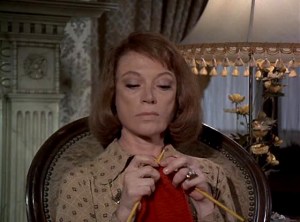
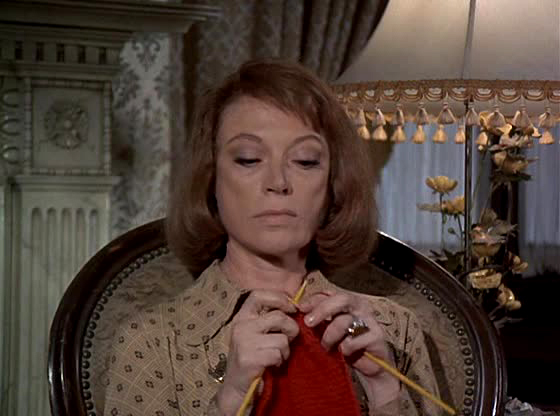
Few women could play a grim spinster better than Grayson Hall

Few women could play a grim spinster better than Grayson Hall

And that is the secret to these ghost stories: sin and death come creeping in by subtle supernatural means, picking away at the minds of the living, until they are too forceful to ignore. Go one way with this, and you get the psychological horror of Shirley Jackson’s The Haunting of Hill House (1959); go the other way, and you get the bloody retributive “justice” of Vincent Price in Theater of Blood (1973). The adaptation of one of her supernatural stories to TV’s Night Gallery as “Certain Shadows on the Wall” (1970), while quite free, conveyed some of the psychological horror in Wilkins Freeman’s original.

I think that her contemporary readers may have found these stories emotionally disturbing. Tastes and in particular what scares us have changed; I find them more intellectually disturbing. Probably the most famous of them is “Luella Miller,” a vampire story without a bloodsucker, because bloodsuckers are too obviously evil. However, for me the most disturbing story is the last one, “The Lost Ghost.” I believe Wilkins Freeman meant this story’s ending to be interpreted sentimentally as a happy ending. Yet she left it sufficiently ambiguous that one can read it as a gruesome victory of evil over innocence.

Before you think I am reading too much ambiguity into what seems straightforward, I have another Wilkins Freeman piece for you to consider, one that is not supernatural, but highly entertaining. Bear with me a bit here: this takes some explanation. Back in 1906, William Dean Howells got this idea for a serialized novel called The Whole Family. The novel would be about a young girl’s engagement to a man she met at a coeducational college, and its effects on her family. Each chapter would be from the viewpoint of a different member of her family, and each would be by a different author. There would be twelve of each.[iii] Howells wanted to show how an engagement was as much about the families as the individuals involved. He also wanted to demonstrate how people should get to know each other before marriage, and that coeducation would help this process.

Howells wrote a straightforward introductory chapter, in which the local newspaper editor congratulates the father of the young girl on his daughter’s engagement. The father rambles on, alluding to Howells’ two main themes while casually sketching out the other members of the family. Howells didn’t go into much detail, for he wanted to give his stable of writers, many of whom he knew personally, ample freedom to demonstrate their talents.

Oh, boy, did he get more than he bargained for, and it was all on Mary Wilkins Freeman’s head. She was the next writer, and had been assigned the spinster aunt. Well, she sat down to read what Howells had written about the spinster aunt and took offense. Here it was 1906, and Howells was describing the spinster aunt, who was only 36, as a total has-been. And this in a story that was going to run as a serial in a magazine, Harper’s Bazar,[iv] that was oriented to modern women! Worse, Wilkins Freeman herself had been single until she married at age 49, and to a man seven years her junior at that, and she did not see herself as having been a has-been!
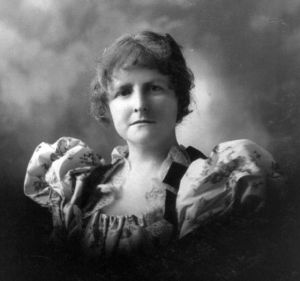
You want to call ME an old maid? I'll show you!

You want to call ME an old maid? I’ll show you!

So, Mary Wilkins Freeman sat down and wrote a second chapter that completely changed the entire nature of the story. The maiden aunt, far from being a dried-up spinster, turns out to be an attractive woman with a long history of conquests among the opposite sex. Indeed, although no one knows it at first, her most recent conquest turns out to be her niece’s fiancé![v]

The other writers were astonished. Wilkins Freeman had certainly been picked because she had written many old maid aunts, but that is not what she wrote this time! Some writers were pleased with both the character and how her actions energized the plot. Others were of quite the contrary opinion. Among them was Howells. He was dismayed, believing that Wilkins Freeman had ruined his story. Certainly she had changed its nature and focus. All the remaining writers were forced to deal with the situation Wilkins Freeman had set up.

And here is where Wilkins Freeman’s talent for ambiguity comes in. One can read her chapter in a straightforward way as the honest account of a vibrant older single woman who really can seduce men of all ages, and who would want a sexually-charged marriage with a man she perceives as her equal. Or, one can read it as an aging woman’s delusions about how attractive she is to men, and who makes mischief because she cannot reconcile herself to the reality of her position. Or some intermediate point between those extremes. Wilkins Freeman deliberately left clues that made this range of interpretations possible.

Subsequent writers took both tacks, and the result is a novel which unintentionally demonstrates the device of the unreliable narrator in a very convincing way. The maiden aunt shifts from chapter to chapter, sometimes being a lovely lady who wants and deserves the love of men, other times becoming a silly, meddling fraud who preys on younger men. All the subsequent writers agreed that the aunt had to be sent off somehow, and those who liked her set up the possibility of a happy ending with the flame of her youth, but those who despised her came last, and had the aunt flee to the city to join forces with a fraudulent medium.

When it was published,[vi] The Whole Family received modestly favorable reviews, though several reviewers noted that the writers were clearly not in harmony with each other. Today it is more a literary curiosity, remembered mostly for how Wilkins Freeman disrupted Howells’ design. But if you are interested in seeing how mainstream American writers in the first decade of the 20th century tried to deal with the idea of a sexually attractive unmarried woman in her thirties, then it’s worth the trouble to read. And if you’re just interested in how Mary Wilkins Freeman could strike a blow for vibrant older women, then it’s worth a read for that as well.


[i] Of which Sarah Orne Jewett (1849 – 1909), with her The Country of Pointed Firs (1896), has had the most enduring reputation.

[ii] Add a supernatural element to that, and you get Lovecraft’s Whateley family in “The Dunwhich Horror” (1928).

[iii] Of the other writers, the most famous is Henry James. The rest are mostly forgotten. Howells wanted Mark Twain and Kate Douglas Wiggin involved, but they begged off. With one exception, each author got a character of the same sex.

[iv] Yes, that was how it was spelled back then. It wasn’t changed to Harper’s Bazaar until 1929.

[v] So in today’s slang, both Mary Wilkins Freeman and the character she wrote were both “cougars.”

[vi] First as a serialized novel in Harper’s Bazar from December, 1907 to November, 1908, then as a book immediately after. Publication in the magazine did not begin until all the chapters had been received and deemed satisfactory by the woman designated as editor for the project. One author was forced to rewrite a chapter, for reasons unrelated to Wilkins Freeman’s work.

Posted in Reading fiction, Reviews | Tagged , , , , , , , | 5 Comments

Chapter 19 of Prophecies and Penalties, and some niceties of language

For once, Emily Fisher’s investigation of High Council member Stephen Nash’s murder is beginning to look straightforward. All she has to do is go to a place that doesn’t exist, by a transportation system that shouldn’t work, to talk to witnesses that can’t be found. That may seem reasonable, but it turns into the damnedest thing in “Beyond limits,” chapter nineteen of Prophecies and Penalties.

While my command of the English language is generally adequate to my purposes, every so often I have doubts and double-check my spelling or use of a word or phrase. Even so, I sometimes make mistakes, usually for E. J. to pick up after the chapter is published. Today, it was “damnedest,” which is usually pronounced as a two-syllable word with a silent “n” among the exalted crowd in which I run (namely, New England Yankees who do not drop their r’s — we are not all inbred Brahmins or pig-ignorant yokels, though there is that cousin marriage in my family tree back a few generations ago). Was it “damnedest,” which seemed correct on the principles of English word formation, or “damndest,” in accordance with actual pronunciation?

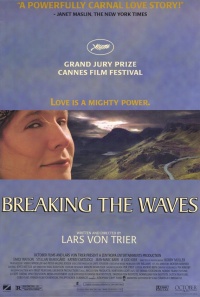
She's damned pretty, according to the Wee Frees in the movie

She’s damned pretty, according to the Wee Frees in the movie

As it turns out, both forms are acceptable. I chose the more formal spelling, because it would elevate the literary tastes of my readers, though not so much that they’d stop reading my work. However, several “authorities” argued that neither form was acceptable, that I shouldn’t use the word at all. If I were using the term metaphorically, according to these authorities, I should use some euphemism, such as “dangdest,” which would be suitable in a Warner Brothers Looney Tunes cartoon. And if I meant it literally . . . well, I shouldn’t. Religious people would take offense. Clearly these “authorities” never saw the burial scene in the movie Breaking the Wave (1996), in which the Free Presbyterian elders are quite clear about the spiritual state of the deceased.

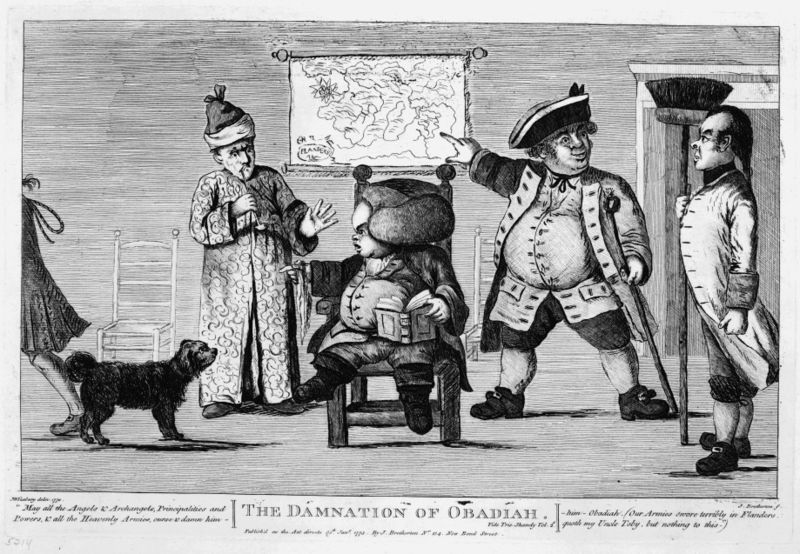
Despite the caption, this is an excommunication scene from the novel, not a damnation; let's not get as sloppy as Dr. Slop

Despite the caption, this is an excommunication scene from the novel, not a damnation; let’s not get as sloppy as Dr. Slop

Back more than two centuries ago, the delightful Laurence Sterne (1713 – 1768) tackled this problem of offensive words with his usual wit. A gentleman in his novel Tristram Shandy has a hot chestnut roll into his open trouser fly. “Zounds!” he shouts. However, “zounds” was an offensive term back then, as it was considered a blasphemous oath, an informal contraction of “God’s wounds.” So after shouting, “Zounds!” the gentleman follows it up with greater propriety by shouting “Z_____!” demonstrating a self-restraint that would serve as a model for the British gentlemen thereafter.

Because Prophecies and Penalties is set in a religious commune in which most sexual behavior is publicly acknowledged, the terms considered offensive in the rest of the United States are rarely used, simply because they don’t have the same connotations. Notably, Elsie, who is not one of the Children, is the only person to have used the most forbidden four-letter word in normal American English. Which is not to say the Children don’t have their own forbidden words, and words which carry impolite connotations, even connotations the Children don’t like to acknowledge. There is more than one reason why the “quad” fell out of favor.

Posted in Prophecies and Penalties, Writing fiction | Tagged , , , , , | 5 Comments

How did the reading habits of your parents affect you?

My parents were both firm advocates of education and voracious readers. My father liked the books he grew up with, and history books, while my mother was more inclined to British murder mysteries and American paperback novels.

Initially, this affected us not at all. For my parents began by reading children’s stories to us. They were our bedtime reading. If, later in life, I began developing stories before I fell asleep, it was no doubt due to the association my parents had established between stories and bedtime.

Kindly ole storyteller, now racist stereotype

Kindly ole storyteller, now racist stereotype

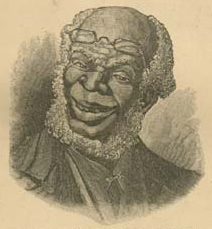
It was the habit, not the contents, that stuck with me. The only book I actually remember from that period was Uncle Remus (1880), which I admit was an odd choice for a New England father to read to his children. But those stories had been out and about in my father’s childhood, and he imagined his children would enjoy them, too. We did enjoy them, in fact. But they were so far removed from our experience, set in an idyllic antebellum plantation South, that they did not stick with us, nor shape our attitudes toward race.

More influential was the encyclopedia set my parents had bought. If you were responsible parents, you had to have an encyclopedia set for your children to use, just as you had to send them to piano lessons. (Two years of them, for me.) The encyclopedia was the abridged version of the Funk & Wagnall’s of the 1950s, 2/3 the size of the 36-volume standard set, and missing the very last volume, “Wash – Z.” I suspect I will be fulfilling the suspicion of many of my readers by admitting I tried to read my way through the entire set. I did not succeed, but I got quite an education that way. Later, my parents bought the first several volumes of an encyclopedia set that was sold on a weekly basis at the nearby supermarket, but it was a clearly inferior product. The only good part it had was a set of book summaries at the end; it is solely because of the drawing of Kitty in that encyclopedia’s book summary that I finally got around to reading Anna Karenina.

Van Loon's art may have been primitive, but he did not talk down to his young readers

Van Loon’s art may have been primitive, but he did not talk down to his young readers

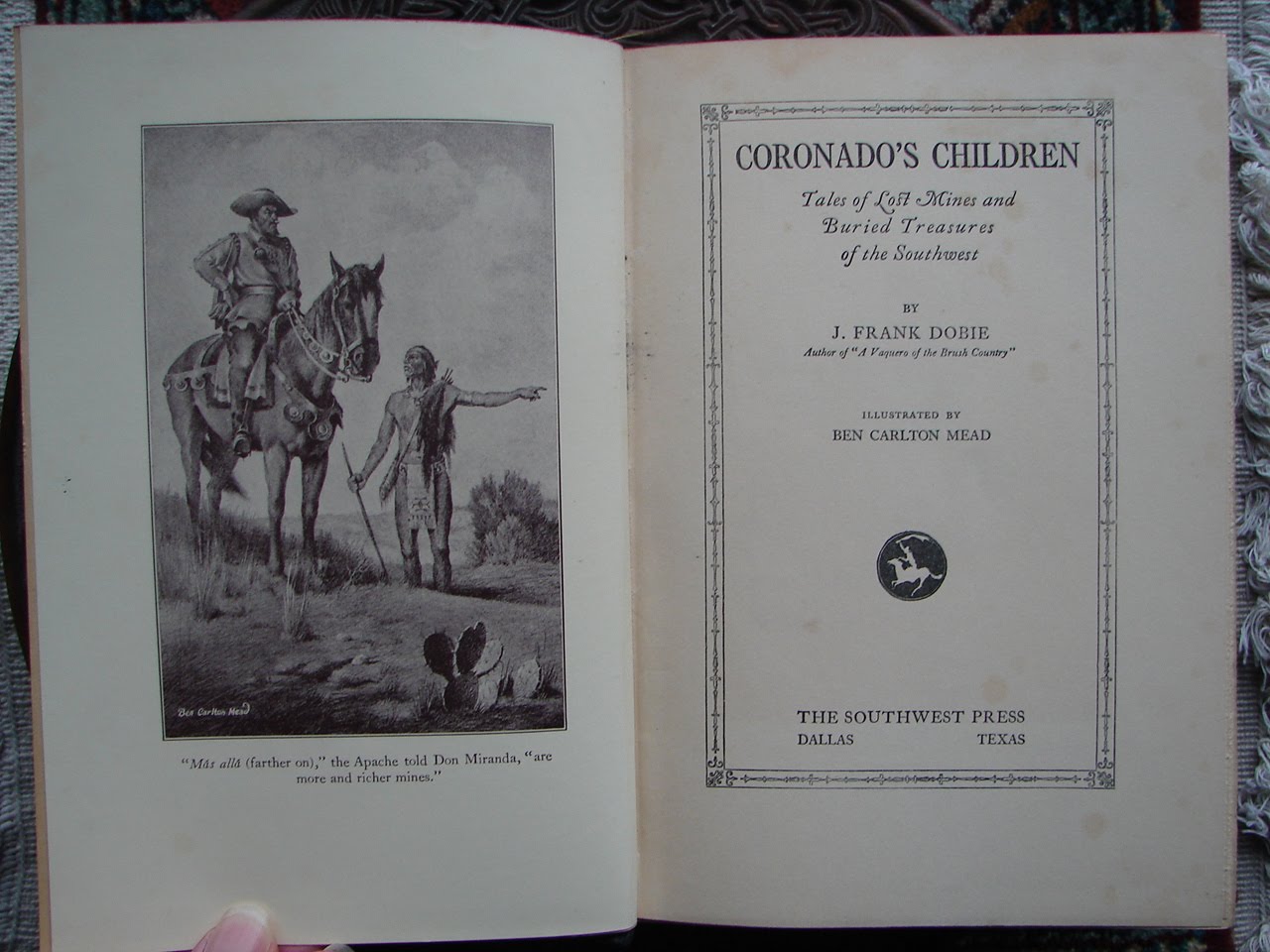
My father’s bookshelf nourished my love of history. He had a 1926 edition of Hendrik van Loon’s The Story of Mankind, complete with van Loon’s artistically simple yet evocative illustrations. If it is now a hopelessly outdated book, nevertheless it was an excellent introduction to the whole of history for an eight-year-old boy, and I cherished the book and reread it for years afterward. For that matter, it still sits on my bookshelf today, visible from where I sit. On the same shelf is a copy of J. Frank Dobie’s Coronado’s Children (1930), a collection of stories and folklore about lost and buried treasures in the Southwest, especially his native state of Texas. To use terms common to professional historians, van Loon was my macro-historical romance, the big picture, while Dobie was my introduction to micro-history and the complex relationship between the stories people tell and what actually happened. Oh, and I dreamed of going to Texas and digging up all those buried treasures for years and years.

You could smell the Old West right from the start!

You could smell the Old West right from the start!

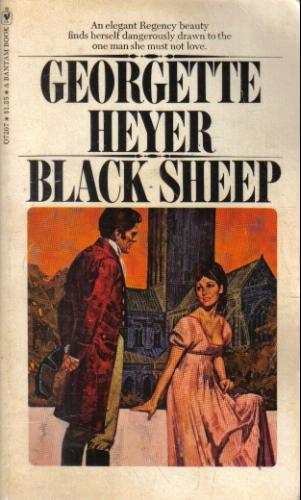
The Regency was cheap in paperback

The Regency was cheap in paperback

My mother’s reading was more in the paperbacks that circulated among her middle-aged fellow wives and mothers. Oh, she had her special interests, and Agatha Christie’s murder mysteries was one. So were Georgette Heyer’s historical romances and Daphne du Maurier’s novels and short stories. (I’d never have read The House on the Strand otherwise; in fact, the copy in my library is the one my mother had; I hope she doesn’t want it back!) If that sounds like a lot of British writers, well, my mother was born in Scotland and didn’t emigrate to the United States until well into her twenties. That’s not to say she neglected popular American writers, including the usual run of scandalous and trashy novels. I have to say I did not benefit from the latter, as I was too young in my pre-teen years, and had a heavy reading schedule of my own in my teen years. Though the fictitious memoir Coffee, Tea, or Me? (1967) served as a tepid introduction to extra-marital sexuality as a perfectly normal practice, as well as inspiring fantasies of airline stewardesses that were forever to be unfulfilled. Guess I’ll just have to settle for the airplane rest room sex scene in Snakes on a Plane (2006).

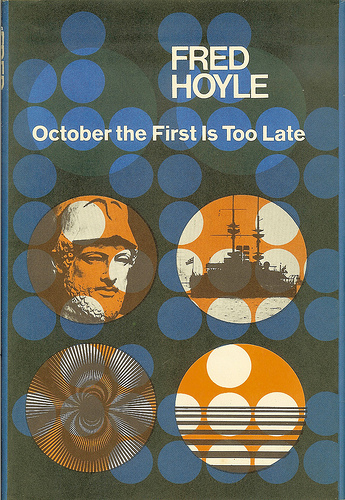
Time travel, ancient Greece, one-night stands in the past, present, and future - what's not to like?

Time travel, ancient Greece, one-night stands in the past, present, and future – what’s not to like?

My own reading habits mystified my parents. I spent so much time with my head in between pages that they consulted my school-teacher aunt, who advised them that I “would grow out of it.” Sorry, Edie, looks like that’s one prediction that isn’t coming true this side of the grave. At least my mother allowed me to subscribe to the Doubleday Science Fiction Book Club for a few years, even though their cheaply priced hardbacks were a strain on the family budget. This indirectly caused an amusing misunderstanding several years later, when I bought George Orwell’s 1984 at the book section in a Sears store and mentioned it to my mother. She was astonished, wondering how in the early 1970s I could spend $19.84 to buy a book. I had to explain that 1984 was the title, and that the paperback actually cost me only 75¢.

And how did your parents’ reading habits affect you?

Posted in Reading fiction | Tagged , , , , , , , , | 14 Comments