Chapter 21 of Martha’s Children, and the college trip

Detective Sherlock Kammen is willing to trail his boss to find out where Martha and her sorceress are. But how far will he go when the trail leads to one of Ned’s family members? Find out in “Happy in this, she is not yet so old but she may learn,” chapter 21 of Martha’s Children, my serial about cops and vampires in 1969 Chicago. If you’re not already reading this story, you can start here.

Writing about a character in this chapter who has just entered the senior year of high school reminded me of what I was doing in the summer between my junior and senior years: the “college trip.” It was a ritual, sort of kin to walking on hot coals, when one visited several of the colleges to which one was thinking of applying. Preferably one got the tour of the campus and an interview with the admissions department staff. Between that visit, the college’s catalog, and several guidebooks rating the colleges according to their selectiveness, one picked the six or so colleges to which one would apply. (Yes, the standard at my school was six in those days. I gather the number these days is closer to ten.)

For me, this trip was important. No one in my family had gone to a four-year-college. I was going to be the first. So I had to get it right. Now I was in a good preparatory school and was a good student, so my school’s college adviser said I should aim high: Ivy League schools and their peers. At the same time, he told me not to go too far geographically, so that I didn’t strain my family’s finances with travel expenses. By the summer before my senior year, I had narrowed my list down to seven schools: four within a day trip of my Massachusetts home, two in Pennsylvania . . . and the University of Chicago. You knew I was going to fit Chicago in here somehow, didn’t you? So, the college trip was to spend a week in the summer traveling out to Chicago, and then swinging back through Pennsylvania to pick up the two schools there. And this would be my first trip to Chicago!

So my parents and I set off in a Ford to cross Massachusetts, New York, Ontario, Michigan, and Indiana to reach Chicago. However, we were on a budget, so we didn’t actually stay in Chicago, no. Instead, we stayed in a motel in Michigan just that side of the Indiana state line. Which meant that every day, to get to Chicago, we had to travel through Gary, Indiana. Gary was a big steel mill town in those days, and there was an ever-present bank of smog hanging over the city, making travel through it akin to experiencing gas warfare. We would roll up the car windows the moment we hit the Indiana state line, and not roll them down again until we were in Illinois. But it wasn’t enough: the smog crept into the car through the vents, gradually befouling the interior. After the first pair of times traveling through Gary, we took to a detour around the city to the south to try to escape the fumes.

The U-505 shortly after it was captured

The U-505 shortly after it was captured . . .

In retrospect, I’m surprised at how little I remember about Chicago from that visit. We played tourists for two days and visited the campus, with the obligatory meeting with the admissions office staff, on one day. The place that stuck in my mind? Not the U. Chicago campus. No, what I remembered most vividly was the nearby Chicago Museum of Science and Industry. And what did I remember most about the museum? They had a captured German U-boat from World War II! I wonderied just how it happened to be that a naval vessel would end up in a museum a thousand miles inland.

. . . and in the museum today.

. . . and in the museum today.

It was probably a sign of things to come that I remembered so little about visiting U. Chicago. I did apply there, along with four other schools. (Two I had been considering I dropped. One was my token all-male school, and the other had a particularly nosy application form.) But I went elsewhere. The next time I visited Chicago, I’d be on a transcontinental train, hunting for a job after college.
Posted in Martha's Children, Writing fiction | Tagged , , , , , , , , , | 3 Comments

The Goths (gothic writers, that is): twin birthdays

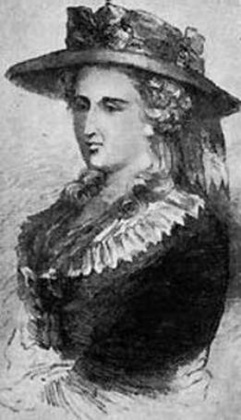
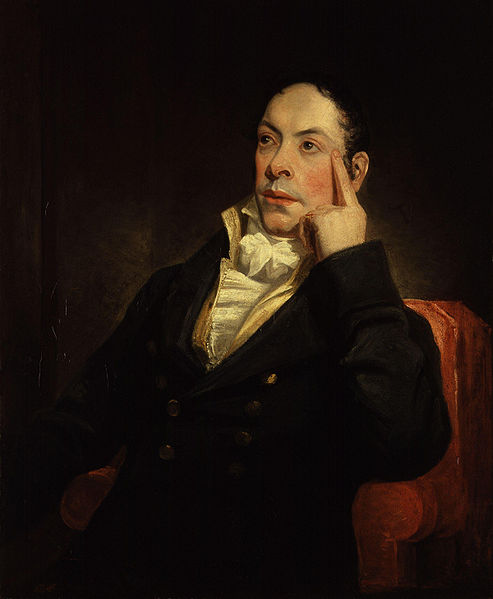
Tuesday, July 9,  is another twin birthday of significance for readers of this blog. Two famous writers of gothic novels, Mrs. Radcliffe (1764-1823), author of The Mysteries of Udolpho, and “Monk” Lewis (1775-1818), nicknamed for his most popular work, The Monk, were born on this date.

There had been Gothic writers before Mrs. Radcliffe. Literary historians usually trace the origin of the genre to Horace Walpole (1717-1797) and The Castle of Otranto, published in 1764. Walpole called Otranto a “gothic story” because of its use of a medieval setting, alluding to the Gothic architectural style. Indeed, Walpole tried to pass off Otranto as an authentic medieval story, much as Wilhelm Meinhold would try to pass off The Amber Witch (1843), another gothic novel, as an authentic 17th-century manuscript. Otranto is one of those books you probably want to read once, and once only. It’s a weak melodrama with fantastical supernatural elements.

Mrs. Radcliffe

A nice, quiet lady who wants to horrify you

Mrs. Radcliffe (née Ann Ward) had a short writing career, spanning less than a decade (1789-1797, if we exclude a posthumously published novel) but she made the English gothic novel both popular and respectable. Well, there’s some question as to the latter, as there was always an occult air attached to her reputation. No doubt one of the elements that made her sensational melodramas respectable was that the supernatural elements were always explained by natural occurrences. Scooby-Doo, anyone? Udolpho, her most famous novel, piled on mystery after mystery, hidden sins, covered-up crimes, disappearing people, and apparent ghosts, set in what for English readers seemed wild and exotic Mediterranean locales.

He's probably thinking up something else depraved for the monk to do

He’s probably thinking up something else depraved for the monk to do

In contrast, Matthew Gregory Lewis had a longer but generally unsuccessful writing career, apart from his gothic romance, The Monk (1796). You want sex, violence, and the supernatural? Lewis included incestuous rape, murder, a baby starved to death, and a seductive emissary of Satan, among many other elements, in The Monk. And he described them all in what for the day was extensive and explicit detail. Mrs. Radcliffe’s novels could be read by maiden aunts who thought they were getting a morally subversive thrill. “Monk” Lewis’s masterwork resulted in a lawsuit that forced Lewis to temper his language considerably, eliminating the more explicitly sexual and gory descriptions (though not the actual actions).

I have to wonder if Lewis got the idea to make a sinful monk his protagonist from the most famous of the Hellfire Clubs, whose members were actually known as the Monks of Medmenham at one time. Sir Francis Dashwood’s club, which flourished in the 1750s and 1760s did feature sexual excesses and mock worship of devilish (or at least pagan) entities, along with the consumption of copious amounts of booze. Certainly, The Monk made hypocritical monks a mainstay of later gothic fiction. One of the first successful gothic novels in the United States was George Lippard’s Quaker City; or the Monks of Monk Hall (1845); Lippard’s monks are more Dashwood than Lewis, which demonstrates that the two strains combined early. Much later in the century, in one of his few forays into traditional gothic style, Ambrose Bierce even named the monk in The Monk and the Hangman’s Daughter (1892) Ambrosius after Lewis’s protagonist.

Perhaps the last word should go to Jane Austen. She read The Mysteries of Udolpho and The Monk, and her response was to satirize them in Northanger Abbey (originally sold to a publisher in 1803, revised and published in 1817). Catherine Morland encountered all the standard features of the gothic novel: wild scenery, exotic castles, mysterious events, and so on. But unlike Lewis, who supplied a supernatural element, or Mrs. Radcliffe, who offered sensational but natural solutions, Catherine’s mysteries all turn out to be very simple and commonplace. Rather like the real life of Mrs. Radcliffe, who stayed out of the public eye despite the fame of her works.

Posted in History, Reading fiction | Tagged , , , , , , , , , , , , | 8 Comments

Chapter 20 of Martha’s Children, and a few thoughts on the Dresden Files

Like Ned O’Donnell, Sherlock Kammen has a favorite sister . . . well, in his case, his only sister. Kate (née Hecate) has always been the older, more sophisticated sister, the one member of the family who moves among the rich and powerful. But she’s not one to ignore blood ties, even to a vampire. Read how Sherlock Kammen continues his investigation of sorcerers in “I would be friends with you, and have your love,” chapter 20 of Martha’s Children. And if you’ve not been reading my serialized story of vampires and cops in 1969 Chicago, you can start here.

I’ve been working my way through the “Dresden Files” series of books by Jim Butcher. For those of you who don’t know it, it shares a number of similarities with Martha’s Children. Both are set in Chicago, both involve magicians (wizards in the Dresden Files, sorcerers in Martha’s Children), and both feature a conflict running between the magicians and vampires. I was a bit worried at first on hearing about the series, for fear that I’d look guilty of plagiarism. In fact, I needn’t have worried. Our uses of magicians and vampires are so different, as are our writing styles.

Cover for the first volume of the Dresden Files.

Cover for the first volume of the Dresden Files.

The Dresden Files series features a scruffy loner, a wizard named Harry Dresden, as its protagonist. He attempts to cope with the various supernatural threats that emerge in Chicago, while sometimes gaining the support but often the disapproval of a worldwide council of good wizards. The threats are a combination of standard supernatural baddies, though often with a twist, and a faerie mythology is thrown in. Vampires play at least a subsidiary role in all five of the volumes I’ve read so far, due to a war Harry’s touched off between the vampires and sorcerers. Unlike the vampires in Martha’s Children, the vampires in the Dresden Files seem to be almost on the same level of power as the wizards.

In each volume, Dresden is typically confronted by several threats simultaneously, which makes it easier for Butcher to keep up the suspense. Dresden uses a combination of willpower-driven magic, sympathetic magic, ad hoc magic, and being rescued by coincidences to muddle through his adventures.

It all sounds like a supernatural version of the old British series, The Avengers, in which Steed and Mrs. Peel would proceed clueless for the first 3/4 of the episode, and then figure out the mystery and physically beat up the bad guys in the last quarter. You’d think they would have made the Dresden Files into a TV series. And they did: The Dresden Files ran for 12 episodes on the Sci-Fi Channel in 2007. It was not a success. I’ve watched the episodes, and I’m not sure why it wasn’t a success, myself. But I can safely say that they have a different tone from the books.

Probably the best way to sum up the Dresden Files series is as high-grade supernatural pulp fiction, and that’s meant as a form of praise. They make for a fun light read. I just hope that as I get further along in the series, Butcher varies his plot structures a bit. I can read about Harry Dresden saving the day despite a lack of sleep, depletion of his magical power, and overwhelming odds, only so many times.

Posted in Martha's Children, Reading fiction, Reviews, Writing fiction | Tagged , , , , , , , , , , | 9 Comments

A few good words about time travel: two books, du Maurier and Riggs

Having just trashed time travel in a previous post, I thought I’d cover two books that use it in unusual ways as a plot device, one book an old favorite, the other a recent book I’ve just read. The old favorite is Daphne du Maurier’s The House on the Strand (1969), the newcomer is Ransom Riggs’s Miss Peregrine’s Home for Peculiar Children (2011).

Daphne du Maurier (1907 – 1989) was a much beloved writer of romantic suspense novels in your parents’ or grandparents’ day, with Rebecca (1938) being the most famous. But every so often, du Maurier would take a turn into the weird and gothic. This is the woman who wrote “The Birds,” which Alfred Hitchcock turned into a memorable 1963 film.

1st edition cover

1st edition cover

The House on the Strand is one of her last novels. It combines her romanticism with her weirdness, and adds a touch of cynicism. Simply put, a man with problems of his own in the present takes a drug which sends him to see other people grappling with their problems in the past. Du Maurier freely adapts the house she was living in and its 14th century history as the setting for the story in both time periods.

What makes the story work for me is how du Maurier uses the 14th century story, the present-day story, and even the method by which the protagonist goes between time periods to create related moral dilemmas for the protagonist. And like The Turn of the Screw, one can even wonder exactly what is going on in the book; that’s how thoroughly time travel is integrated into the protagonist’s perspective. Time travel is integral to the plot, themes, and characters of the book, not just a vehicle to transport the protagonist to some other more interesting time.

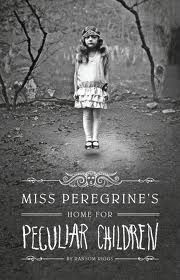
Is she floating in mid-air?

Is she floating in mid-air?

Ransom Riggs is a new author, with Miss Peregrine’s School for Peculiar Children his first published novel. I have to admit that what got me to buy his book was the combination of a discount at my local bookstore . . . and those vintage photographs! The book is just full of reproductions of old, weird photographs, on which Riggs used to hang the plot of his story. It reminded me right away of a book that used photographs in a similar way, but in a different field, Michael Lesy’s historical analysis of death in the late 19th century, Wisconsin Death Trip (1973).

Riggs’s novel combines “Nazis are evil monsters” with “Professor Xavier’s School for Gifted Youngsters.” The reason time travel is needed? The novel begins in the present, but its fulcrum is several days that happen on September 3, 1940. If you’re wondering just how several days happen on just September 3, 1940, you’re beginning to appreciate the odd way time travel works in this story. And no, it’s not just a Groundhog Day type of experience going on.

Peregrine is not as tightly organized as House, nor as deep. It’s ultimately a fanciful adventure story, in which our protagonist confronts a variety of external mysteries and threats (unlike House, where at least some of the mysteries are psychological). The characters are reasonably well-developed, though the situation most of them are in doesn’t allow for deep character development. And, it must be mentioned, the book is the first volume in what I suspect will be a trilogy. So it does tie up some plot threads, but leaves others dangling.

If you want a nice historical time travel fantasy adventure with the bonus of a creative use of odd vintage photographs, then Miss Peregrine’s School for Peculiar Children is for you. If you want a time travel novel featuring adults grappling with personal problems, a novel that may leave you scratching your head, go for The House on the Strand.

Posted in Reading fiction, Reviews | Tagged , , , , , , | 2 Comments

Chapter 19 of Martha’s Children, and the Vampire Bureau star design

WARNING! This post actually says something about this chapter!

“I never did repent for doing good,” but in chapter 19 of Martha’s Children, it seems no good deed goes unpunished. The intrusion of sorcerers into the affairs of the would-be vampire police has put everyone on edge. And is Ned O’Donnell’s method of addressing the problem aiming for a solution, or just getting rid of a problem? If you’re not already reading this serialized story of vampires and cops in 1969 Chicago, you can start here.

Now that they’ve actually appeared in the story, a word on the Vampire Bureau’s stars. As mentioned in the previous post where the illustration was introduced, they are based on the stars (badges) worn by Chicago police between 1955 and 2002, which covers the time period for Martha’s Children. Ned explains in today’s chapter why they are not exact duplicates, but he doesn’t go into details on the design.

You can trust the vampire who wears the star

You can trust the vampire who wears the star

The first thing to note is that while the official stars point upward, the Vampire Bureau’s star points downward. In magical terms, that’s a reference to diabolical forces. The vampires have lost their souls, so they are damned creatures. However, they are not without hope of some form of salvation, hence the small, upward-pointing star at the top of the interior design. That smaller star and moon, which replace an infant on a shell on the city seal, are a reference to night, the time when vampires are active. The robed figure carrying a sword on the left represents an occult figure, both in the sense of being hidden and magical, willing to use force to uphold the law. The wolf on an American shield represents a vampire’s ability to transform into other creatures, including wolves. The ship and motto are holdovers from the city seal and official badges, though just as the star has had its orientation reversed, so has the city seal design.

If this all seems a bit learned and weird for Ned O’Donnell to dream up, then good for you to realize that, because he didn’t. He had a general idea of what he wanted, but didn’t know how he could get the unofficial stars made. What does a good boy do? He goes to his mother. Ned mentioned his problem to Mother Fokker, and she undertook to have the badges made for him. Martha’s accumulated enough money over her long life to be able to finance such things. (Oddly enough, few vampires bother to accumulate wealth despite having potentially long lives.) And as we saw in the early chapters when Martha was instructing Ned, she’s accumulated a lot of knowledge as well. She put it to use by redesigning the stars, as much whimsically as seriously.

Posted in Martha's Children, Writing fiction | Tagged , , , , , , , | 1 Comment

Priscilla’s lament

I rise, I walk, I do my job.

I will not see the spring.

I eat, I drink, I meet my friends.

I will not see the spring.

The brown leaves fall as I walk by.

I will not see the spring.

I will not see the spring.

I cannot change my daily course.

I will not see the spring.


Composed and performed to music for Samantha Milowsky’s birthday celebration, June 22, 2013. (No omens intended.) Copyright © 2013 by Brian Bixby.

Posted in Uncategorized | Tagged , | 2 Comments

Chapter 18 of Martha’s Children, and time travel

In the last episode, Sherlock Kammen got ventilated, by bullets, that is, so we need a new narrator. Sally Truax, Internal Affairs’s finest, steps up to the plate to tell us what happened after she shot up her sometime lover, in “Narrative interrupted: Sally speaking,” chapter 18 of Martha’s Children. If you’re not already reading this story of cops and vampires in 1969 Chicago, you can start here.

I’ve tried to avoid writing time travel stories. For me, they keep running into the problem of whether the past can be changed. Now, admittedly, there are a good many stories about time travel that avoid that problem, from H. G. Wells’s The Time Machine (1895) onward. But the moment one opens up the possibility of time travel, it is hard to avoid the question of whether time travel can change what has already happened. If the answer is “no,” then the universe has to play games on the time traveler. The time traveler becomes a puppet. (“I went back in time to kill Hitler, but it turned out the diary on which I relied got his movements wrong.”) If the answer is “yes,” we have to wonder how a future that will not come to pass affected our world. There are tricks to get around both of these problems, some of which are effective but arbitrary, others of which ultimately raise more questions, such as the parallel universe “solution.” (“If there’s a parallel universe which I visited, is there not also a parallel universe that is just the same that I didn’t visit?”)

It's silly. It should be.

It’s silly. It should be.

Sometimes a good writer can get around the problem by connecting the “solution” to the themes of the work. Connie Willis did a splendid job of this with her novels Doomsday Book and To Say Nothing of the Dog, but pushed the connection too far by reversing it with her Blackout/All Clear two-volume story. [Warning: here be spoilers!] Willis used a consistent time travel theory, that people could not make major changes to the past, for all three stories. So, yes, the continuum conspires against our time travelers. But in Doomsday Book, the reason our time traveler gets inadvertently stuck in the Black Death is because a pandemic is raging at Oxford in the present, and the two events are intimately connected. While To Say Nothing of the Dog is a comedy in which our protagonist uses the way the continuum interferes to frustrate him as clues to what is really going on. Those worked. However, in Blackout/All Clear, Willis needed to make her previously indifferent continuum benevolent to sustain her story. Thematically, it works: the changed concept of time travel supports the development of all the leading characters, fulfilling all their wishes in a genuine way (which is not always a happy one, even so), and incidentally saving the entire world. Logically, it is a disaster: the continuum can use small changes to make Hitler lose the war, but simply couldn’t kill him. Why? Who knows? Realistically, because then there wouldn’t have been any story. To make her story work, Willis turned the “great men of history” theory on its head, but the result doesn’t actually make sense. M. A. Foster did a better job with that idea in his Morphodite trilogy (1981 – 1985), which was not complicated by having to support time travel. [End spoilers!]

The "slasher" style poster makes this look like a stupider movie than it is

The “slasher” style poster makes this look like a stupider movie than it is

All of this leads me to the conclusion that time travel back to the past leads one into one form of insanity or another. So it was a pleasure to find a story about time travel into the past that recognizes the insanity, and is successful by playing it up for all it’s worth. I’m referring to the 2007 Spanish movie Los Cronocrímenes, a.k.a. Timecrimes, which I just saw over this weekend. An ordinary married man sees strange things, and gets involved in time travel. And things keep getting stranger and stranger, in a fashion which supports both the motivations of the lead character and the insane logic of time travel. Part of the fun of the movie is being able to guess sometimes what is going on, and being right . . . sometimes!

Timecrimes isn’t for everyone. If you speak English and not Spanish, you’ll have to cope with subtitles. The movie has its violent moments, which aren’t overdone, and a bit of nudity and sexual suggestiveness, enough combined to give it an “R” rating in the United States. But if you can go into a movie prepared to enjoy time travel that is logical and insane at the same time, Timecrimes should be enjoyable.

Posted in Martha's Children, Reading fiction, Reviews, Writing fiction | Tagged , , , , , , , , | 23 Comments

A short story, “The Misplaced Voyage”

One hundred and nine years have passed in the Sillyverse since Rebecca Farnsworth Maxwell wielded her magical walking stick in The Dragon Lady of Stockbridge. It is 1995, and Geoffrey MacAlpine, Professor of Magic and Occult Studies, is bringing two of his graduates to his flat in Edinburgh, Scotland for some after-dinner drinks and conversation. But Geoff has an unexpected guest waiting in his living room. Read what happens in “The Misplaced Voyage.”

Posted in Dragon Lady, Writing fiction | Tagged , , , , , , , | Leave a comment

Chapter 17 of Martha’s Children, and the Walker Report

In “To unburden all my plots and purposes,” chapter 17 of Martha’s Children, Sherlock Kammen finds out more about how Martha and sorcerers may affect his chances to get back on the police force. And for all you women’s libbers, as any self-respecting woman was called back in ’69, you get to see Sally Truax demonstrate to Kammen why it’s a bad idea to cross a woman!

For those of you who haven’t been reading Martha’s Children, my serialized story about vampires and cops in 1969 Chicago, you can start reading here! I put up a new chapter every week.

One of the recurring problems in any society that aspires to democratic principles is how to deal with people who don’t believe their opinions are being heard, who feel the need to loudly, visibly, and forcefully communicate their differences with the existing laws and governing opinions in their society. True, people can express their differences at the ballot box. But what if they don’t feel the elected government really represents the will of the people, or believe they have a moral imperative to change how people think and feel, to force the government to change its policy? What rights do they have? Conversely, how much freedom should a democratic society give people who refuse to abide by laws and elections? Does a society risk losing valuable opinions by limiting how they are expressed? Are there times when even expressing dissenting opinions cannot be countenanced?

In recent years, we’ve seen this problem arise from either end. Occupy Wall Street pushed the bounds of acceptable protest, leading many to dismiss the “occupiers” as welfare moochers and criminals. On the other side of the coin, the NSA’s surveillance programs, whose exact parameters are not known, could cause people to mute their dissent or not engage in potentially suspicious but lawful political activities, just to avoid the Federal Government’s attention.

Chicago, Friday, August 30, 1968

Chicago, Friday, August 30, 1968

Well, in Chicago in 1968, the conflict was more evident and controversial. A large number of protesters showed up to stage demonstrations while the Democratic National Convention was in town. And the city was determined to maintain order. The result was day after day of pitched battles in central Chicago. Protesters accused the police of brutality and suppressing political dissent, while the police in turn claimed the protesters were breaking the law and openly attacking the police when they were trying to restore order. The debate continued in the media for months.

Today, there is no method to resolve such a debate that would not run afoul of the partisan divide in our national politics. But in 1968, Americans still trusted the Federal Government to deal intelligently and fairly with issues. President Lyndon B. Johnson appointed a National Commission on the Causes and Prevention of Violence (NCCPV). And the Commission in turn appointed Chicago lawyer Daniel Walker to study and prepare a report on the events in Chicago. Walker assembled a team, and in 57 days compiled a report on what had happened. He called it Rights in Conflict. Most people just called it the Walker Report.

Walker was an Establishment figure, imbued with Establishment values. His report frequently expressed a disdain for the persons, appearances, and behavior of the protesters when they deviated from the accepted standards of polite society. His report often distinguished between protesters and “innocent bystanders,” as if protest somehow made one guilty of something. And Walker was quite eager to include reports of provocation by the demonstrators. However, Walker and his staff could not ignore the evidence that the authorities in Chicago had tried to restrict the free expression of the protesters, that they had provoked unnecessary confrontations, and that they had engaged in excessive and needless violence against the protesters.

Under the circumstances, Walker made a wise decision. His report relied on presenting extracts from hundreds of eyewitness accounts. In the foreword to the report, Walker stated it was his intent in the report to provide a basis of facts to inform the national debate on how to handle political protests. But even with his bias against the protesters, Walker could not resist concluding that the violence in the streets of Chicago had often been a “police riot.”

The mas market paperback edition of the Walker Report

The mass market paperback edition of the Walker Report

Rights in Conflict was issued as a government task force report. Probably Walker and the NCCPV expected it to achieve a limited circulation among political leaders. Instead, it did the 1968 equivalent of going viral. It got picked up by a paperback book publisher and became a best seller, said to have sold a million copies. No one was happy with it and everyone had something to say about it. Above all, because it offered facts without trying to draw simple moralizing conclusions, it fostered debate on the issue at hand: how to reconcile political protest with maintaining order.

The Walker Report became a turning point in handling political protests. It was recognized that the police could overreact, and that one could not simply assume that the protesters were at fault. Pressure was brought on the police to change their tactics and become less confrontational. It did not happen all at once; 1969 would prove to be another year of violent protests, and the Kent State shootings (which involved the National Guard, not police) took place in 1970. And there were other factors that helped reduce the violence, among them the gradual winding down of the Vietnam War and the increasing isolation of the more violent radical elements in American politics. But the Walker Report deserves at least some of the credit for helping to reduce violent confrontations between police and protesters in the 1970s.

If we wanted to do something similar today when confronting our political problems, whom would we get to compile and edit such a document? People don’t trust the Federal Government as much as they used to. The old print and broadcast media are in decline. And the bloggers have neither the reputation nor the resources. It appears one of the trade-offs we have made in developing a more politically diverse media is the loss of an authoritative source for news. In that respect, the media today more resemble the press in the decades before the Civil War than the press and television news of the 1950s and 1960s.

Posted in History, Martha's Children, Writing fiction | Tagged , , , , , , , , , , | 4 Comments

You’ll be missed, Iain (M.) Banks

Just saw the news this morning about the death of Iain Banks yesterday, at age 59 (1954-2013). Banks was one of the living science fiction writers I wanted to meet; now I’ll never have the chance. And we won’t see any more stories from his hand.

Iain (M.) Banks (photo: Stuart Caie)

Iain (M.) Banks
(photo: Stuart Caie)

Banks wrote “regular” fiction (much of which was quite irregular) under the name Iain Banks, science fiction under the name Iain M. Banks. Oddly enough, I ran into “Iain Banks” first. At the suggestion of a friend named Mary Hopkins, I picked up Whit, or Isis Among the Unsaved. It’s the story of a woman who is supposed to play a major role in an eccentric religious cult in Scotland, and how she reacts as she discovers the cult isn’t exactly what it seems to be. Her conclusions are not what you would expect in a novel written by an avowed atheist, but instead offer some interesting thoughts on what a religion is.

Most of Banks’s science fiction was built around the idea that in the future humans would live in a benevolent society which has solved the scarcity problem, become capable of space travel, and ultimately turned control over much of their society to highly intelligent machines imbued with the same values. The first of these “Culture” novels I read was Excession, in which the Culture confronts an artifact that apparently is more powerful than it is, and was greatly entertained by the variety of imaginative ideas Banks incorporated into his story. Probably the most caustic of the Culture novels was The Player of Games, in which the Culture’s most renowned expert on games is sent to topple a scarcity-based hierarchical society in which one of the three sexes has engaged in both social and genetic engineering to keep the other two sexes in subordination. Besides being a critique of the way our societies are organized, it’s one of the few Culture novels to show that, even when every material need can be met, there are still things people will want and can’t get.

Banks found out some months ago that he was dying of cancer, and asked his partner of some years if she would agree to be his “widow.” They got married, and he announced to the public that he was dying. Although I knew it wasn’t realistic, I was kind of hoping that one of the intelligent space ships from his Culture novels would come rescue him and take him away before he died.

Posted in Reading fiction, Reviews | Tagged , , , | 6 Comments