Chapter 45 of Prophecies and Penalties

The_Chocolate_Girl_by_Jean-Étienne_Liotard

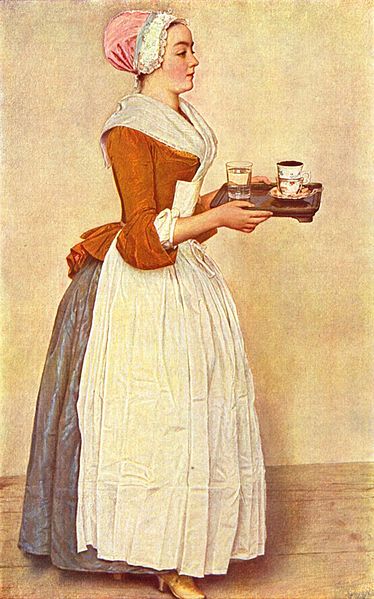
“Your chocolate, ma’am, and a happy Boxing Day. No, ma’am, I did not put any poison in it. I presumed that was your . . . holiday indisposition talking. No, ma’am, I’m not saying you were drunk, though Sir Rodney was shocked to find you in the ostler’s bed this morning. I explained to him that it was the ostler who was drunk and mistook you for one of his horses after you fainted from the heat last night. He accepted my explanation without demur. No, ma’am, the rest of the household (saving the servants) doesn’t know. Why, thank you, ma’am, that would be a wonderful present on Boxing Day!” Jean-Etienne Liotard (1702-89), “The Chocolate Girl” (circa 1745)

When you understand that suicidal thoughts among the Children of the New Revelation are considered signs of demonic possession, you can understand how shocking it is for Hannah Priest Wyatt, an Instrument of the Divine, to be having such thoughts. Yet she is indeed contemplating suicide.

Emily Fisher has decided it is her responsibility to save Hannah. Though Emily is not one of the Children herself, she is their Prophesied One, and she’s willing to use that status in speaking to Hannah. And in so doing, Emily must carve out her own path to “Salvation” in chapter 45 of Prophecies and Penalties.

Next week I expect to be posting the final chapter on Boxing Day. (That’s December 26, the day on which you give your servants their annual gift. Don’t have any servants? How about about treating your nice friendly household computer to an upgrade? C’mon, you know I deserve it, the way I look after you. I even promise to not tell the authorities about your downloads. Well, fine, if that’s how you feel, I was going to say that memory is cheap, but not as cheap as you!) And I thank you all for reading along on what had been the longest story on this blog.

Posted in Prophecies and Penalties, Writing fiction | Tagged , , , , , | 1 Comment

Chapter 44 of Prophecies and Penalties

Emily Fisher really, really doesn’t want to be the Prophesied One of the Children of the New Revelation. Pity, then, that at least half a dozen people already know she is. Because if people think you are something, they will develop expectations accordingly. And this is something Emily doesn’t even want to acknowledge. She is in “Denial,” chapter 44 of Prophecies and Penalties, and she’s got only this and two more chapters to get it right.

How much symbolism can I cram in here? Well, there's a mountain, just like in the story. There's a storm, and we all know what that used to mean in Hollywood movies. And the painter, Albert Bierstadt (1830-1902) named the mountain after the woman who was then his mistress.

How much symbolism can I cram in here? Well, there’s a mountain, just like in the story. There’s a storm, and we all know what that used to mean in Hollywood movies. And the painter, Albert Bierstadt (1830-1902) named the mountain after the woman who was then his mistress.

Posted in Prophecies and Penalties, Writing fiction | Tagged , , , , , | 11 Comments

The year in review: 2014

It's about time for all those Father Time images again! This is the rotunda clock in the Library of Congress's Thomas Jefferson building. The sculptor, John Flanagan (1865-1952) also designed the Washington Quarter

It’s about time for all those Father Time images again! This is the rotunda clock in the Library of Congress’s Thomas Jefferson building. The sculptor, John Flanagan (1865-1952) also designed the Washington Quarter

I just finished up writing the last chapter of Prophecies and Penalties Sunday night, so it seems like a good time to review where Sillyverse has gone this year.

It’s been a year of consolidation and retrenchment. The blog has featured one main story, Prophecies and Penalties, which began on February 14 and will wrap up at the end of the year. There have been a few minor pieces about the “Sillyverse” relating to Abigail Lane (such as her biography), and a Halloween horror story, “Death and Professor Appleton.”

On the other hand, family and personal demands on my life meant I scaled down the other posts and content during the year, to the point where they all but vanished at times. I’ve spun off the historical content to sister blog, Sillyhistory, which should start seeing more activity over the next two months as I gear up for my pirate course. And I injured my arm typing the Halloween story, which is one reason I haven’t attempted a Christmas ghost story this year . . . so far. Maybe I might still squeeze a short one in, but that’s definitely not a promise.

Overall, while 2013’s output may have deserved the “Very Inspired Blogger Award” I got in January, this year has been . . . pedestrian. There are now 375 followers of this blog, the most popular post this year was a review of Stephen Flowers’s Galdrabók, and crimsonprose was the most frequent commenter. Thanks, CP, and to the rest of you who took the time and trouble to write comments as well.

Prophecies and Penalties has been the longest story I’ve attempted on this blog. Dragon Lady clocked in at about 73,000 words, Martha’s Children 105,000, and Nightfeather: Ghosts a paltry 47,000 words, but Prophecies will run about 124,000 when completed. As such, it’s been a useful exercise and a caution. I think it a bit better constructed than Martha’s Children, but its pace is sometimes glacial. It was quite a challenge to do a credible job on Alex Bancroft, who has insight into the future, and in whose wake coincidences multiply. How much do they multiply? At the end of chapter 4, three invisible people wake up Emily Fisher, disturbing the cat in the bedroom. We find out in chapter 41 that one of the invisible people was Sarah Priest. The name of the cat in the bedroom? Sara.

Still, the pace was slow at times. That seems to be deadly to maintaining people’s interest in reading a blog. Which suggests to me that the next story should adopt a pace more like that of Dragon Lady or Nightfeather: Ghosts. Only some stories can be told that way. I’ll have to see if I can come up with one.

The blog will definitely go off its regular schedule after December 26, when the last chapter of Prophecies and Penalties goes up. I expect to take the month of January off, and then resume blogging on Sillyverse in February. Meanwhile, you’ll be able to catch me over at Sillyhistory, so I won’t be entirely gone.

Posted in Uncategorized | Tagged , , | 7 Comments

Prophecies and Penalties chapter 43

Emily is about as confused as this creature, originally dubbed Ornithorhynchus paradoxus by European naturalists. (Photo source:  Zoos Victoria website)

Emily is about as confused as this creature, originally dubbed Ornithorhynchus paradoxus by European naturalists.
(Photo source: Zoos Victoria website)

Murder solved. But one sister is missing, and another is slipping away. Emily Fisher can’t seem to catch a break. And the Divine only knows what the High Council of the Children of the New Revelation has in mind for her. So Emily’s life takes another paradoxical turn in “Trouble is not always where you find it,” chapter 43 of Prophecies and Penalties.

Posted in Prophecies and Penalties, Writing fiction | Tagged , , , , , | 4 Comments

Chapter 42 of Prophecies and Penalties

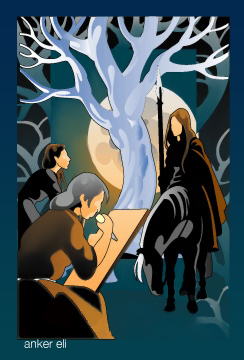
The supernatural figures in the lives of the three sisters in this chapter (Art work for Faeroe Island stamp by Anker Eli Petersen)

The supernatural figures in the lives of the three sisters in this chapter
(Art work for Faroe Island stamp by Anker Eli Petersen)

Emily Fisher has to decide on whether she will become the guardian of the plaza on Sacred Mountain. She also needs to get ready to leave with her sister Elsie and the emotionally shattered Jezebel Johnson. Pity those two responsibilities are in conflict with each other. So the very last thing Emily needs is another conflict in her life. But that and more is what she gets when she has “Trouble with sisters,” in chapter 42 of Prophecies and Penalties.

I went looking for a picture of three sisters, since that’s how many figure directly in this chapter. Dismissed the depictions of gorgons out of hand; Emily may not think much of her looks, but neither she nor her sisters are that ugly. I wanted something traditional, maybe an engraving of the Greek Fates, or a Pre-Raphaelite painting of the daughters of King Lear. And then I ran into the postage stamp that features this depiction of the Norns, the Norse approximate equivalent of the Fates, and I was smitten. You do not want to know how much time I spent thinking about which of the daughters of Gabriel Fisher go with each Norn.

Posted in Prophecies and Penalties, Writing fiction | Tagged , , , , , , | Leave a comment

On Thanksgiving day

Brian Bixby's avatarNo Humble Opinion

I actually like Thanksgiving. It’s a reminder of what is good about people and bad about people.

It’s about surviving a tough year in the wilderness with the help of some friends . . . and then driving those friends out of their land. It’s about being thankful for what we have, before hitting the mall to buy more stuff. It’s about getting together with family, until the game comes on TV. It’s about feeding the homeless and forgetting about them. And it’s a deeply spiritual holiday, celebrated by the worship of gluttony.

In short, it’s America, 2014.
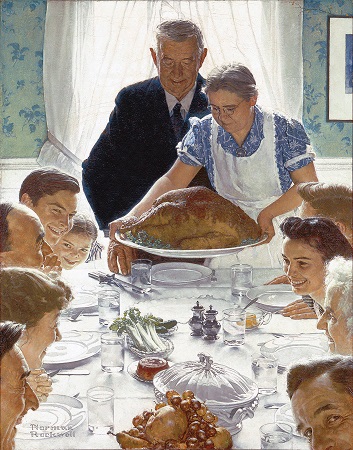
Freedom_From_Want
To sum it up, remember this picture, Norman Rockwell’s iconic depiction of a Thanksgiving dinner? Its title is “Freedom From Want.”

View original post

Posted in Uncategorized | Leave a comment

Chapter 41 of Prophecies and Penalties

The Lavinia of Roman legend is famous for her hair spontaneously bursting into flames. Emily is not going to be so lucky.

The Lavinia of Roman legend is famous for her hair spontaneously bursting into flames. Emily Fisher is not going to be so lucky.

Everything is connected. The secret paths linked all the most important places in the lands of the Children of the New Revelation. And now they aren’t working well. They almost killed Emily Fisher. And the problem doesn’t end there . . . for everything is connected. And Emily Fisher has to deal with being one of “Lavinia’s heirs” in chapter 41 of Prophecies and Penalties, my weekly serial of murder and magic on a Vermont religious commune. If you’re not reading it already, you can start at the beginning.

Posted in Prophecies and Penalties, Writing fiction | Tagged , , , , , , | Leave a comment

THAT walking stick will be in an art show

E. J. spent a lot of time looking at depictions of Japanese dragons before creating this

E. J. spent a lot of time looking at depictions of Japanese dragons before creating this

Some of you remember the dragon-head walking stick that played such a significant role in The Dragon Lady of Stockbridge: A Tale of Magic in the Gilded Age. Well, the original art for one version of the walking stick is going to be in a juried art exhibition run by the Cambridge (Massachusetts) Art Association, starting December 4! So here’s to artist E. J. Barnes, for taking a few words out of my story and turning it into a striking picture!

Posted in Dragon Lady | Tagged , , , | 2 Comments

Review: Violet Hunt, (More) Tales of the Uneasy (1911, 1925)

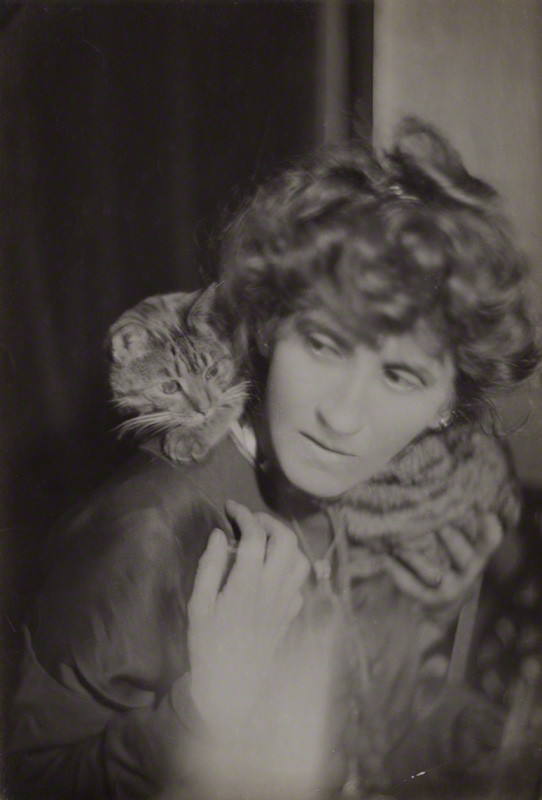
The author around the time she wrote "Tales of the Uneasy"

The author around the time she wrote “Tales of the Uneasy”

Every year at Halloween, I dig up a “moldy oldy,” a generally forgotten book of supernatural fiction to read. This year, for a change, I tackled a pair of short stories collections: Tales of the Uneasy (1911) and More Tales of the Uneasy (1925) by Violet Hunt. My verdict: stick to the first volume, if you must, but there are better supernatural short stories out there.

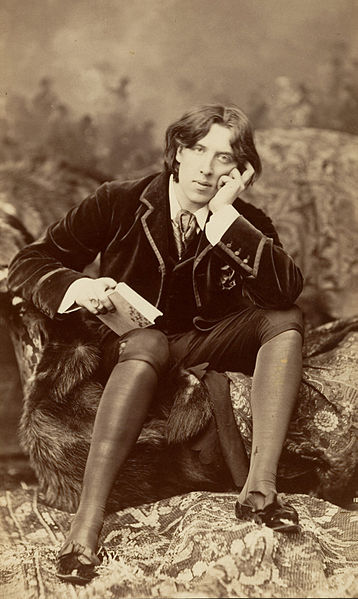
Isobel Violet Hunt (1862-1942) is one of those people who is best remembered for whom she knew, not what she did. She knew the Pre-Raphaelites as a child, and wrote a biography of Dante Gabriel Rossetti’s wife Lizzie Siddal in which she maligned Rossetti. When she grew up, she received a marriage proposal from Oscar Wilde(!) and was the mistress of Somerset Maugham, H. G. Wells and Ford Madox Ford, though not all at the same time. The “Preface” to More Tales of the Uneasy engages in so much name-dropping of famous authors of the day that one might think Hunt was anticipating her future reputation.

If this guy had proposed to me, I'd be pretty uneasy, too

If this guy had proposed to me, I’d be pretty uneasy, too

I stumbled across Hunt’s “The Prayer” in an anthology of ghost stories written by women. It’s the ghastly story of a man who is brought back from the dead by his wife’s prayer. But this is no zombie story of the Haitian or Romero variety. The husband is quite normal, in most respects. And yet, as you read the story, he will definitely make you uneasy, just as he does all the other characters in the story.

Because “The Prayer” was collected in Tales of the Uneasy, I presumed it was a collection of supernatural stories. I was wrong. Hunt’s main interest is in psychological or social unease. True, the majority of the stories contain a supernatural element, but it is always coupled with some other troubling phenomenon. Many of the stories revolve around people being cruel in socially acceptable ways: women mistreat the men in their lives, mothers neglect their children, even the dead are none too careful about the living. And in many cases, they are either haunted or punished by supernatural means.

So far, I can appreciate Hunt. This is the way the supernatural should be used seriously, to illuminate human feelings and situations. Yet her stories aren’t very memorable. Every time I go back to the book, I have to leaf through the pages to remember what most of the stories are about. Though “The Tiger-Skin” is possibly the grimmest story about eugenics I’ve ever read that didn’t involve mass murder, and worth a look.
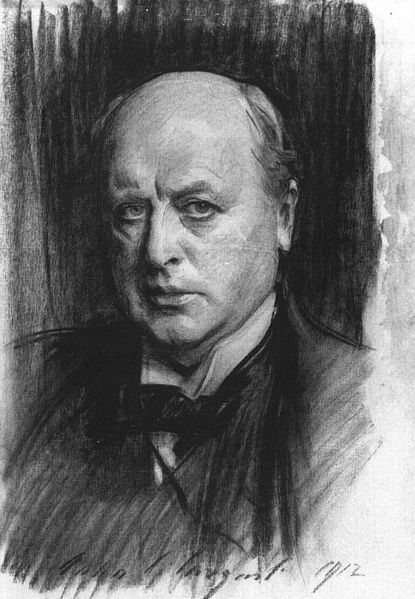
In her preface to "More Tales of the Uneasy," Hunt gives credit for the title to Henry James

In her preface to “More Tales of the Uneasy,” Hunt gives credit for the title to Henry James

By the time she got to More Tales of the Uneasy, I suspect Violet Hunt had run out of steam. The supernatural element has receded to a minor role in two of the four stories, while social tensions are cranked up. In fact, it is only Hunt’s ability to show us people who make us feel uncomfortable that saves two of the stories from being just hack work. The most effective tale, “The Cigarette Case of the Commander” contains no supernatural element at all. Two murky situations that arose out of a wartime party during which morals were not at their best become the tools four people use for their own purposes when they meet at the same house a few years after the war. You don’t want to be any of these people, and yet they are all perfectly respectable.

After reading that anthology of women’s ghost stories, I was inspired to read other collections of short stories by Gertrude Atherton and Vernon Lee as well. Of the three, I’d place Lee’s collection first, Atherton’s second, and, sad to say because I do love “The Prayer,” Hunt’s last.

Posted in Reading fiction, Reviews | Tagged , , , , , , , | 3 Comments

Prophecies and Penalties Chapter 40

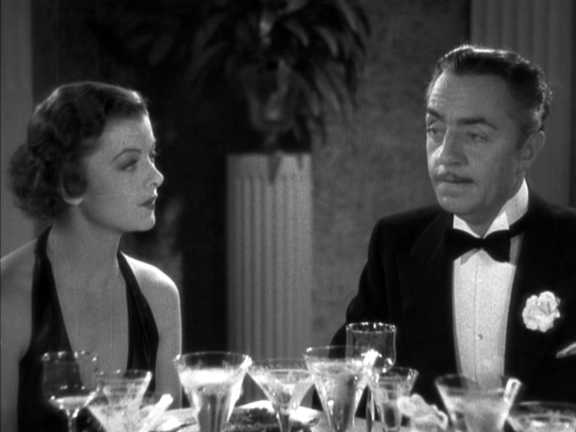
It was all over but the healing. So Emily Fisher thought once Stephen Nash’s murderers were identified and killed. Nick and Nora Charles could have told her otherwise:

“What do you think will happen to Mimi and Dorothy and Gilbert now?”

Nick and Nora at their favorite activity: drinking

Nick and Nora at their favorite activity: drinking

“Nothing new. They’ll go on being Mimi and Dorothy and Gilbert . . . Murder doesn’t round out anybody’s life except the murdered’s and sometimes the murderer’s.”

“That may be,” Nora said, “but it’s all pretty unsatisfactory.”

— Dashiell Hammett, The Thin Man (1934)

As Emily Fisher finds out in chapter 40 of Prophecies and Penalties, “Things are not what I expected.” The fall-out from the Nash murder investigation continues, and Emily is finding it all “pretty unsatisfactory.”

Posted in Prophecies and Penalties, Writing fiction | Tagged , , , , , | 9 Comments