Chapter 4 of Prophecies and Penalties, and charismatic Instruments

Ethan Knowles may be married to Emily’s former babysitter, but he’s got a history, a history that makes Emily not sure she can trust him. Still, for the moment, he’s the best source she has for what’s going on with the Children of the New Revelation. And as it turns out, he’s not the creepiest thing Emily’s going to encounter. Read all about it in chapter four of Prophecies and Penalties, “Who’s the killer?”

Weber is considered one of the founders of Sociology

Max Weber (picture taken 1894)

As I’ve mentioned once before, the sociologist Max Weber (1864 – 1920) is best known for his distinction between charismatic and bureaucratic forms of authority. Charismatic figures lead by inspiration; bureaucratic authority is governed by rules. Many movements begin with a charismatic leader. When that leader dies, the followers either disperse and the movement ends, they find a new charismatic leader (a rare event), or they try to encode the leader’s views into rules and devise a procedure for selecting successors. The successors rule not by their own charisma, but rather because they were selected by the rules, are officially considered to have charisma (even when they don’t), and enforce the rules. The best known example to most of my readers is probably Jesus of Nazareth, who wrote nothing down himself, and the Roman Catholic Church, the largest and most enduring collection of rules for both conduct and selecting Jesus’ successors as leaders of the movement.

Yet the possibility always exists that new charismatic figures will emerge in a society governed by bureaucratic authority. Say a new prophet arises who claims God speaks to them. For the bureaucratic leadership, this creates a crisis: unless the new prophet’s teachings can be brought into line with the existing rules, the prophet will become a new source of authority who can claim to be superior to the existing leadership. This is how many religious movements have developed schisms: the followers of the new prophet break away from those who reject him or her and adhere to the old rules.

Amana on a Sunday in the early 20th century

Amana on a Sunday in the early 20th century

Some religious groups have institutionalized the role of charismatic leaders who speak with God. Among them was the Amana Society, a group of German Pietists who migrated to Iowa starting in 1854, and founded a religious community there in which all property was held in common. They believed that there were people who were directly inspired by God, people they called Werkzeuge, or, as they were called in English, Instruments. Since they also believed that people might falsely claim to be inspired, or might be inspired by the devil, they devised rules to identify and manage true Instruments. That included rules to discipline them, even punish them, if they got out of line. And they devised a thirteen member Great Council of the Brethren to provide the bureaucratic authority to run the community on a day-by-day basis. While the Instruments had the final word, they were not expected to comment on most matters. This scheme worked well enough for the Amana Society, at least until their last nineteenth-century Instrument died in 1883.

It should be obvious that I’ve swiped some ideas from the Amana Society for my Children of the New Revelation. But don’t let that fool you into thinking the two are the same, or even very similar. The Children run by different rules. And as we’ll see, the issue of authority among them has become confusing with the appearance of the Prophesied One.

Amana is ready for tourists

Amana is ready for tourists

Amana still endures as a community today, but not in the same form. The attractions of the outside world, and the lack of guidance from any Instrument after the last nineteenth-century one died in 1883, led to dissatisfaction among members and a dissolution of the communal organization in 1932. Much of their business was set up as the for-profit Amana Corporation, well-known for their refrigerators and air conditioners. But that company was sold to private investors in 1950, and is now part of the Whirlpool Corporation. And the town has become a tourist attraction, trading on its unique past. Yet there are still those of the faith who live and worship in the seven Amana villages.

Posted in History, Prophecies and Penalties, Writing fiction | Tagged , , , , , , , | 9 Comments

Review: Leigh Eric Schmidt, Heaven’s Bride

Seeing that today, March 3, is the anniversary of the passing of the Comstock Act in 1873, I thought it appropriate to review a book about one of the victims of the Comstock Act, Ida C. Craddock (1857-1902).

First, a word of explanation. In the aftermath of the Second Great Awakening and the Civil War, American sexual mores became truly Victorian: people did everything, but you couldn’t talk or write about sex at all. Some people, such as Anthony Comstock (1844 – 1915) set themselves up as moral censors of sexual matters in American society. Comstock was the founder of the New York Society for Suppression of Vice. Seeking a larger role, he managed to get Congress to pass a law making it illegal to send anything “obscene” through the mail, and got himself appointed a Federal postal agent, giving him the authority to pursue and destroy “obscene” material nationwide, so long as someone, somewhere, had tried to send it through the mails. Now Comstock’s definition of “obscene” was very broad. Anything with sexual content was liable to meet his disapproval, even medical texts and sexual advice to married couples. And he made a particular point of suppressing any and all forms of birth control.

IdaCraddock

Ida Craddock was a woman of her times who would appear bizarrely out of place in our own, partly because she was a very unusual person, partly because she embodied a combination of values that did come together for some people circa 1900, but seem oddly out of joint now. Ida was a spiritualist and a sex reformer who was probably celibate, apart from having orgasmic sex with a ghost. And although she was a sex reformer, she thought sex should be confined to heterosexual intercourse in marriage. No oral sex, no non-intercourse stimulation of the clitoris, and certainly no homosexuality.

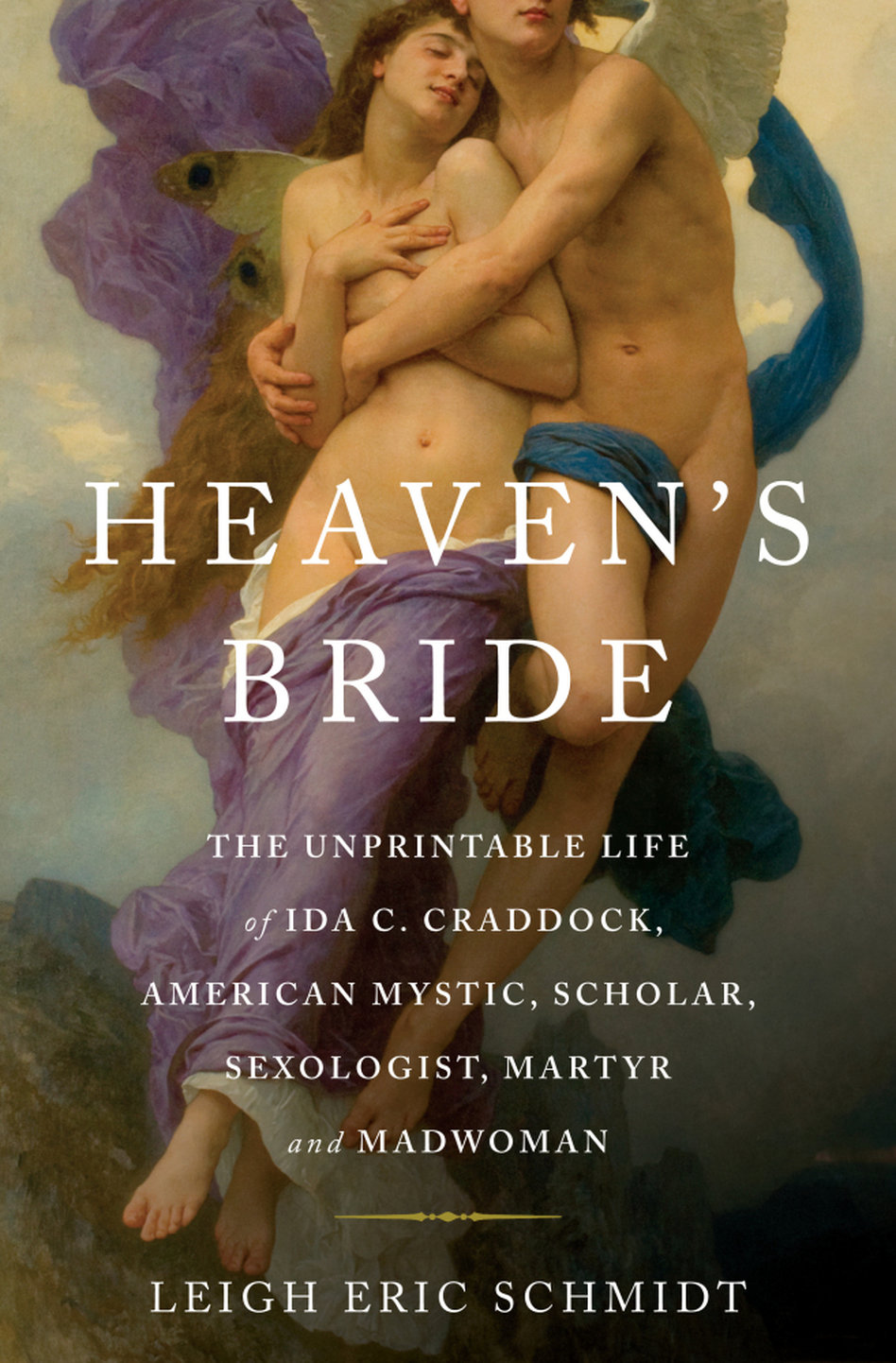
heavens-bride

Schmidt’s problem in presenting Craddock’s life in his book, Heaven’s Bride: The Unprintable Life of Ida C. Craddock, American Mystic, Scholar, Sexologist, Martyr, and Madwoman (2010) is similar to Stewart Kansa’s in presenting Marjorie Cameron’s life, which I discussed some time ago. There isn’t much historical evidence about significant parts of Ida’s life, partly because much of her published work was destroyed thanks to Comstock and his supporters, and many of her private papers were destroyed by her mother after her death. Schmidt being a historian, his way of addressing this problem is to try to place Ida Craddock in the context of her times, explaining how her attitudes reflected developments in her time and culture. It’s a superior approach, because it puts Craddock in context. But in the process, Schmidt tends to exaggerate Craddock’s importance. Despite how often she was “ahead of her time,” it’s placing undue importance on her to suggest that how our treatment of sexual issues has changed depended greatly on her. She failed repeatedly in challenging Comstock, and the court cases and changing attitudes that finally altereded our views of obscenity would happen decades later. Craddock is definitely a woman out of her time.

And yet she’s part of her time. Like many nineteenth-century reformers, she wanted to find a way to combine carnal sex with spiritual love. For her, the answer was a heterosexual marriage of two partners who both physically and spiritually stimulated each other. Holy sex! Her big splash was to defend belly-dancing as exhibited at the Chicago World’s Fair of 1893, the Columbian Exposition. She then began an active practice as a sex therapist, whether through direct counseling, publications, or through religious services(!). Twice she had to flee to England to avoid having her mother toss her into an insane asylum, which actually happened once. And confronted with a lengthy prison sentence after violating the Comstock Act, Craddock chose to commit suicide instead.

To explain Craddock’s significance as a forerunner of more liberated sexual attitudes, while still putting her in the context of her times, Schmidt treats each major theme in her writings and life separately. It’s not a bad strategy, but because most of what we know about all these aspects of her life come mostly from the last decade of her life, the reader is apt to become confused by the chronology. I can’t fault Schmidt too heavily for this — he was constrained by the evidence that has survived.

Despite what Schmidt says, I would regard Craddock as a marginal figure. I think the greatest value of this book is demonstrating cultural change: showing how attitudes that would seem impossible to combine today could be reasonably combined a century ago. Unfortunately, the people who should be learning this lesson are the least likely to read this book. The book’s other audience will be those who want to know more about spiritual eccentrics and forerunners of sexually liberated attitudes. For them, it will be an amusing read.

Posted in History, Reviews | Tagged , , , , , , , , , , , | 5 Comments

Chapter 3 of Prophecies and Penalties is up

Emily Fisher can relax about one point: she now knows who Bonnie Knowles is. But why did Bonnie marry Ethan Knowles, center of one of the biggest scandals in Quasopon’s recent history? And just what did he do? The answers are in chapter 3, “Love and fighting among family,” of Prophecies and Penalties, my serial story about Emily’s return to her home town to investigate a murder. A new chapter is posted every Friday. And if you haven’t been following the story and want to start at the beginning, you can start here.

Posted in Prophecies and Penalties, Writing fiction | Tagged , , , | Leave a comment

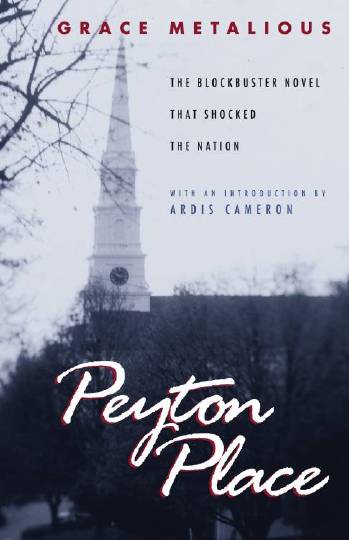
50 years dead: Grace Metalious and Peyton Place

After being out of print for several years, the novel came out in a new edition in 1999

After being out of print for several years, the novel came out in a new edition in 1999

It was fifty years ago today that the unhappy Grace Metalious (born Marie Grace DeRepentigny, 1924 – 1964), author of that scandalous best seller, Peyton Place, succeeded in drinking herself to death. In her lifetime, Peyton Place was banned from libraries and bookstores (and the whole of Canada!), while spawning movies and the first nighttime soap opera on American TV. These days, it’s taught in academic courses as an early feminist work, which is usually a reliable indicator that something is dead in popular culture.

It’s a pity. The reputation of  Peyton Place was built on its frank treatment of sexuality, particularly female sexuality. In the view of some scholars, the book helped precipitate the sexual revolution of the 1960s. But that same sexual revolution destroyed Peyton Place, through the proliferation of blockbuster novels that contained much more sexuality than Peyton Place. Sit down to read the novel today, and you will be surprised at how tame it now appears in its depiction of sexuality, and wonder what all the fuss was about. Were people really that reticent about sex? Or was there another agenda here?

The answer to both of those questions is “yes.” What Metalious did was much worse than writing about sex in 1956. She wrote about sex in many forms, legal and illegal, as a normal part of the lives of people in a New England mill town, a town divided by class and ethnic divisions, in which people preached what were supposed to be American values while living by other values. And she portrayed the people with an almost sociological detachment. Whether good or bad or morally indifferent, Metalious showed us how social forces shaped people’s behavior, and how people justified their behavior to themselves. Few characters are wholly good or bad in Peyton Place; Metalious forced us to understand the quite human reasons why people often behave badly. She told us we weren’t living up to the rosy picture of the American dream, not through a political diatribe, but by showing us normal people failing to live up to our values. Sex was only part of the problem. It was the easiest part to criticize, and, hey, who doesn’t like thinking about sex? But the controversy over the sexual content let people off the hook, so they didn’t have to confront the rest of the book.

Naturally, when Hollywood got hold of the book, they toned down both its social criticism and its sexuality. They turned Peyton Place into soap opera romance, pretty people searching for romance, love, and sex, pretty much in that order, with the occasional murder or car accident thrown in to keep things lively. The 1957 movie revived Lana Turner’s career, while the 1964-69 series launched Mia Farrow’s career. That’s what the video adaptations did for pretty people. The cost was the suppression of the uglier side of Peyton Place. Selena’s abortion was turned into a miscarriage for the 1957 movie, while the entire shanty town and its people were simply dropped from the 1964-69 television series. Metalious had torn apart the image of a New England village as a nice, quaint community; Hollywood restored the image.

The "Pandora in Blue Jeans" photo taken by Larry Smith

The “Pandora in Blue Jeans” photo taken by Larry Smith

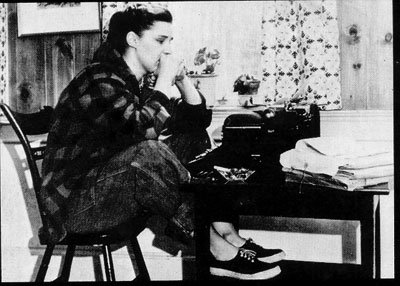
Grace Metalious had an image problem, too. She was unconventional, a bad housekeeper who dressed casually, if not carelessly, and whose behavior was a bit too unconstrained, yet she was also shy and self-doubting. The publisher packaged an image of her as “Pandora in Blue Jeans” as part of the publicity campaign for Peyton Place, and Grace was stuck living up to, or down to, that image ever afterwards. It was one of the problems that set her on her path to alcoholism.

Metalious didn’t live to see the TV series gut her story, and her estate never earned a dime from its unprecedented success as the United States’ first nighttime soap opera. By 1964, her marriage had broken up, she had taken up and broken up with a series of lovers, her agent had cheated her, and she had signed away the TV rights almost as an afterthought. She had lived high and spent every cent she’d made on her books. And she’d taken to drinking in a major way to cope with the stress, the betrayals, and the hostility from those who hated Peyton Place. The doctor who attended her death bed in a hospital figured Grace must have been drinking a fifth of whiskey every day at the end.

In its era, everyone knew about Peyton Place, and it endured for years in popular culture as the hypocritical scandal-plagued small town par excellence, even figuring in the 1969 hit song “Harper Valley PTA.” But the TV series was cancelled, sexier blockbusters came along, and the novel gradually drifted out of print. It might be completely forgotten today, had not feminist scholars rediscovered it in the 1990s. A new edition of the novel came out in 1999, a biography of Metalious followed in 2000. Both are still in print.

Is it worth going back to read Peyton Place? I think so. In fact, I’m rereading it now. I’ve long been a fan of Stephen King’s depiction of a small New England town in Salem’s Lot. But Metalious’s depiction is deeper, richer, and much more morally complicated. She set the standard. Before it became a catch-all term to describe book-length fiction, the term “novel” applied only to such stories that tried to be realistic depictions of human life. Peyton Place is a novel in that older sense, strongly so, and hence worth reading.

Posted in History, Reviews | Tagged , , , , | 5 Comments

Chapter Two of Prophecies and Penalties, and Charlie on the MTA

So Emily Fisher is going back to her home town, which she doesn’t want to do, to investigate a murder, something she doesn’t know how to do. Misery may love company, but Emily doesn’t have any on her flight to Boston. And there’s a surprise waiting for her in Logan Airport, which is going to make matters even more confusing. Read all about it in chapter two of Prophecies and Penalties, “Flying home.”

When she thinks about Logan Airport, Emily makes a reference to someone named Charlie escaping from the MTA, as if you’re supposed to know who’s she’s talking about. There’s a story behind Charlie. And it’s another humdinger.

The MTA was the Metropolitan Transit Authority, now called the MBTA, for Massachusetts Bay Transportation Authority. This government agency runs the elaborate system of buses, trolleys, subways, trains, and boats that serve the greater Boston area. And while the system is elaborate, in the 1940s the fare system was positively Byzantine. The fee schedule was said to run nine pages. There were not only fees to get on the system, there were fees to get off the system! They’d been instituted to increase fares without changing the entry turnstiles, and were mightily resented.

In 1949, there was a mayoral election in Boston. Walter A. O’Brien, the candidate of the left-wing Progressive Party, decided to make the fare increases, including the exit fees, one of his major campaign issues. Now O’Brien didn’t have much of a campaign budget. So he hired some local folk artists to compose his campaign songs. And one of them was a song about a guy named Charlie who boarded the subway, but hadn’t brought along enough change to pay the exit fee. So he couldn’t get off!

Well, despite the catchy song, O’Brien lost. In fact, he came in last place, with just over 1% of the vote. But the song lingered. And in 1959, the Kingston Trio, a famous folk group of the era, decided to record the song. Red-baiting had tainted the Progressive Party’s reputation, they were thought to be communists, or at least communist sympathizers, so the Kingston Trio changed O’Brien’s name. But otherwise they mostly left the song alone. And their version, which you can listen to here, became a hit song.

The Kingston Trio, with Mitt Romney at right

The Kingston Trio, with Mitt Romney at right

“He may ride forever / ‘neath the streets of Boston,” for Charlie’s song has been a favorite in Boston ever since. Indeed, when the MBTA switched to a card system in 2004, they called it the CharlieCard. And they held a special ceremony for this old leftie folk song, where the Kingston Trio sang it once again, accompanied by the state’s preeminent liberal of the day, Governor Mitt Romney.

For more information, the lyrics are on the MBTA’s web site, along with some history, and the photo of the Kingston Trio with Gov. Romney comes from their web site, specifically this page, which contains some other photos related to the song, as well.

CharlieCard_800

Posted in History, Prophecies and Penalties, Writing fiction | Tagged , , , , , , | 2 Comments

Review: Flowers, Galdrabok: Icelandic Book of Magic

A few years ago, I found out from Owen Davies’ Grimoires  that there was an English translation of an Icelandic grimoire. Having developed an interest in the Icelandic sagas and the curious magic in them, I meant to hunt the translation down to have a look, but never quite managed to do so. And then just last week I was hunting through the stacks at Harvard University’s library, and there it was!

Galdrabok cover

Stephen E. Flowers’ The Galdrabók: An Icelandic Book of Magic (second, revised edition, 2005) is a slim volume of about 100 pages, of which the actual grimoire, the Galdrabók, takes up only 17 pages. The rest is Flowers, offering background, footnotes, and related texts to help explain the contents and context of the grimoire. Sounds like a lot of explanation for so little text? You’ll need it. If anything, I find Flowers a bit too succinct in his “Historical Background” chapters, often leaving me with questions about the basis for some of his assertions.

If you’ve been following this blog, you might remember my review of Stephen A. Mitchell’s Witchcraft and Magic in the Nordic Middle Ages. Now the Galdrabók dates from just after the period Mitchell covers, since it was compiled sometime after 1550, but Mitchell has two pertinent observations. Magic has to be practical: it is meant to do things people want done, and must be grounded in a world-view that makes the magic possible. Second, what was originally a pagan magic system was increasingly influenced by Christianity, forming a syncretism that is less a coherent system and more an agglomeration of elements from both.

Both of these observations apply in full force to the Galdrabók. It is not a systematic exposition of magic. Instead, it is a collection of 47 spells that were assembled by four different compilers. They are practical spells: protecting one’s self against danger, detecting a thief, making a woman fall in love with you, and the like. (Yes, there is a spell to make your enemies fart. You just had to ask, didn’t you?) And the spells clearly include a mix of elements from pagan and Christian magical traditions.

There are two distinctive features of the Galdrabók in comparison to the more Christian magic in such grimoires as the various Keys of Solomon. There are runes, of course. And the magic seems to work directly through the agency of the operator, as opposed to the operator summoning entities (usually demons or angels) to effect the task.

Flowers makes both these points himself in his commentaries on the text. He also offers some general historical background on the development of religion and magic in Iceland, and explanations of the individual spells in the Galdrabók. Still, as I say, I found him a bit too succinct. It’s sometimes hard to tell whether Flowers is summing up a vast amount of information in brief, or offering a conclusion based on scanty evidence. Fortunately, the footnotes and bibliography suggest useful additional reading, though I must note that several works are in Icelandic (naturally) and other tongues.

Flowers himself is apparently a practicing occultist, and the praise for this work on amazon.com mostly comes from others interesting in practicing rune magic. But whether you’re interested in practicing magic, or, like me, more interested in its anthropological and historical aspects, I’d suggest this book is more of an entry point into understanding Icelandic and Germanic magic, rather than a volume to stand on its own.

Posted in Reviews | Tagged , , , , | 8 Comments

An old birthday and a new story

First, a new story kicks off today, Prophecies and Penalties. Meet data analyst Emily Fisher. She’s going home. Great? She doesn’t think so. She’s even less happy about the reason why. You can start with chapter one, “The Iron Lady.” And a new chapter will go up every Friday before noon, Boston time (GMT – 5).

The original, built for the Columbian Exposition, Chicago, 1893

The original, built for the Columbian Exposition, Chicago, 1893

Second, it’s the birthday of that cheerful fellow who predicted that we’d inevitably starve due to population growth, Robert Malthus (1766); the man with the wheel, George Washington Gale Ferris, Jr. (1859); union leader and landfill participant, Jimmy Hoffa (1913); sometime fake Amish woman Florence Henderson (1934), and your truly (19%*). Despite these legendary names, today is not an official holiday in Massachusetts, Tuvalu, or Svalbard, though in New Jersey the police celebrate the day by digging through yet another landfill without success.

Posted in Prophecies and Penalties, Writing fiction | Tagged , , , , , , | 5 Comments

Getting back on schedule

Sillyverse will go back on a regular schedule Friday, February 14, 2014, with a fiction post on that day, and another post on varied subjects on Monday or Tuesday. That means a new story starting on Valentine’s Day, which long-time readers of this blog know is a special day for me.

The Head ache, by George Cruickshank (1792 -1878)

The Head ache, by George Cruickshank (1792 -1878)

I’d meant to go back to a regular schedule at the beginning of the month, but life has intervened. I’ve had unexpected family obligations, and am trying to recover from a head cold that spawned repeated sinus headaches. So things have been a bit chaotic. Rather than botch a new story, I reluctantly decided to put off beginning one until I’d had more time to think and write.

There will be at least one post before then, as I’ve a book review, one of several, that I want to get up soon. And, no, I still haven’t settled on the next story. The needed skull work hasn’t been done because my skull’s been incapacitated.

Posted in Uncategorized | Tagged , , , | 3 Comments

The Governor’s Proclamation

It is the custom in the United States of America that state governors issue proclamations to note special days, weeks, or months, and the reason for their designation. Here is the draft of one such proclamation to be issued tomorrow.

Commonwealth of Massachusetts

A Proclamation

His Excellency Governor Deval L. Patrick

Whereas, it is a tradition among the peoples of the world to look for signs of the approaching spring, particularly after this darned polar vortex; and

Seriously, we're celebrating this varmint?

Seriously, we’re celebrating this varmint?

Whereas, the traditional way to do this is to observe the humble groundhog’s rising on the second day of February, to see if he sees his shadow; and

Whereas, we owe this observance to a pagan tradition that dates back decades to some money-grubbing Pennsylvanians looking for a lame tourist attraction; and

Whereas, the Commonwealth has its own groundhogs, who are perfectly capable of forecasting the coming of spring, insofar as a pesky rodent can do so.

Now, Therefore, I, Deval L. Patrick, Governor of the Commonwealth of Massachusetts, do hereby proclaim February 2, 2014, to be

Groundhog Day

And urge all the citizens of the Commonwealth to take cognizance of this event and participate fittingly in its observance (though reminding them that while it is not technically groundhog hunting season, we’ll look the other way, just this once).

Given at the Executive Chamber in Boston, this second day of February, in the year two thousand and fourteen, and of the Independence of the United States of America, the two hundred and thirty-seventh.

By His Excellency

Deval L. Patrick
Governor of the Commonwealth

William Francis Galvin
Secretary of the Commonwealth

God Save the Commonwealth of Massachusetts

Posted in Uncategorized | Tagged , , , , | 11 Comments

Conflict: reviewing a year of writing

Time for another review of writing techniques, based on the last year’s work. Let’s talk about conflict.

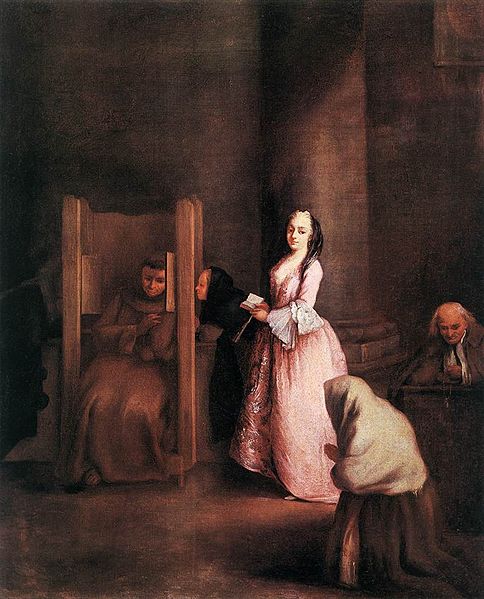
To a good Catholic such as Nora, the authority of a priest is overwhelming

To a good Catholic such as Nora, the authority of a priest is overwhelming

Lesson #1: Personal conflict works. Some of the better parts of Martha’s Children, notably Nora’s tense interview with her parish priest, are driven by personal conflicts, people who have personal relations to each other coming into conflict because of different values, agendas, or knowledge of different facts. And there’s no point to “Dead Cellphone” without the personal conflict between Kristen and Patty.

Lesson #2: So does psychological conflict. Sanderson has to cope with her own character, intellect, and uncertainty of her powers to deal with the soul eater in Nightfeather: Ghosts. And some of the more frightening passages in Martha’s Children deal with Martha’s psychological instability (such as her fugue after killing a sorcerer).

A magical or spiritual war can be dramatic, but not if it's off stage!

A magical or spiritual war can be dramatic, but not if it’s off stage!

Lesson #3: On the other hand, conflicts that occur mostly “off stage” are difficult to do well, and can cause the story to drag. Martha’s Children is the biggest offender here. I just went back to reread it the other day. The “sorcerers’ war” becomes the dominant plot in the latter part of the story, and the pace and tension both drop considerably because we don’t see Martha and Cross in direct conflict until the very end. That was due to a decision I made about how the narrative was constructed, as explained in the epilogue, a decision which in retrospect I recognize was a bad idea. We don’t see what Cross thinks, so the sorcerers’ war is invisible for the most part, as well as being based on false assumptions. It would have been a better story if we’d seen Cross’s attempts to track down the sorcerer behind Martha.

Lesson #4: The build-up for a conflict should be proportionate to its significance and the length of the story. This worked out well for Nightfeather: Ghosts, which, like The Dragon Lady of Stockbridge, is about an individual’s attempt to cope with the magical world around her. Sanderson, like Rebecca, drives the plot, and their conflicts are at its center from the beginning.

In contrast, once again Martha’s Children went astray, especially at the end. The resolution to the conflict in chapter 36 was a surprise to readers in the bad sense, a surprise because I didn’t devote enough time and energy to developing Ivy’s and Nora’s distaste for the methods of both Martha and Cross. Ideally, the reader should have been surprised, but thought that the resolution makes perfect sense in light of what the characters have said, done, and thought before. Instead, for several of you, it was a resolution that seemed to come out of nowhere.

This is not to say that the build-up always has to be extensive. “Dead Cellphone” is a short story, and meant to be a mystery, so the conflict between Kristen and Patty doesn’t need much explication: the two don’t get along, and Kristen’s situation is due to Patty.

Lesson #5: Magic works best in a story of conflict when it either sets up or exacerbates the conflict. None of the stories I’ve put on this blog would work at all without magic. But my stories work best when magic serves as part of the personal and psychological conflicts of the main characters. Ned has to learn how to be a vampire in Martha’s Children, Kristen suffers from Patty’s vengeance. In Nightfeather: Ghosts, Sanderson’s personal relationship with Doc Helen and Charlotte Smith are altered by the magic Sanderson uses.

I’m still figuring out next month’s story. But I hope thinking about what has and hasn’t worked in stories this past year will make me a better writer, and perhaps help you, the reader, as well, whether in reading my stories or writing your own.

Posted in Writing fiction | Tagged , , , , , , , | 11 Comments