The next story is a ghost story

There'll be scary ghost stories and tales of the glories of Christmases long long ago

“There’ll be scary ghost stories and tales of the glories of Christmases long long ago”

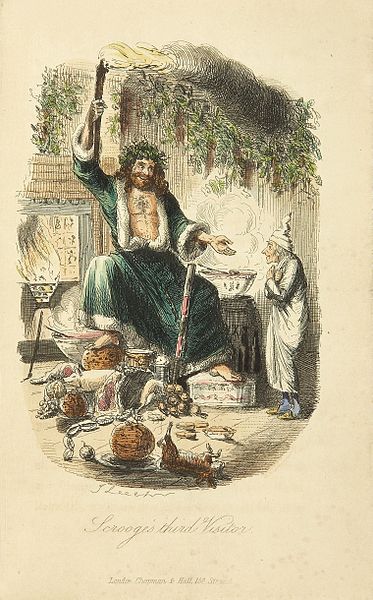
There once was a tradition that people would tell ghost stories around Christmas time, especially on Christmas Eve. Victorian authors adapted the tradition, writing ghost stories for the December issue or Christmas annual of whatever periodicals they wrote for. The most famous example is Charles Dickens’s A Christmas Carol, published in 1843. But not all Christmas ghost stories were about Christmas itself. For example, Mrs. Gaskell wrote a story, “The Old Nurse’s Tale,” for Dickens’s 1852 Christmas supplement , which has very little to do with the holiday other than its temporal setting, but instead is a story of guilt and ghostly retribution.

In the same spirit, this month of December, I’ll be telling a ghost story. It will begin December 1 and end on or before December 24. And more than that, I can’t tell you, save that a character you have met before will put in a surprising appearance.

And if you don’t recognize the quotation under the picture, this is the original: http://www.youtube.com/watch?v=73UqDX_quk0

Posted in Writing fiction | Tagged , , , | 15 Comments

Oregon vampires and elves

Suzy Beal, who occasionally comments here, sent me a clipping of a story that caused both of my eyebrows to go up in utter astonishment. Just read it. It explains the header for this post, quite ludicrously.

I had to laugh, because the next story (actually the original story in order of composition, but taking place after Martha’s Children) that features my vampire-sorceress Martha Fokker begins with her fleeing Portland, Oregon, where a vampire gang war is in progress.

Posted in History, Martha's Children | Tagged , , | 6 Comments

Review: Mitchell, Witchcraft and Magic in the Nordic Middle Ages

Book review

Book review

An acquaintance mentioned to me a talk on “Witchcraft and the Law in Medieval Scandinavia” by Prof. Stephen A. Mitchell of Harvard University that she had heard and enjoyed. So I looked up Prof. Mitchell’s 2011 book, which includes a chapter on that very topic, and made it my historical reading for the last several days. It’s heavy going, but offers a useful historical analysis of its subject.

First of all, let me tell you what this isn’t. It’s not a popular work loaded with anecdotes, or a systematic explanation of magic in medieval Scandinavia. This is a scholarly work, not afraid to discuss the finer points of language and interpretation (though most of that is confined to the end notes), and can be quite dry at times. It’s also not about the entire medieval period, but of the years between 1100 and 1500. Mitchell is trying to fill in a gap in our understanding between the numerous studies on the Viking Age before 1100 and the surge in witch trials after 1500. One of the reasons for the gap is the relative paucity of evidence for this period and the difficulties in trying to analyze it. So if you’re looking for a complete picture of how witches and magic operated in Scandinavia in this period, you are going to be disappointed.

What you do get is a study of a culture in transition, from the pagan world of the Vikings (not as well understood as we like to think) to the Christians who would hunt down and burn witches in early modern times. Mitchell’s fundamental principle is that beliefs about magic have to be useful: people engage in witchcraft or accuse others of witchcraft to achieve real ends, even if their methods will not succeed. If people are engaging in magic, they must have a world-view that supports the efficacy of their magic, and ends it will achieve which they value. If people accuse others of being witches, they must be relying on beliefs about witchcraft to achieve their own ends by prosecuting the witch, and whether they succeed will depend on how community leaders view witchcraft. Keep all this in mind, and Mitchell’s analysis is easier to follow.

At the most concrete level, Nordic magic involved charms and spells to influence the things those people most wanted: love, wealth, good weather, good fishing, good luck, and conversely bad luck, poverty, and impotence on their enemies. The medieval Scandinavians (which in this study includes the Northern Germanic peoples spread out from Greenland to Sweden) tended to lump poison in there among the malevolent things witches might do, presumably because in its actions it was as hidden or occult as magic. This form of magic with charms and spells originated in pagan times, and endured throughout the period Mitchell analyzes, gradually incorporating Christian content that sometimes supplanted and other times coexisted with pagan elements.

Apart from this folk tradition, there was also what might be called a literary tradition of powerful wizards and witches, who drew their power from the old gods and from the spells they cast. These were figures of legend, not reality, but they did influence what people thought about witches. As Christianity gained hold in Scandinavia, Christians began by showing the pagan wizards as being defeated by Christians who wield stronger magic, then gradually shifted the source of the pagan magicians’ power from old gods to demons posing as gods. Ultimately, this merged with the idea of the witch making a pact with the devil that bubbled up from the south. By 1500, wizards and witches were no longer just wielders of magic, they were disruptive agents of evil, in a wicked league with the devil.

Significantly, the Nordic understanding of witchcraft was usually gendered, though how so changed over time. There’s some evidence that the powerful mages from pagan times may have been mostly female. But the Church’s view of women’s nature being weak, lustful, and sinful gradually changed the gendered roles. Male witches increasingly were seen as serious disruptors of social order. In literature they often took on a martial role, while in actual court cases they were seen as serious threats to order and treated with severity. Female witches, on the other hand, gradually were seen as motivated by more personal concerns, such as love and sexuality. In literature, they increasingly tended to operate on a personal scale, and in actual legal cases were often dismissed with mild punishments if they agreed to desist.
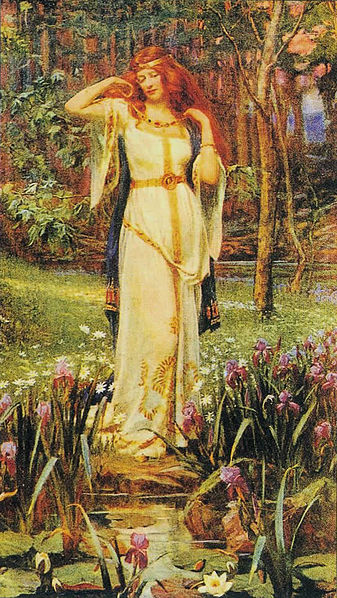
Freyja and the Necklace - J. Doyle Penrose (1913) Clearly there's more to Freyja than I learned in Edith Hamilton

Freyja and the Necklace – J. Doyle Penrose (1913)
Clearly there’s more to Freyja than I learned in Edith Hamilton

Mitchell has a great deal more to say, but that’s a short description of what you’ll find in Witchcraft and Magic in the Nordic Middle Ages. Naturally, I’ve simplified and generalized a lot. I’ve left out Mitchell’s discussion of the evidence, as well as such topics as the role of the goddess Freyja, the value of a woman’s reputation and the depiction of witches in medieval church art, among others. If you’re interested in a historian’s careful analysis of fragmentary evidence of what is generally viewed as a transitional period in thinking about magic and witchcraft, then find this book and read it.

Posted in History, Reviews | Tagged , , , , , , , , , | 8 Comments

A Halloween short story: Dead Cellphone

According to WordPress, I just hit 200 people following this blog on the 25th. So, between that and Halloween, it’s time to celebrate with an original horror story. And here’s the link to it: it is called “Dead Cellphone.”

“Dead Cellphone” isn’t connected to any other story on this blog. At least I don’t think so.

And that’s my three Halloween posts! I’ll be posting only irregularly in November. Probably back to a regular schedule of story chapter posting in December.

Posted in Writing fiction | Tagged , , , , | 5 Comments

Review: William Hope Hodgson, The Ghost Pirates (1909)

William Hope Hodgson

William Hope Hodgson

William Hope Hodgson (1877 – 1918) was a modestly successful English writer in his day, until he joined up in World War I and was killed on the battlefields of France. His reputation, never great, languished for several decades. In that respect, he resembles H. P. Lovecraft, who in fact praised Hodgson’s The House on the Borderland for its weird horror. Hodgson’s short stories of nautical horrors were occasionally anthologized, but that was about it. However, in the last few decades readers have been rediscovering more of Hodgson’s stories, such as those featuring the occult detective Thomas Carnacki. One sign of this improvement is that Night Shade Books has been putting out a splendidly bound edition of his collected fiction in several volumes.

For this year’s “moldy oldie” horror/supernatural story, I decided to tackle Hodgson’s The Ghost Pirates, published in 1909, the shortest and most accessible of his four published novels. The Ghost Pirates, according to the introduction in the third volume of the Night Shade Press edition, was a “solid” success when it was published. I’m happy to say that the novel holds up very well a century later.

So what’s it about? Dead guys with eye patches and cutlasses, a precursor to the Pirates of the Caribbean movies? No, no, no. Hodgson is more subtle than that. First, you should keep in mind that Hodgson wrote stories featuring natural and supernatural threats. You can’t initially be sure of what you’re dealing with in any given story. (That’s one of the virtues of the Carnacki stories: you don’t know if Carnacki is facing a ghost or an annoyed prankster.) And Hodgson spent the better part of a decade at sea, so he knows whereof he speaks. Indeed, one sometimes feels the need for a glossary of sailing terms when reading Hodgson.

Our protagonist is a sailor who comes aboard the Mortzestus, a ship with an unlucky reputation, while it’s in port in San Francisco. There is only one crewman aboard from the ship’s previous voyage, who has stuck with the ship because he wouldn’t be paid otherwise. This other crewman makes vague allusions to past troubles, without putting any sort of name to them.

As you might expect, the Mortzestus is only under sail for a few days when things start getting a bit odd. Our narrator is not an unintelligent man, and he tries to make sense out of what is happening. The problem is that the more sense he makes out of what he sees, the less sense his explanation makes! And soon the mysteries become deadly . . .

And that’s The Ghost Pirates in a nutshell: it’s a straightforward story of terror and horror that becomes increasingly mysterious. Straightforward and mysterious, now there are two terms I’d not thought I’d use to describe the same plot. It’s a good yarn. It won’t knock your socks off, but you’ll be happy you’re reading it on dry land.

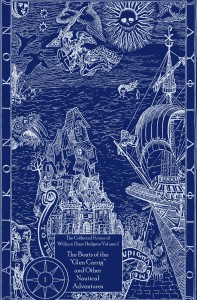
The covers for the Night Shade Press volumes are gorgeous

The covers for the Night Shade Press volumes are gorgeous

Hodgson wrote copiously in the years before the war, and he wasn’t above reusing and refashioning his stories in other forms. One of the advantages of reading The Ghost Pirates in the Night Shade Press edition is that it’s immediately followed by a short story, “The Silent Ship,” which is a reworking of the epilogue to The Ghost Pirates. It offers a different twist of horror to the original story, one which complements The Ghost Pirates quite well.

If you read The Ghost Pirates and like it, I’d suggest going on to Hodgson’s short stories of nautical horrors, such as “The Derelict” and “A Tropical Horror.” Or you might tackle the Carnacki stories; there’s nine of those, though some editions that call themselves “complete” only feature the six published in Hodgson’s lifetime. I have not read it yet, but I gather that The Boats of the “Glen Carrig” should also appeal to fans of The Ghost Pirates. If your tastes run more toward weird fiction like Lovecraft’s, or if you liked Olaf Stapledon’s Last and First Men, then, yes, The House on the Borderland is for you. I make no recommendation about Hodgson’s other novel, The Night Land, because I haven’t read it and because critical reactions are so divided, with some people greatly liking it, while others accuse it of being unreadable between being too long and overlain with too much sentimentality.

One more post for today, and then it’s time for Halloween candy!

Posted in Reading fiction, Reviews | Tagged , , , , , , , , | 9 Comments

The conclusion to Martha’s Children

The struggle between Martha Fokker and Edward Cross is over. But what does that mean for Ned O’Donnell’s vampire police? And what of Martha and Cross, for that matter? And who’s going to tell us all this, anyhow? Find out in the concluding chapter to Martha’s Children, “Epilogue: She does as she pleases.”

With that, the story of Martha’s Children is over. It’s the second and longer serialized story I’ve told here in the past year or so. I’ve got two other posts to put up today, it is Halloween after all and this is Sillyverse, but after that, I’ll be taking a break for November. I’ll still be making the occasional post, but won’t get back to anything regular until December.

Posted in Martha's Children, Writing fiction | Tagged , , , , , , | 5 Comments

No post today or tomorrow; three on Halloween

Sorry to make a post about not posting, but that’s what this is. I won’t be making my usual Monday or Tuesday post, because I’m working on three posts for Halloween. See you then!

Posted in Uncategorized | 4 Comments

Chapter 36 of Martha’s Children, and Halloween next

EVERYONE wants in on this battle!

EVERYONE wants in on this battle!

Finally Edward Cross and Martha Fokker are poised to engage in deadly combat. And holding the balance of power between them is the sorceress who calls herself Make Love Not War, who is Martha’s friend . . . but sitting at Edward’s side? What’s going on, Love? Find out, as Martha’s Children reaches its climax in chapter 36!

I ended up combining what I had originally thought would be two chapters into the chapter 36 you have before you. So there is only one chapter left. It will come out, not next Friday, but on next Thursday, Halloween. Call it my holiday treat. And one reader asked for it, too.

Posted in Martha's Children, Writing fiction | Tagged , , , , , | 5 Comments

The magic of Owen Davies

America Bewitched

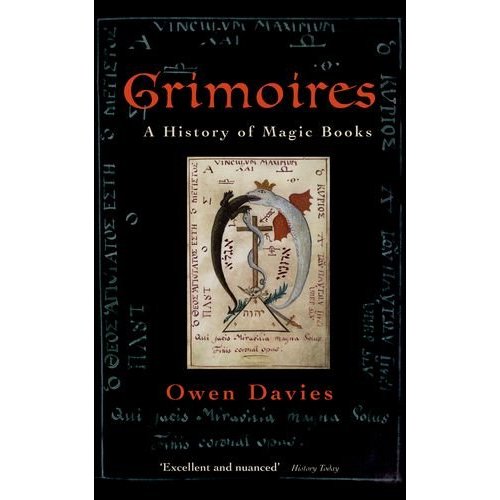
Owen Davies is a U.K.-based scholar who has been writing scholarly and popular books on magic and witchcraft for more than a decade now. I’d only learned about him by reading his Grimoires: A History of Magic Books (2009), which I liked very much. (I even borrowed some information from it as background for my story “The Troubles of the Farnsworths.”) So when I ran across his latest, America Bewitched: The Story of Witchcraft After Salem (Oxford University Press, 2013), I thought I’d fit it into my reading schedule.

If you thought witchcraft persecutions ended after 1692, then Davies’ book will be a shock. Oh, judicial witch killings ended back in colonial days, but people went on killing “witches” in this country well into the Twentieth Century. Davies develops a theory of the social and cultural framework for accusations of witchcraft and their resolutions in the centuries since Salem, offering copious examples in detail. Each chapter sketches out a different aspect: how witches were identified, who persecuted witches, how the law on witchcraft changed, and so on.

In both this book and Grimoires, Davies writes in a popular style. His storytelling ability is a great help in making these books accessible to the general reader (if I am any judge). And the “further readings” provide such readers with many entry points into the scholarship on magic and witchcraft.

Not that there isn’t material here for the scholar. America Bewitched does not confine itself to European-derived witchcraft concepts, but explains how European, African, and Native American beliefs all interacted in the development of witchcraft persecutions, a point well worth emphasizing. The book supports its theoretical analysis with many examples, all extensively referenced. However, the scholar trying to assemble a chronological development of witchcraft persecution is likely to be frustrated both by Davies’ approach and his presentation of the material. A chronological index of cases would have been helpful.

Since I mentioned it and recommend it, here's the earlier book

Since I mentioned it and recommend it, here’s the earlier book

Overall, while I enjoyed America Bewitched because of the strong case the book makes for the endurance of witchcraft and witchcraft persecution in America after 1692, I did not like it as well as I liked GrimoiresAmerica Bewitched feels like a much looser book, not as tightly organized or as well edited as Grimoires, as if Davies’ storytelling side got too much the upper hand. I doubt that will bother most readers! And I still intend to track down some of his other books to read.

Posted in History, Reviews | Tagged , , , , , , | 9 Comments

Chapter 35 of Martha’s Children, with the end in sight

Ned’s attempt to establish a vampire police bureau has gotten tangled up in a sorcerers’ war pitting Martha Fokker against Edward Cross. Martha is not known for the sweetness of her temper. She’s going to put an end to this war for good by killing Cross. Only Cross has a few tricks up his sleeve that Martha never anticipated! See the sorcerers finally meet in chapter 35 of Martha’s Children, my serial of cops, vampires, sorcerers, and stuffy parties.

And with chapter 35, Martha’s Children is only a few chapters from its end. As I did at the end of The Dragon Lady of Stockbridge, I expect I’ll take a month away from regular postings to this blog to recuperate and decide what should go next. After two stories of violence and confrontation, I’m thinking the next long story should be of a much different nature. There’s a good chance I’ll go back to the same universe as Dragon Lady, though it’s unlikely any of the same characters will figure in the story. (There are two Abigail Lane stories and one Amy Van Duesen story sitting around, partially completed. But none of them are anywhere near ready.) For that matter, the story that follows up the survivors of Martha’s Children forty years later is a considerably different story, too. We’ll see.

Posted in Martha's Children, Writing fiction | Tagged , , , , , | 4 Comments