Beyond fan fiction, a personal account

As I mentioned in my post a week ago, my story telling was inspired by the example of my father reading to us kids and telling us his stories. However, inspiration is not enough. One has to take the initiative, and start working out stories of one’s own.

I have had trouble falling asleep since as far back as I can remember. As a child, I slept in a bedroom that had a closet that contained other people’s clothes. So I rarely went into it, and its contents were unfamiliar to me. I would lie awake at night, and wonder just what might be lurking in the closet. Or maybe under the bed. It would take me forever to fall asleep.

I needed a way to distract myself. So, when I was in elementary school, I began thinking up stories as I lay there, trying to get to sleep.

I wasn’t original enough to make up my own stories from scratch. I needed something to get me started. So I did what millions of others have done. I engaged in dreaming up fan fiction, although I didn’t know that was what it was called. Give me a little credit for creativity, though. I didn’t just start with one source; I combined two. There was what I guess would be called a young adult novel by Lois Duncan entitled Ransom that had just come out about children on a school bus being kidnapped. (I was nine when I read it, hardly a young adult, but I read well above my age level in those days.) And there was a television series, The Green Hornet, which was similar to the Batman series of the same era, but much, much less campy, more straightforward. (Here’s a link to its opening credits, which gives you an idea of what it was about, and why it might inspire a nine-year-old. Don’t confuse this with the recent movie remake.) So I took the book and the TV series, recast myself as a Green Hornet clone, assigned the Kato role to the girl on whom I had a secret crush, and went out to foil the bad guys in Ransom. And imagining that story helped me to get to sleep.

Well, you can only tell yourself the same story so many times before it gets old and shopworn. I set out to solve other crimes, to right other wrongs. But I never got that far from being the Green Hornet. No, breaking away, becoming original, that took time. It also took yet another television series, the Dark Shadows gothic soap opera, for that step. The main protagonist in Dark Shadows was a vampire who was trying to do good, but compelled by his nature to do evil. It was a challenging concept for a subteen boy. That time around, I didn’t just borrow the stories and cast myself in the lead. I made up an entire universe. I was going to dream my dreams. In truth, my universe and characters were threadbare copies at first. They weren’t complete copies, though. I introduced differences. To start with, my lead character was not a vampire, even though he was a deeply conflicted individual who dealt with the supernatural. Over time, those differences built up. Eventually, they became my creations, with very little debt to the originals.

One of the engines for my original development of stories has been the age-old question, “How did it get that way?” I’d work out a story in my head, and once I had it worked out, I’d start wondering about what happened before. And there’s always something that happened before. Asking this question made me a historian by inclination long before I became a professionally-trained one. Trying to answer that question (and its counterpart, “What happened afterwards?”) meant I had to think about the motivations and social conditions that created any story I developed. For example, those of you reading my story The Dragon Lady of Stockbridge as I post it, know it is set in the year 1886, and that Abigail Lane is one of its principal characters. Abigail was created to help explain elements in another story I have written, a story set in the year 2000!

That story set in the year 2000 represented the last crucial step I took in the transition from fan fiction in my head to original stories on the written page: writing. It doesn’t matter how lively your imagination is, you can’t write a good story unless you actually write it down. (Homer and Oscar Wilde are exceptions, I admit. If you’re in their league, don’t read my advice; send me yours!) Writing it down does three things for you. First, it forces you to actually define your story, set it in metaphorical concrete, make you translate your musings into something that has to have logic and coherence. Second, you have to consider how to tell the story, and what mechanics and strategies of writing you will use. To mention the most obvious example, because it is being written as a serial, The Dragon Lady of Stockbridge has to have some sort of climax at the end of every chapter, and I have had to try what for me are new strategies to create those. Third, you have to actually think about your audience. What you write has to be good enough to read, by someone. If it isn’t, you have to either revise, begin over, or admit you don’t really want to write. If it is, you then need to figure out how to reach your audience.
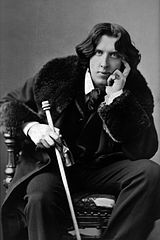
He’s an exception

The biggest day in my life as a writer was not creating that first story, back when I was a child. No, it was when I had the courage and desire to show my first written story to my girlfriend. That was the day I said I wanted to write something good enough for another reader, something good enough to be published. Writing in this blog has been another step. And if my protagonist, Rebecca Maxwell, carries a walking stick, just like the lead in Dark Shadows, I have the pleasure of knowing that it is only a resemblance, and that she and her story are entirely my creation, here for you to read.

Rebecca Farnsworth Maxwell’s walking stick – E.J. Barnes

Posted in Dragon Lady, Writing fiction | Tagged , , , , , , | 72 Comments

Lucky(?) chapter 13 of Dragon Lady is here, and my Scottish misadventure

After two weeks of suspense, “Different truths,” chapter 13 of The Dragon Lady of Stockbridge finally reveals what happened when the parson put a gun to Rebecca’s head. It’s a long chapter, by the way, about twice as long as usual, so plan your time accordingly. And if you haven’t started reading this tale told in weekly installments, you can start reading here.

Below is the third of the drawings of Rebecca’s dragon-headed walking stick, done by E. J. Barnes. (Keep in mind that these three drawings are the property of E. J. Barnes, and should not be reproduced without her permission; contact instructions are on her website here.)

Rebecca Farnsworth Maxwell’s walking stick by E. J. Barnes

I’ve added a smaller version of this drawing to decorate the Dragon Lady‘s table of contents.

Just as happens at the Double Eagle Hotel in this chapter, I’ve stayed at an inn where the more favored guests ate dinner at the main table, while less favored guests ate at a smaller table. It was in Scotland, in the Hebrides. I was on vacation, doing the “ancestor trip.” Many Americans feel this need to connect to their family’s history by going to visit the countries from which their ancestors had come. I was one of them. My mother had come from a town in Scotland called Milngavie, not far from Glasgow. But there was no way I was going to go visit just Milngavie, which is not a very remarkable town. I wanted to sample the historical and scenic highlights of the entire country, which is why I was staying for a few days at a bed and breakfast inn out in the Hebrides, the islands off the west coast of Scotland. The inn was an old Georgian house that had been renovated and expanded when the family made a great deal of money in the indigo trade in the Victorian era. Part of the renovations included adding a tower. Much to my initial delight, my room was in the tower. My delight was diminished when I saw that the room was barely large enough for the bed, and that the bathroom was down the stairs, down a hallway, down a step, and along another hallway. Still, it was a tower room, and between that and the view from the windows, I was content.

Apart from an American family that left the day after I arrived, the guests were British or Western European. It made for interesting conversation at the main dinner table. That the central ornament on the table was a stuffed ram’s head played a surprisingly small role in the conversation.

You can imagine my surprise and distress when the owner came to me the next day and told me that I had been banished to the smaller table. Naturally, I asked why. He replied, “The French couple could not understand a word you said.”

They couldn’t understand a word I said? Me? I’m a New Englander, but I don’t have much of an accent. There was a couple there from the Orkneys (the island group just north of mainland Scotland) whose accent was so thick even I had trouble making out what they said. And yet the French couple objected to me? I had to wonder if it was something I had said, as opposed to how I had said it, and my host was being polite. Or maybe my accent sounded too strange to people who expect to hear BBC-accented English. Or it might have been that I talk fairly quickly. In any case, I was banished to the small table for the rest of my stay.

My troubles were not over. I was sitting in the parlor, updating my travel journal and watching it rain outside. The owner was tidying up, when he discovered that one of the old chairs in the parlor had been broken. He asked me if I knew anything about it. I told him it had broken when the husband in the American family, who had just left, had sat in it last night. He grumbled that the man had not bothered to tell him, and that this was far too typical of American guests, that things tended to be damaged or go missing when American guests were around.

OK, I was now twice in the dog house. I somehow offended due to my speech, and I was an American who had just helped demonstrate just how inconsiderate Americans are. What else could go wrong?

Wouldn’t you know, my host found the one other topic that could cause a problem. No, not politics. History. Scottish history. Scottish clan history. He was curious as to just what I was doing in Scotland, as I didn’t fit the usual categories of Americans he got. (Apart from thieves and vandals, that is.) So he asked me what brought me there.

My heart sank, and I tried to give as general an answer as possible. “Some of my family came from Scotland.”

“Oh, what was their family name?” he asked.

I thought I might pretend to a coughing fit that would end in my apparent death, but decided that would lead to too many complications. Time for courage! “Oh, Campbell.”

Now my host was a MacDonald, and the MacDonalds and the Campbells have a famous feud that goes back centuries. The MacDonalds once controlled the Hebrides and the adjacent coastal lands on mainland Scotland. Then these upstart Campbells, who were such Johnny-come-latelies that they didn’t even have a legendary ancestor, pushed the MacDonalds and several other clans aside in bloody conflicts, seizing many of their lands and making the Campbells a leading power in Scotland. And some Scotsmen remember these things.

My host was one of them. He looked at me and said, “You know what my mother told me?”

I did not, but thought that saying so was not going to win his favor. In fact, I had the uncomfortable feeling that I was about to find out, willy-nilly.

Taking my silence for acquiescence, he continued, “Never trust a Campbell. The name means ‘liar’ in Gaelic.”

Well, that’s a somewhat prejudiced translation, but, yeah, there’s something to it. I was tempted to reply that the MacDonalds had their name because otherwise they wouldn’t know who their father was, but thought better of it.

We continued in uneasy silence thereafter. He had run out of ways to condemn me, short of asking about my religion, and was perhaps afraid that I’d turn out to be a Free Presbyterian who thought him dreadfully slack. I did not feel like provoking him further as he picked up around the place, lest he take up the fireplace poker and do me in.

Finally, he was finished and asked me if I wanted any refreshments. I allowed as I was not hungry, but some Scotch whiskey would be a delightful afternoon treat. He ran through the list of what they had. I picked the Lagavulin, a whiskey made in the Hebrides. At my choice, his face lit up. I had chosen well. He complimented me on my good taste in Scotch, and I never got anything but a smile from the owner thereafter. Except, of course, he did get me the Scotch!

Posted in Dragon Lady, Writing fiction | Tagged , , , , , , , , , , , | 2 Comments

“Teller of Tales”

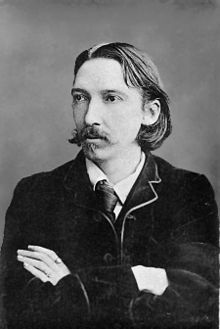
Robert Louis Stevenson

Robert Louis Stevenson

No, this isn’t about Robert Louis Stevenson, though he does play a part. Stevenson, for those of you who don’t know, was the author of Treasure Island. He spent his last years before he died in 1894 on an island in Samoa, where he earned the name “Tusitala,” or “Teller of Tales.”

Stevenson does not have a high critical reputation. He is often seen as a teller of boys’ adventure stories. Bah! The man knew how to spin a yarn that people enjoy and come back to, over and over again. And if you read between the lines, even Treasure Island, “boy’s book” though it is, contains serious lessons on social status and wealth, honesty and treachery, and the bounds of civilized behavior. It does not do to undervalue Stevenson, nor the role of “teller of tales.”

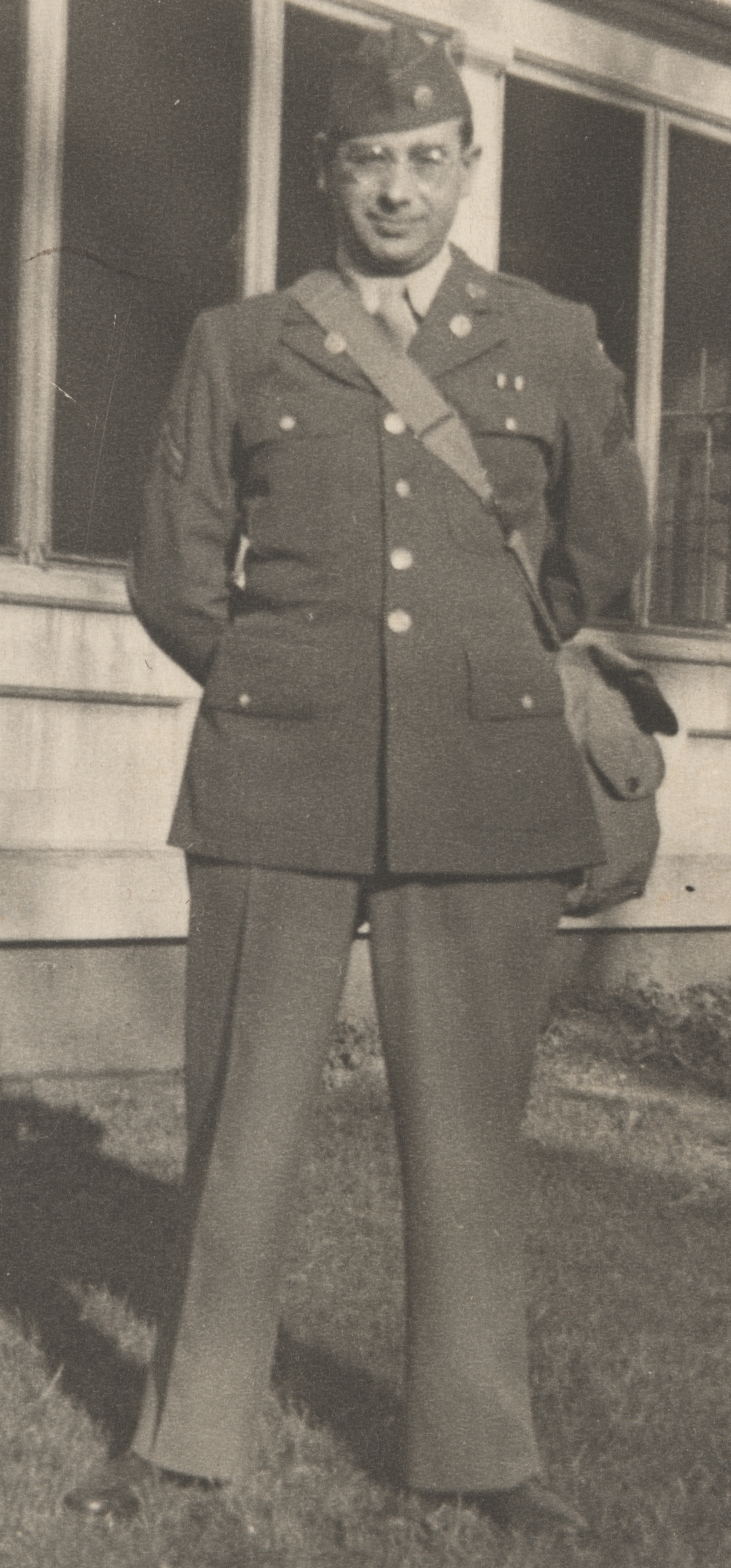
Rudolph Varnum Bixby

Rudolph Varnum Bixby

Stories begin someplace. For me, stories begin with my father. This is him, in one of the roles for which he would have liked to be remembered, a soldier in the Second World War.

Stories begin with my father because he read us stories. He would read us children stories at night, before bedtime. They were stories of faraway places and strange things. They were not the elaborate fictions suited for adults, but the simpler fictions that a child could comprehend. They made our world, a depressingly ordinary suburban small town in New England, a bigger world, a world of wonders. It was an inspiration. If I read about Merlin in Mary Stewart’s The Crystal Cave when I was ten, and imagined Merlin appearing before me on the shores of Lake Winnisquam, it was thanks to my father. If I wanted to see the world, it was thanks to my father.

What was more extraordinary was that my father could make even our dull home town seem interesting. We’re talking about a town that didn’t even have a red-yellow-green traffic signal in it, it was that dull. But my father made it interesting. He was well-read on local history, having grown up in the town, and could talk about the conflict between the Indians and colonists as if it had happened to him. It helped that we were related to many of the colonists and their descendants who figured in his stories. And what a collection they were! There was Lovell and Paugus’s son, hunting each other with deadly intentions. There was the Revolutionary War veteran Job Shattuck using his sword to fight off the minions of a tyrannical governor who had tracked him through the new-fallen snow. We could go and stand on the very common where the fight had taken place.

But those were only the stories he learned from others. He had stories of his own! There was the Irish grandmother, Bridget Lee, whose immigrant sisters walked barefoot through the winter from Montreal to Boston. There was Captain Palmer, the old Civil War veteran, a hero who had sacrificed so much for his country, whom my father had known personally. And there was the story of the cow that got caught in the railroad tracks. Forgive me, I cannot tell that story here and do it justice. I would need my father’s narrative skills and gestures to turn it into a living story. It just doesn’t work in print. It was THE favorite story of my siblings and me when we were kids. We often went by the very railroad tracks, and could imagine the cow caught there, the train coming down from Townsend Harbor, and my father’s Uncle Charles desperately trying to free the cow.

What my father did for my sister, my brother, and me was to make us interested in stories. Despite having radically different educations and different tastes, we are all readers. I have no doubt that we could all be writers, too. We know what a story is. We had that burned into our souls as children.

If, on this blog, I manage to tell at least one story that entertains people, then much of the credit belongs to my father. For us, he was the real “teller of tales.” It’s a title and an honor. Maybe someday I’ll deserve it myself.

Posted in History, Writing fiction | Tagged , , , , , , | 6 Comments

Chapter 12 of Dragon Lady and another look at the walking stick

This week’s installment of The Dragon Lady of Stockbridge, chapter 12, “Abigail’s frustrations,” is now up. As if someone pointing a gun at your head isn’t bad enough, things are looking bleaker still for Rebecca and Abigail! And yes, despite the American holiday, a new chapter will go up next week on Friday.

Those of you who have stopped by the blog probably noticed that I’ve changed my header to incorporate one of the drawings E. J. Barnes did of Rebecca’s fearsome walking stick. I’ve also changed the blog’s icon to incorporate her ink drawing of the walking stick. The original  drawing is reproduced below. (Note that it is the property of E. J. Barnes, and should not be reproduced without her permission, which may be sought here.)

Rebecca Farnsworth Maxwell’s walking stick – E.J. Barnes
Where did Rebecca get such an unusual piece? Well, it was originally her Uncle Israel’s. (I should note that the title “uncle” was not literally true, since he was actually her first cousin twice removed, as his father and Rebecca’s great-grandfather were brothers. Got that? But Israel was old enough that “Uncle” seemed the appropriate title for Rebecca to use in addressing him.) How Israel Farnsworth came into possession of the walking stick is described in a letter that Secretary of the Treasury George S. Boutwell wrote to his politically precocious daughter Georgianna, which you can read here.

George Sewell Boutwell (1818-1905) is one of those political figures who was a household name in his day, but has since faded into obscurity. Many of his achievements, such as being the youngest elected Governor of Massachusetts and being the first Commissioner of the Internal Revenue Service, would interest few people today. On the other hand, his support of civil rights, including his role in the development of the Fourteenth and Fifteenth Amendments to the United States Constitution, and his commitment to education from his years as the Secretary to the Massachusetts Board of Education to his role as a founder of his home town’s public library, both should earn him at least a passing nod of respect.

Posted in Dragon Lady, History, Writing fiction | Tagged , , , , , , | Leave a comment

My own tale of crime (sort of) from the Berkshires

As readers of this blog know, my ongoing story, The Dragon Lady of Stockbridge, is set in the Berkshires of Massachusetts. I’ve traveled all over the region myself, indeed have visited every town in the region. I’ve stood at the mouth of the Hoosac Tunnel in the summertime and felt the cool breeze rushing out of it. I’ve gone down to Mount Washington (the town, not the mountain, and they are nowhere near each other) and walked a half dozen miles of the Appalachian Trail looking over the Housatonic Valley. I’ve had to brake for a line of turkeys crossing the road in Tyringham.

And once I was under suspicion of having engaged in criminal activities.

It happened in Monterey, Massachusetts. Monterey, which acquired its name from a battle in the Mexican War, was and is a small town. There were about 800 people living in it when I came calling. Downtown is not very big. On the south side of the highway, running west to east, are the post office, the general store, and the library. Attached to the library on its east side is an annex, another room, used by the town’s historical society. Here’s a picture of the library. It is the scene of my not-quite crime.

Monterey (Mass.) Library

I was exploring the history and demographics of the region, so the library seemed a natural stop. There was no parking lot there, so I pulled into the one by the general store. It was a nice sunny day. Suspecting nothing, I strolled over to the library, pulled open the screen door, and walked inside.

There was nobody there.

Well, small towns can be trusting, but a library without a librarian was just not believable. I looked around a bit, didn’t see anyone, but did see various books and computers that would have been worth stealing. Wondering at the negligence, I went outside to walk around the building to see if I could find someone.

That’s when I discovered the annex for the historical society. I was there for history, so I figured I might step in and take a look. I walked up the stairs, put my thumb on the latch, and pressed down.

The door opened. And an alarm went off. A burglar alarm.

Here I was, a total stranger in town, and I had just set off a burglar alarm, with no one to witness that I was innocent on any crime. Not good. So I decided to play it safe, and go back into the library, and await people coming to answer the alarm.

I closed the annex door, walked over to the library, reached for its screen door, and pulled it open. And another burglar alarm went off.

Now I started to get worried. I hadn’t done anything, but I had set off two burglar alarms. I needed to contact the authorities. It was a small town, and I didn’t see a police station handy, so I walked over to the post office, figuring they could help me by telling me how to reach the librarian. They couldn’t tell me anything. So I doubled back and tried the general store. There was one woman in it, working the cash register. Getting desperate to explain this to someone with a local reputation, I announced, “I’ve accidentally set off the burglar alarm in the library. Can you tell me who I should contact about this?”

Before the woman could answer, a man stepped in from the the side door facing the library. He said to me, “Is that what that noise is? Well, the library should be opening at about 3, so you can talk to the librarian then.”

I was thinking to myself, this is an awfully casual attitude. And then I looked at my watch. It was 2:45. But the library doesn’t open until 3? Then why was it open?

Completely confused, I thanked the man, and headed out the front door and back to the library. What else could I do? As I cleared the end of the general store, an elderly woman emerged from the library, looking quite worried. At last, I thought, someone! I hailed her. “Are you the librarian?”

She kept coming toward me. “Yes.”

“Well, I’m the person who set off the alarms,” I told her.

We went back into the library, she turned the alarms off, and I explained who I was, why I was in town, and what happened. As I was explaining, I realized how absurd the whole story sounded. And the librarian’s face was getting longer and longer. She clearly didn’t believe me, but was at a loss to explain what had happened. Finally, I left my name and phone number and took off.

Two weeks later, I went back. I made sure to arrive in Monterey after 3 o’clock. No way was I going to run into a mysteriously open library and be suspected of who knows what again. Pulled into the same parking lot, walked up to the library, very cautiously opened the screen door, and walked inside.

The librarian was finishing with a customer. I waited until she was done, and greeted her by saying, “Anyone else set off any alarms?” Tactful me.

She laughed. “We finally figured out what happened,” she told me. On that day, her son had come over to mow the library’s lawn. He had opened up the building to air it out so it would not be stifling hot when his mother arrived. However, the town’s fire whistle went off. The son was a volunteer, and had to abandon the library and go fight the fire. That explained why the library was open but vacant when I showed up.

The alarms were a more complicated story. The historical society met in that annex once a month. At their previous meeting, the last person out had armed the burglar alarm, but failed to lock the door! In the two weeks or so since the last meeting, no one had happened by to try to open that door. It was left for me to do so, and set off the alarm.

Now the son had turned off the library’s alarm system when he opened the building, which explained why it did not sound when I first went in. However, it was not just that the annex and the library were connected; their alarm systems were connected. My triggering the annex’s alarm turned the library’s system back on. And so, when I tried to return to the library, I set off that alarm the moment I touched the screen door.

I was glad to get that all straightened out, and know I didn’t face an arrest warrant if I ever set foot again in Monterey. I’ve actually passed through the town several times since then. But I’ve never stopped, and I have definitely not tried to visit the library again. I have this horrible feeling that they’ll have upgraded the burglar alarm system on account of me, and that it will trap me inside . . . until someone bothers to investigate and find out what that noise is that is coming from the library!

Posted in History | Tagged , , , , , | 10 Comments

Part II of Dragon Lady, and THAT walking stick

Part 2 of The Dragon Lady of Stockbridge opens with Chapter 11, “Civic leaders welcome Rebecca home.” And so they do. But what sort of welcome do you give a witch who’s the sister of the one of the most admired men in town?

Those of you who have been reading Dragon Lady know Rebecca Maxwell carries a formidable walking stick with a dragon head. This week I have a treat for you all. This is what that walking stick looks like:

Rebecca Farnsworth Maxwell’s walking stick

I commissioned artist E. J. Barnes to draw the walking stick, based on the description of it in Dragon Lady and her study of Japanese dragon imagery. This is one of three pictures of the walking stick she produced. You can see why Rebecca’s servants in Stockbridge were leery of the thing. I’ll put up the other two pictures in subsequent posts, and ask people which one they like best. By the way, these pictures of the walking stick belong to E. J. Barnes, and you shouldn’t copy them without her permission.

I’m proud of the job E. J. did, so I’m going to toot her horn. She describes herself as an artist and illustrator, as you can see on her website here, and also as a cartoonist, as you can see at the website for Drowned Town Press here. Those of you into history and magic might want to take a look at Me & Doctor Dee: A Jape, a lighthearted minicomic about the famous 16th century magician John Dee and his troublesome assistant Ned Kelley. E. J. even blogs, at “Shunpike.”

I’ve changed the header of the blog to feature the above illustration. There’s an ink drawing, which I’ll display in a later post, that is becoming the icon identifying this blog across WordPress.

Posted in Dragon Lady, Writing fiction | Tagged , , , , , , , | Leave a comment

Review: Crawford’s “The Witch of Prague” (1890)

F. Marion Crawford’s current literary fame rests primarily on Wandering Ghosts, a 1911 posthumous collection of short stories of the supernatural. Crawford (1854-1909) attempted a long supernatural story once, The Witch of Prague. I just finished reading it. My advice? If it’s supernatural thrills you want, stick to Wandering GhostsThe Witch of Prague is a Victorian cat fight, which is a lot less exciting than it sounds.

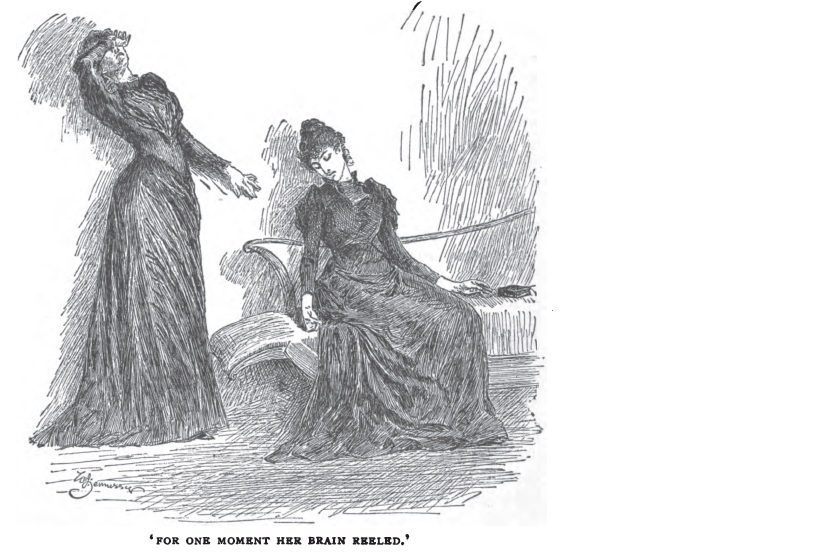
Your brain will reel, too, as I explain what’s going on here. No, this is not a picture of a woman with a migraine standing besides an opium addict. The woman on the left is Unorna, the Witch of Prague. Her name means “woman of February,” which in Prague is the cruelest month. She is called that because she comes from nowhere and has no kin, as is proper for a witch. She is in love with a man called “the Wanderer.” The woman on the right is Beatrice, because we’re into significant names here (think Dante), and she loves the Wanderer, and he loves her. Unorna knows where the Wanderer is. Beatrice does not. You know this isn’t going anywhere good, now, don’t you?

Beatrice looks drugged out because Unorna has put her into a deep hypnotic trance. That’s Unorna’s power, by the way. She can do it to anyone, even to wild animals. That’s why she’s a witch. Unorna’s brain is reeling because, in her infinite evil, she has decided to make Beatrice commit an unforgivable crime, and then die with that sin on her soul, doomed to Eternal Damnation. What is this unpardonable sin, before which even the hardened heart of Unorna quails? Why, to take the consecrated wafer from where it is kept in the nunnery’s chapel, and defile it by casting it on the floor. Crawford, in a footnote, assures us that someone has actually done this, so we should not think him mad for suggesting such a horrible deed in the novel.

That situation sums up everything that is good about The Witch of Prague, and everything that is bad, and sadly the latter outweighs the former. Crawford pushes hypnotism to the limit by openly raising the question of whether it is a natural or supernatural power. He has a masterful woman (always a threatening figure to Victorians), a mad scientist, a mysterious wanderer, and a love story. These are great ingredients. Above all, the novel offers a complex depiction of what love can be, and what it can make people do. Unfortunately, he had not yet learned the conciseness of his short stories, and rambles on at great length. He uses coincidence too freely. His entirely conventional morality forces him to make Beatrice a stick figure and her love appears colorless against the fiery passion of Unorna’s. This undercuts his analysis of love, robbing it of much of its interest. And with that lost, this novel becomes little more than a prolix morality play.

Sad to say, there is one other problem with The Witch of Prague I have to mention. Crawford traveled widely, but he absorbed the racial and ethnic prejudices of his time. The Czechs, or Bohemians as he calls them, are lightly stereotyped, but the Jews get battered. Indeed, Crawford puts a Jew into a major role in the story apparently for no better purpose than to tell an antisemitic story, which he assures us in another footnote is also based on history.

The edition I read was published in 1892 and featured many illustrations by W[illiam] J[ohn] Hennessy (1839-1917). I had never heard of Hennessy before. He was an Irish painter whose wood engravings illustrated many important literary works of his day. I’ve done web searches for his works, and am impressed by his paintings, and even some of his engravings. His work for The Witch of Prague is not up to his best, in my judgment. In particular, he never makes the two women look as beautiful as they are said to be. Maybe that’s just the difference between the aesthetics of the 1890s and today, but I don’t think so.

To conclude, The Witch of Prague is an unsatisfactory story, told at great length. One of Hennessy’s other engravings is entitled “You shall suffer, indeed.” Truer words were never spoken.

Posted in Reviews, Uncategorized | Tagged , , , , | 7 Comments

As Dragon Lady chapter 10 goes up

With “The men in their lives,” the tenth chapter in The Dragon Lady of Stockbridge, part 1 comes to an end. Rebecca has faced several challenges in Stockbridge. But will she find it more difficult to deal with a werewolf, or with her estranged husband? And what news from her boss awaits Abigail?

The end of part 1 is the end of Rebecca’s stay in Stockbridge. But it is not the end of Rebecca’s days in the Berkshires, by no means. Where is she going? Read chapter 10 and find out, and then come back next week for a new chapter!

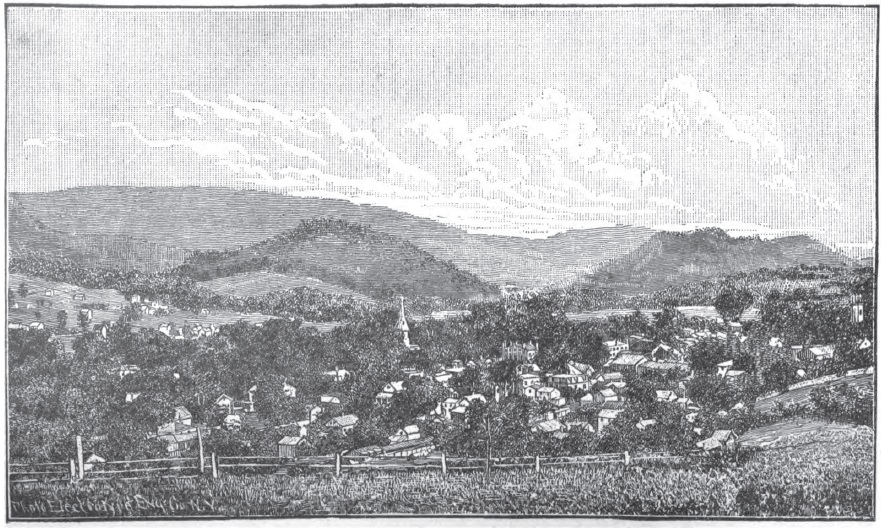
A Berkshire town in the 1880s

Posted in Dragon Lady, Writing fiction | Tagged , , , , | Leave a comment

A story for Halloween: “On Huckman Causeway”

To celebrate the spooky traditions of Halloween, I’ve written a short story, “On Huckman Causeway.” You might call it a ghost story. Then again, maybe not. Anyhow, you can link to it here.

The story has nothing to do with The Dragon Lady of Stockbridge: A Tale of Magic in the Gilded Age, the longer story I’m publishing as weekly updates. By the way, neither the storm Sandy nor this tale have upset Dragon Lady‘s schedule. There will be a new chapter Friday as scheduled.

Happy Halloween!

Posted in Writing fiction | Tagged , , , , | Leave a comment

The 2nd annual Halloween read

This year, I’m going to continue a tradition I started last year of digging up a “moldy oldy,” a supernatural horror story by a writer who was once famous, but who has vanished into obscurity. This year’s story will be The Witch of Prague by F. Marion Crawford.

Last year, I had just reread Wilhelm Meinhold’s The Amber Witch (which I mentioned in a previous post on supernatural fiction), and decided for Halloween to follow up with his Sidonia the Sorceress, upon which Edward Burne-Jones based a striking painting. Alas, just as Bram Stoker went back to the well once to often, hoping to reproduce the success of Dracula, Meinhold decided to do The Amber Witch, which was a fictional history, one better with Sidonia, which was a fictional treatment of the real history of the strange end of the Pomeranian ducal House of Griffins. Fascinating history, but Meinhold didn’t manage to explain how Sidonia’s motives and methods led to the Griffins dying as they did. I doubt anyone could, the whole scheme being too fantastic.

This year, I was rereading three horror stories that all had towers in them. One was F. Marion Crawford’s “For the Blood is the Life,” an interesting variation on vampires. I read through the rest of Crawford’s supernatural short stories, which have been collected as Wandering Ghosts. The introduction to my edition of this collection mentioned that Crawford had written only one horror novel, The Witch of Prague. So I decided it had to be  my Halloween read this year. How could I turn down a second obscure novel about a witch in a row?

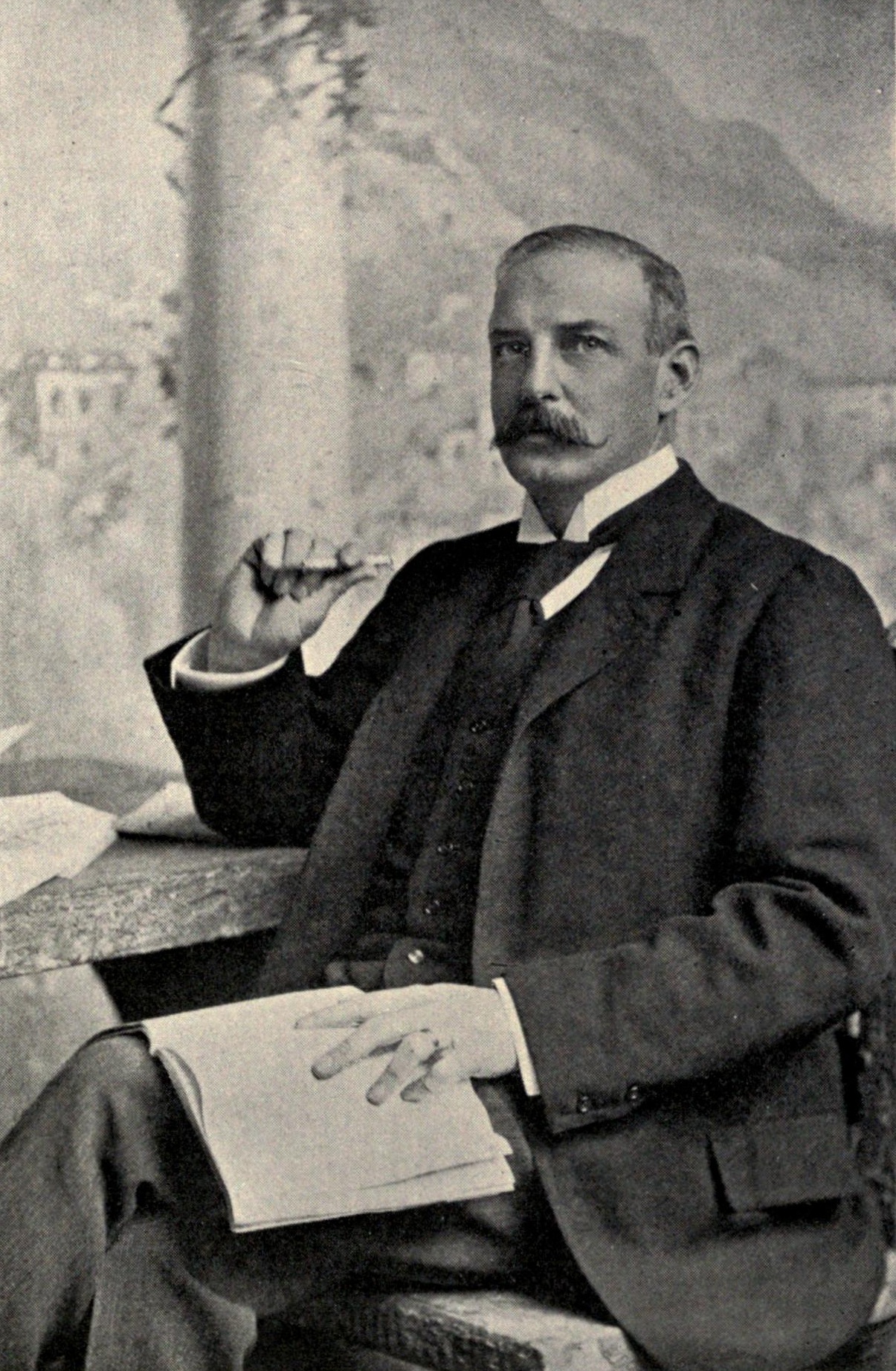
I don’t know that much about Francis Marion Crawford (1854 – 1909), but what I have learned makes him sound like an interesting fellow. He was born in Italy to American parents, and would eventually return there as an adult to settle with his wife and children. He got his start as a writer when he failed to make it as a professional singer, and his uncle suggested that he write down some of his adventures from India instead. He was a bit of a recluse, and would sometimes retire from his villa to an isolated coastal tower to write undisturbed. Isn’t that something every aspiring writer would like to be able to do!

Francis Marion Crawford

In his own day, Crawford was best known for his many historical novels, particularly those set in Italy. These days, he is best known for the supernatural stories in Wandering Ghosts.

I’m tackling The Witch of Prague with some trepidation, because the only review specifically to mention it on Amazon.com suggests it is a cure for insomnia. Depending on how it goes, I may follow up with Crawford’s Khaled: A Tale of Arabia, which seems to be in the spirit of Vathek, and which Crawford himself is said to have liked best of his own novels. Anyhow, I’ll let you all know how my reading turns out.

Posted in Uncategorized | Tagged , , , | Leave a comment