Chapter twenty of Summer of the Netherfield Witch

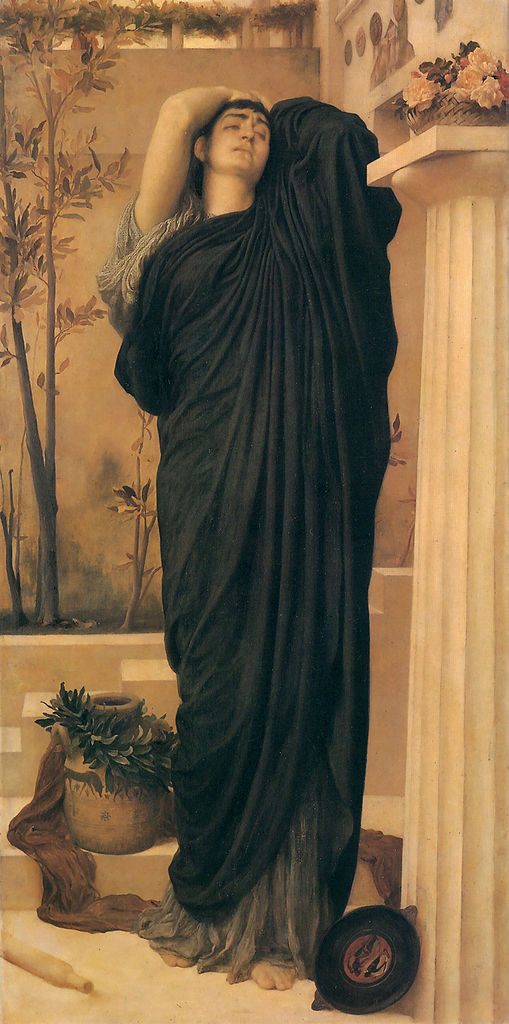
You'll figure out why I posted this image when you finish reading the chapter.

You’ll figure out why I posted this image when you finish reading the chapter.

You can’t go through life not trusting anybody, or you end up a psycho with guns. Or maybe carrying on a relationship with a dragon. They’re sort of the same.

Well, kinda.

OK, it sucks as a comparison. I guess “I hit rock bottom” and so does Jane in chapter 20 of Summer of the Netherfield Witch. At least Jane gets a burning dog out of it, while all I get is heartburn.

While looking for an illustration to go with this post, I did an image search for “burning dog.” I ran into a line of merchandise advising you not to pet one. Whereas when I typed in “burning cat,” the search engine asked if I wanted to change that to “burning cat alive.” Dog people and cat people really are different. And there are a lot of disturbed people out there.

Posted in Netherfield Witch, Writing fiction | Tagged , , , , , , , | 1 Comment

Trust me; I know what I’m doing! A retrospective on Sledge Hammer!

Sledge Hammer! is a mostly-forgotten TV comedy show from the 1980s with a cult following. It probably doesn’t deserve either to be forgotten or to be a cult show. I’m not sure what it deserves! But it’s an interesting look at the state of American culture and television programming of that era.

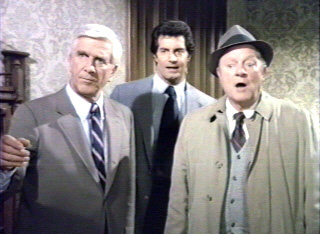
Sledge, flanked by Trunk and Doreau

Sledge, flanked by Trunk and Doreau

The series, which ran two seasons in 1986-88, focuses on an over-the-top violent cop in the “Dirty Harry” mold. Inspector Sledge Hammer thinks nothing of physically roughing up a suspect, is ready to use a gun to solve any problem, and believes women are definitely inferiors. So of course in the first episode he’s teamed up with a female cop, one Lt. Dori Doreau, an expert on criminal terrorism, who has a fine kick but doesn’t share Sledge’s love of violence. And to round out the cast is Sledge’s boss, Capt. Trunk, a black officer who feels very frustrated because Hammer is too dangerous to keep around, but his performance is too good to get rid of him.

Episodes parody TV police procedurals while satirizing contemporary cultural phenomena. Movies are a common target, from Witness to Play It Again, Sam to Robocop (satirized as “Hammeroid”). Elvis impersonators, TV game shows, and the plot device of blows to the head causing character changes all get skewered as well during the show’s run. Even the show’s introductory credits satirize gun culture.

Lt. Doreau functions as the audience’s surrogate, trying to prevent Hammer from being too violent or misogynistic while at the same time quietly admiring him and making excuses for him. As might be expected, Doreau is an attractive blonde, which does not spare her from Hammer’s criticism, save when she acts “just like a man.”

I do have to say that the lead actors, Anne-Marie Martin as Doreau, Harrison Page as Capt. Trunk, and above all David Rasche as Sledge Hammer, do throw themselves into their roles and they’re also all good at physical comedy. That said, this is very much Rasche’s show. Page’s Trunk is just a foil for Hammer, while Martin’s Doreau seems to become increasingly passive as the series progresses.

I enjoyed Sledge Hammer! when it originally ran, but upon reviewing it this past week found it less enjoyable than I recalled. Partly due to its emphasis on satirizing popular culture, it has become very dated. Many of its targets are long forgotten. Its misogyny, however satirical, is simply unacceptable today. (Its attitude toward gays is no better.) And, curiously, its violence feels nostalgic, more akin to police methods prior to the 1960s than those used by the militarized police of today.

Police Squad!'s leads. That's Leslie Nielsen on the left. Now you remember?

Police Squad!’s leads. That’s Leslie Nielsen on the left. Now you remember?

I suspect Sledge Hammer! has an unacknowledged debt to Police Squad!, the short-lived satirical series than lasted only six episodes but spawned the much more successful Naked Gun movie series. Among other things, Sledge’s bad parking behavior parallels Det. Frank Dreben’s from Police Squad! And like Police Squad!, Sledge Hammer’s jokes are very much a hit-or-miss affair. Sometimes whole episodes work well. The pilot, “Under the Gun,” was well-crafted, “Haven’t Gun, Will Travel” does a good job of sending up Sledge himself, while “Play It Again, Sledge” works as a satire of the film noir genre. But other episodes? “Dressed to Call” would have needed more of the sexuality of Dressed to Kill to actually work, while “Model Dearest” seems to be a rejected Charlie’s Angels script.

Police Squad! was lucky: it lasted only six episodes. Sledge Hammer! ran for 41. Bright ideas and sharp humor can take a series only so far. To last a long time, a series needs heart, it needs characters whose behavior helps drive the satire without being consumed by it. But Sledge Hammer! rarely gave its characters the opportunity to develop. Capt. Trunk got a failed marriage in “Over My Dead Bodyguard,” while Doreau played an entire episode against her usual character in “Desperately Seeking Dori.” That’s about it. The one attempt to delve into Sledge’s character in any depth, “Here’s To You, Mrs. Hammer,” is a cringe-worthy failure. What makes this all so sad is that Alan Spencer, who was the creator and an executive producer of the series, did a great job of building the characters in the pilot. He demonstrated how to integrate character and plot development. But he never again tried so hard and so well.

So is Sledge Hammer! worth watching in 2015? Watch it if you want to see three actors throwing themselves into comic roles, or if you want a view of American popular culture in the mid- to late 1980s. Don’t expect a masterpiece. But possibly the best evidence that the show still has something to show us is that you’ll probably be offended by some of the things you laugh at. After all, this is the series that ended its first season by blowing up San Francisco with a nuclear bomb.

(P.S. If you’re looking for the Peter Gabriel song, well, you’ve wasted your time. However, it’s worth noting that the song and video came out just before the TV show, and it’s said the network, ABC, used the song in its advertising for the series. So, with that thin connection, here’s a link to the award-winning video of that song.)

Posted in Reviews | Tagged , , , , , , , | 3 Comments

Chapter 19 of Summer of the Netherfield Witch

Jane is having some bitter feelings about "man's best friend."

Jane is having some bitter feelings about “man’s best friend.”

Deadly snakes, Satanic porn, and beer: Jane Harris leads a dangerous life. And that’s even before we consider the people in her life. Although some of them don’t exactly qualify as people. But what teenage girl worries about danger? All Jane wants is affection, a sign someone cares about her. So it’s a real trial for her to realize that she’s someone “That not even a dog could love” in chapter 19 of Summer of the Netherfield Witch.

Posted in Netherfield Witch, Writing fiction | Tagged , , , , , , , , | 2 Comments

Chapter 18 of Summer of the Netherfield Witch

Okay, so Jane Harris is not pregnant by a centaur. But her best friend Cindy is hanging out with a dragon. Miranda’s been propositioned by a dog. And the sexiest person Jane knows is sort of a fish. It’s just another day in Netherfield, and Jane has “A peculiar set of friends” in chapter 18 of Summer of the Netherfield Witch. A new chapter in this serialized sort goes up every Friday. If you’re just starting and want to read the whole story, you can jump to the first chapter, and the rest are hyperlinked together.

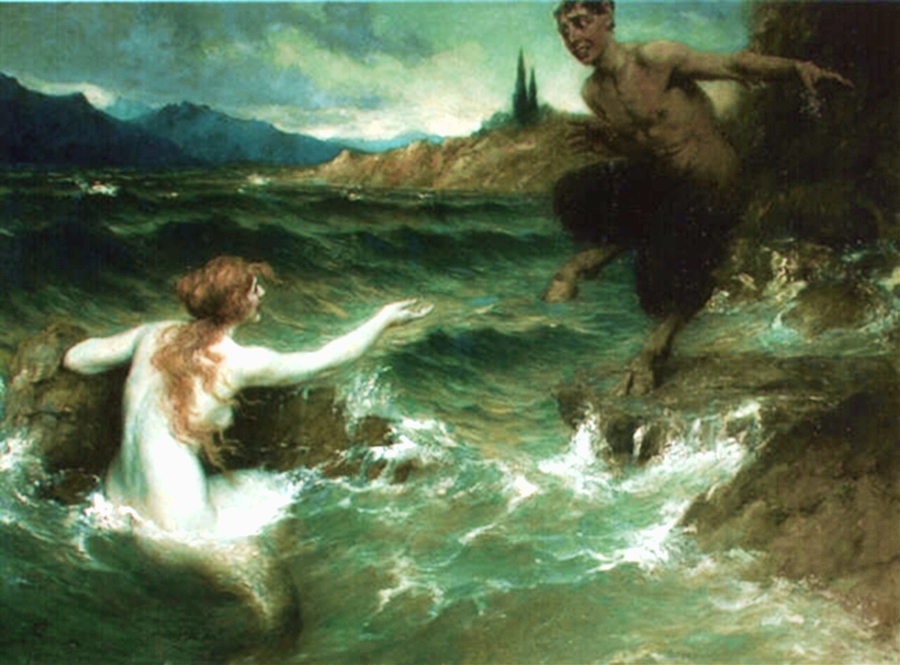
The way things are going in Netherfield, this could become a common sight. ("The Mermaid and the Satyr" by Ferdinand Leeke (1859-1923))

The way things are going in Netherfield, this could become a common sight.
(“The Mermaid and the Satyr” by Ferdinand Leeke (1859-1923))

Posted in Netherfield Witch, Writing fiction | Tagged , , , , , , , , | 2 Comments

Chapter 17 of Summer of the Netherfield Witch

A burning dog comes to your bedroom and tells you to bring money for a ferry ride. What do you do? If you’re like most of us, you check to see if you’ve been taking meds with strong side effects. But not Jane Harris. When you’ve already been poisoned by a mermaid and almost had your soul stolen by a shopping mall (a sad but common occurrence in the United States, said to affect 1 in 4 teenagers), a ferry ride begins to sound quaint and relaxing. But wait ’til she meets the ferryman! Jane is “Living in the realm of the dead” in chapter 17 of Summer of the Netherfield Witch.

The glamour of ferry travel. I've been on a chain-drawn ferry in Nova Scotia, but this example comes from 19th century Scotland.

The glamour of ferry travel.
I’ve been on a chain-drawn ferry in Nova Scotia, but this example comes from 19th century Scotland.

Posted in Netherfield Witch, Writing fiction | Tagged , , , , , | 2 Comments

Chapter 16 of Summer of the Netherfield Witch

Jane Harris’s best friend was just bitten by a dragon. Jane was almost killed by a shopping mall. And she’s traveling with a witch. Jane will let you know that there are some “Thing I don’t tell Mother” in chapter 16 of Summer of the Netherfield Witch. But anyone who’s been a kid knows that not telling your mother does not always solve your problems. And sometimes it puts you in the doghouse.

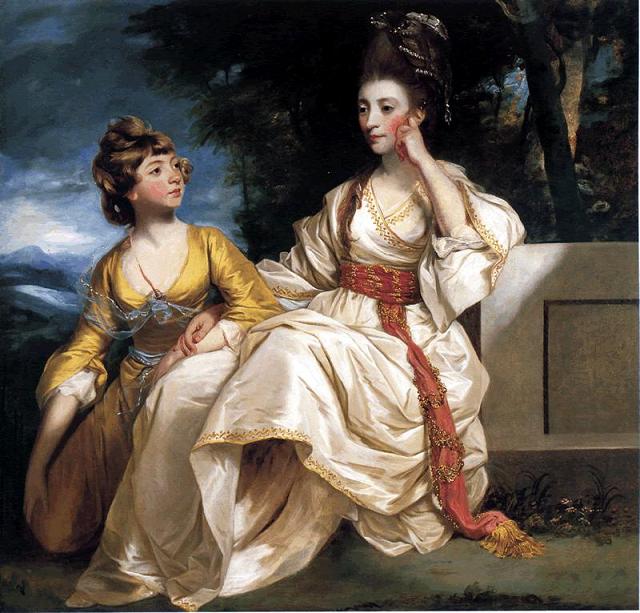
If Hester Thrale was my mother, I would tell her everything!

If Hester Thrale was my mother, I would tell her everything!

Posted in Netherfield Witch, Writing fiction | Tagged , , , , , , | Leave a comment

Chapter 15 of Summer of the Netherfield Witch, and a new Miranda Milan picture

Jane has barely survived a trip to the Mall of Lost Souls. And now she faces an “Attack of the copying machine?” in chapter 15 of Summer of the Netherfield Witch? Obviously that encounter with the monstrous mall security guard has left Jane a bit addled. Just how addled? Well, read the chapter to find out. It’s not just Jane. Things are getting weird.

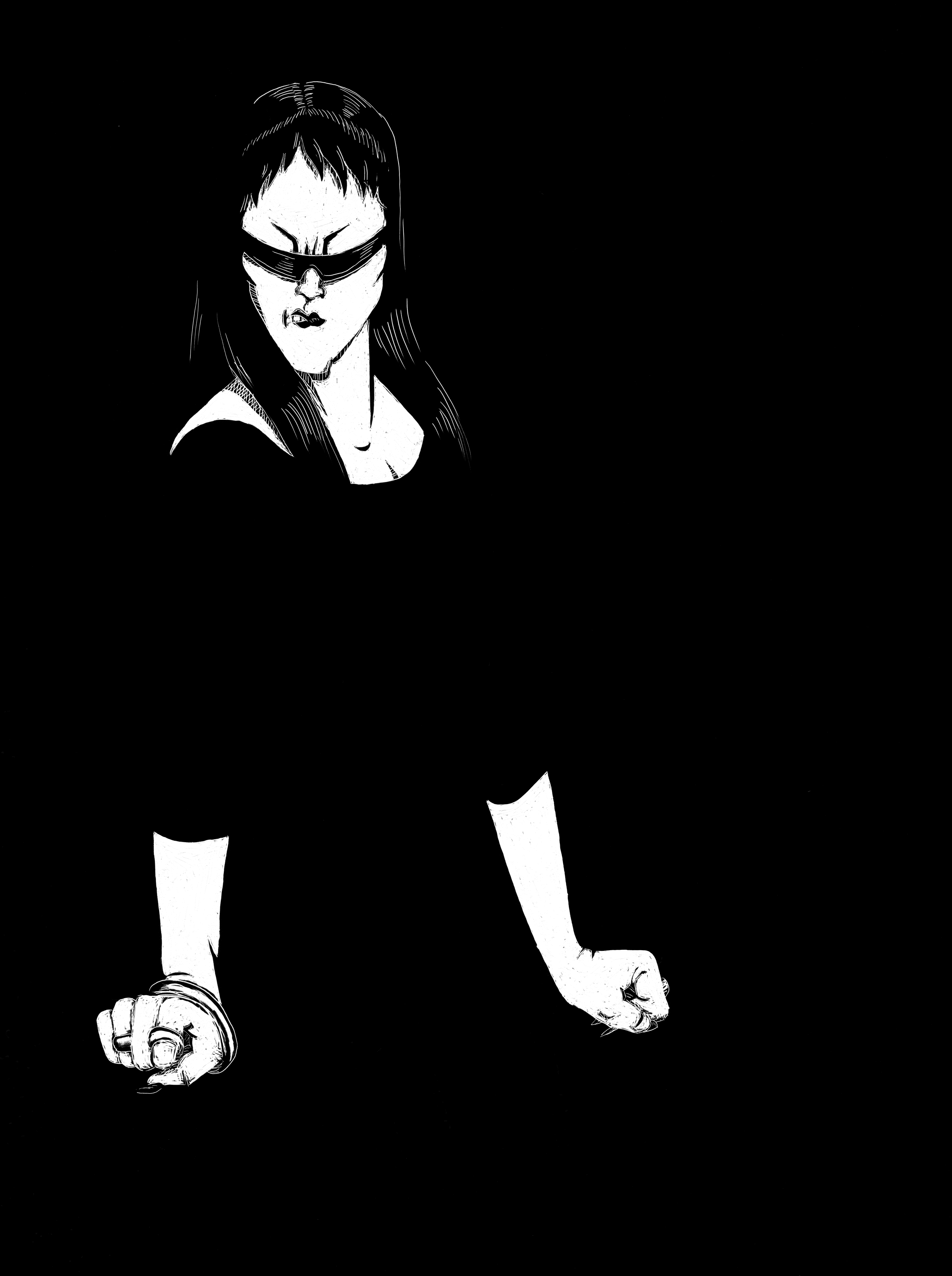
As readers have noted, Miranda Milan has been a mite temperamental. Let’s just say that in this chapter, her mood doesn’t get any sweeter. And so we have new art work from E. J. Barnes, showing Miranda in one of her more common moods. You’ve already seen Miranda Melancholia (she’s up there in the header). Now feast you eyes on Miranda Milan II: Miranda Furiosa. And as you read the chapter, I’m sure you’ll spot just where this happens in the text.

Miranda Milan II: Miranda Furiosa (Art by E.J. Barnes, all rights reserved)

Miranda Milan II: Miranda Furiosa
(Art by E.J. Barnes, all rights reserved)

Posted in Netherfield Witch, Writing fiction | Tagged , , , , , , | 5 Comments

Chapter 14 of Summer of the Netherfield Witch

Cindy Van Schacht is lost in the Mall of Lost Souls. Considering that Cindy isn’t quite all there, this is an even bigger problem than it would be for a normal person. But not to worry! Jane Harris, resourceful and intrepid fourteen-year-old friend, and Miranda Milan, legendary witch, are determined to rescue Cindy. However, they are still in the Mall of Lost Souls, and the mall knows how to confuse them with “Questions of identity” in chapter 14 of Summer of the Netherfield Witch. Good luck, Cindy! (You’ll need it.)

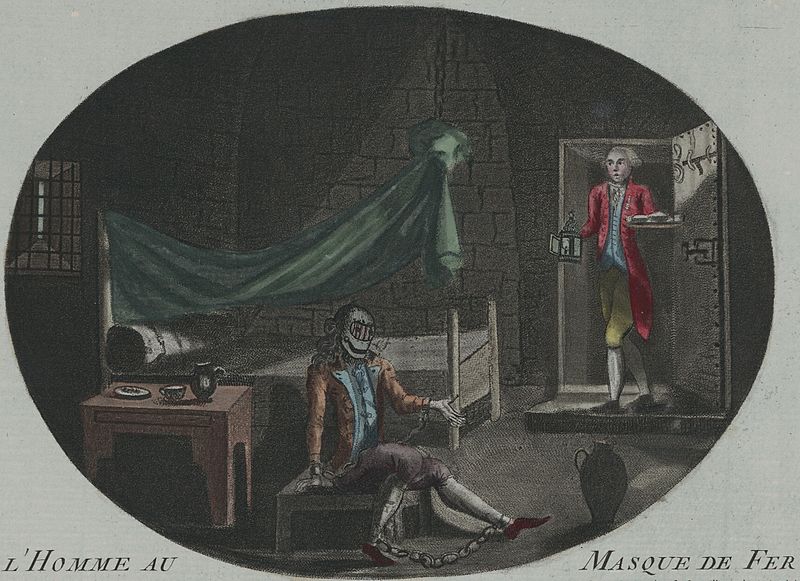
A historical question of identity: the Man in the Iron Mask (died 1703), as depicted in 1789

A historical question of identity: the Man in the Iron Mask (died 1703), as depicted in 1789

Posted in Netherfield Witch | Tagged , , , , , | 1 Comment

Going back to “Underworld” before they release a fifth film

I’m not a big fan of Underworld, but I did pick up the Blu-ray set of the movies a year ago. Now I hear there’s a fifth movie on the way, although casting problems may delay it. So I decided to go back and watch all four to see what I thought of them, and think about what I’d hope to see in the fifth movie.
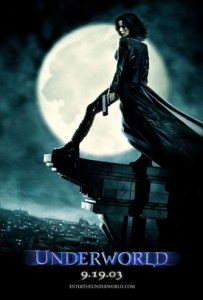
Underworld_posterFor those of you who aren’t familiar with it, Underworld is a series of movies set in a universe in which immortal races of vampires and lycans (werewolves) clash without the knowledge of the regular humans. (Note that “immortal” in this context doesn’t mean they can’t be killed, only that they don’t age or die of natural causes. You know, Highlander style “immortal.”) In the first movie, the lycan leader Lucian engineers the creation of the first hybrid vampire-lycan as part of an ultimately unsuccessful plot to overthrow the vampires. In the second movie, the surviving vampire elder attempts to unleash the original lycan to be his ally and to destroy the hybrid created by Lucian, while in both instances being opposed by the vampire Selene. The third movie travels back in time to show how Lucian became the leader of the lycans and led them in revolt against the vampires who had enslaved them. The fourth movie picks up from the second to follow the fates of the hybrid, Selene, and their hybrid child in a world where humans have discovered the existence of the two races and are intent on eliminating both. (There have also been comics, novelizations, and at least one original novel. I’ve not read any of these and am not going to consider them here.)

You knew she'd turn into a lean, mean killing machine

You knew she’d turn into a lean, mean killing machine

While not favored by the critics, the movies developed a substantial fan base. Fans like the blue-tinted Underworld, the mythos/backstory supporting the series, the fast-paced and violent action, and Kate Beckinsale kicking ass as the “death dealer” vampire Selene. Indeed, these were the movies that made Beckinsale an action-adventure star. Go watch Cold Comfort Farm (picture left) if you want to see what she was like before.

This Welshman went to the dogs, in a good way

This Welshman went to the dogs, in a good way

Although Beckinsale is the star of the series (even though she doesn’t really appear in the third movie), the real driving force of the series is the lycan leader Lucian, played by Michael Sheen. It’s Lucian’s revolt in the third movie that frees the lycans to wage open war on the vampires. It’s Lucian’s deal with the subordinate vampire leader Kraven that almost destroys the vampires in the first movie. And it’s Lucian’s idea to create a hybrid, shaping the plots of the first, second, and fourth movies. Lucian is simply the most intelligent figure in the entire series, the most influential, and in some ways the most sympathetic. Without him, there is no Underworld series.

Apart from being a guilty pleasure, I have to admit that the mythos was one of the more appealing features of this film series when I saw the first two movies in the theater (and why I regretted missing the third when it was in the theater). However, my sober analysis of the mythos after watching through the series is that it’s less logical and more dependent on coincidence than it appears. The assumption of the first two movies is that humans are by and large unaware of the vampires and lycans, yet in the third movie the people under the rule of the vampire leader Viktor certainly know of both. When did the vampires and lycans go underground, and why would they bother? The lycans originally protected the vampires during the day; who’s been doing the job since they revolted? Why don’t the lycans ever attack the vampires in the daytime? Selene played around the tomb for the original lycan, saw the key device for that tomb, and exiled the historian who knows the truth about her relationship to the tomb, but remains completely unaware of what she knows until the vampire leader Marcus begins his hunt for the tomb? And if the vampire leader Viktor meant for the original lycan to be entombed for all time, why did he construct the tomb with a lock that could be opened? Or why didn’t he destroy the key afterwards?

Still, it was an entertaining and successful movie series . . . for three installments. And then came the fourth movie and things went south. The fundamental problem is one endemic to action-adventure movie series: how does each new entry in the series top the previous ones? The most obvious route is to go for direr threats and more spectacular scenes. This can work, for a while at least. (The James Bond franchise went to this well so often that it required a reboot to regain any credibility.) The second Underworld movie went this route, but also included new plot developments and a love story. The third movie really took another tack altogether by going back into the mythos, although it does have its “bigger and better” elements. Unfortunately, the people behind the fourth movie explicitly went for bigger threats and more special effects (according to the commentary track on the Blu-ray disc). But the new threat, the super-lycan, while supposedly the heart of the movie’s plot, doesn’t appear long enough to actually drive the plot. And the new plot elements that could add human interest are underplayed. The cop’s dead vampire wife gets only a mention, while the hybrid child Eve gets two perfunctory moments of bonding with her mother Selene. OK, so they gave Kate Beckinsale the chance to show some human emotions, pleasing the fan boys, but it’s not enough to help carry this movie.

It doesn’t help that there were other problems with the fourth movie. The look of the earlier movies is gone, and the setting seems to have mysteriously changed from Hungary to the United States. The special effects budget apparently went into shooting the movie in 3-D at the cost of using some really unconvincing computer graphics, especially in Selene’s first fight sequence. And it probably didn’t help with the fan boys that Selene doesn’t so much kick ass in this movie as she gets her ass kicked. Excuse me, but my sublimated masochistic desire for a leather-clad dominatrix gets spoiled when she gets beat up all the time.

So what can we hope for in the fifth movie? Reports vary, but the common thread is that it will continue the story of some of the characters from the fourth movie, but apparently not Kate Beckinsale’s Selene, who is scheduled to appear in a sixth movie. For me, this poses a problem. Apart from simply using more technology to drive the vampire-lycan war, which was one of the plot elements of the first and fourth movies, the other obvious continuation is to follow the development of the hybrid Eve, Selene’s daughter. We don’t really know what hybrids can do, apart from acting a bit like both vampires and werewolves and surviving a spike through their chest. Having Eve come to terms with her nature while coping in a vampire underground would be a neat story.

You wouldn't like me when I'm angry . . . oops! wrong franchise; this is the vamp-wolf or were-pire or something.

You wouldn’t like me when I’m angry . . . oops! wrong franchise; this is the vamp-wolf or were-pire or something.

There’s just one problem with the idea of Eve as the central character. It should require Selene as a major character as well. In the fourth movie, Selene is fiercely protective of her daughter, once she knows she has one. It would be unnatural for her to abandon her daughter. Now some sort of plot contrivance could be devised, I’m sure. Have the police hunting Selene, and have her separate from her daughter for Eve’s own safety. Sure, it can be done. But Eve needs someone to play off of, someone more stable. Sure you can play her off some handsome male vampire, and bring sex into it. Please do. (And that apparently was going to be part of the fifth movie’s plot, at least until Theo James’s participation became a problem.)  But having her mother around, trying to cope with a daughter who is so much more than she is, would give Beckinsale a chance to show off her dramatic chops, while pulling Eve in several directions at once. And, needless to say, one could still fit in enough fight and chase sequences to keep the fans happy.

Frankly, at the moment, I’d rather pretend the Underworld series ended after three movies. A good fifth movie could rescue the series and make the fourth a necessary link, if an unloved one. A bad fifth movie . . . well, Kate Beckinsale might be able to deliver the fan boys to make a sixth movie a financial success, but I’d suggest she stay away. At that point, the best course is to abandon any pretentions to story-telling, stop being coy about sexuality, and come clean about exploiting the fan base. Underworld VI: Rise of the Vampire Women Warrior-Whores, anyone?

Posted in Reading fiction, Reviews | Tagged , , , , , , , , , , | 5 Comments

Visiting the Mall of Lost Souls in chapter 13 of Summer of the Netherfield Witch

And the Mall of Lost Souls isn't just an American thing. If you look closely, you can see it lurking within Birmingham, England's Great Western Arcade, which has had more than a century's experience in entrapping the unwary

The Mall of Lost Souls isn’t just an American thing. If you look closely, you can see it lurking within Birmingham, England’s Great Western Arcade, which has had more than a century’s experience in entrapping the unwary!

Miranda Milan is a witch. She’s also a walking goth fashion disaster. And now she’s taking Jane Harris and Cindy Van Schacht on a trip to one of the most dangerous places in the world: a shopping mall. But this is no normal shopping mall. This is a place where even your credit cards can turn against you. This is the Mall of Lost Souls. And Miranda is placing all three of them in danger as she goes “Shopping for souls” in chapter 13 of Summer of the Netherfield Witch.

Summer of the Netherfield Witch is my current serialized story. A new chapter goes up every Friday before noon (U.S. Eastern Daylight Time, GMT-4, for the benefit of those people in Latvia, Mongolia, and St. Lucia who have visited my blog . . . once). If you’ve not been reading this story, you can begin here, at chapter one. Each chapter is hyperlinked backwards and forwards to the adjacent chapters. And the table of contents page can take you to any chapter. Or you can go to the “About” page and see a description of all the other stories on this blog. It’s like a virtual shopping mall of stories! (Heh, heh . . .)

Posted in Netherfield Witch, Writing fiction | Tagged , , , , , , , | 3 Comments