Riding the MBTA subways . . . all of them!

The Orange Line gets more upscale advertising than the Red Line’s Mattapan extension. The riders on the B branch of the Green Line are on average much younger than on the other lines. A free doughnut may not taste better, but it’s worth the price. These were some of my lessons from spending yesterday riding the subway system of Boston in its entirety.

Why do such a thing? Thank the MBTA: the Massachusetts Bay Transportation Authority, or “T,” the organization responsible for mass transportation in the greater Boston area.[i] The MBTA was unable to maintain regular service during our record-setting winter snowstorms.[ii] So they decided to make the entire system free, charging no fares, all day, Friday, April 24.

E. J. at the Mattapan station, which I'd never visited before.

E. J. at the Mattapan station, which I’d never visited before.

E. J. Barnes and I had talked about spending a day riding the entire system, just for the fun of it. Well, with free fares, how could we resist the opportunity?

Now, when I say the “system,” I don’t actually mean the entire MBTA system. The T runs commuter rail lines, buses, subways, and even some ferries. Trying to ride all of them would take days. No, what we had in mind was riding the subway system.

Calling it the “subway system” is a bit of a misnomer. First of all, it’s not all underground. Many of the lines run through surface cuts or at street level once they head out from downtown Boston. Second of all, it wasn’t developed as an integrated system. The different lines don’t even use the same equipment. And third, while the system is described as a hub-and-spoke system, the hub isn’t one station, but four, and while there are four lines (Red, Green, Blue, and Orange) that cross at the hubs, there are not eight termini, but twelve.[iii]

And then there’s the Silver Line. The MBTA treats it as a subway line on its maps, but unlike the others, it’s not a light rail line. It’s a bus line. Part of it runs in a dedicated tunnel, which technically makes it a “subway,” but the rest runs on streets just like any other bus. So it sort of counts, but sort of doesn’t.[iv]

Rather than ride each line to its end(s) and back, we sometimes rode buses, or even just walked short distances, to go from one line to another. Yes, some lines pass so close to each other than you can walk from one to another in a few minutes.[v] Some of these shortcuts saved us time, though some probably did not. In any case, we set out at 9:05 in the morning, and returned at about 9:50 in the evening.[vi]

You learn a few things about the Boston area riding the subway. For all that there are integrated neighborhoods in the Boston area, a lot of the region is racially and economically segregated. There are sections of lines with predominantly black riders, and lines with overwhelmingly white riders. There are a lot of Asian riders near the Chinatown stop. (This was not a surprise.) The riders on the B branch of the Green Line are much younger than most because the route passes through the Boston University campus. Brookline, which although surrounded by the City of Boston on three sides is a separate municipality, is wealthier than surrounding Boston neighborhoods, as one can tell from looking at the buildings.

The Mattapan trolley. They use an old jet engine to clear this line's tracks.

The Mattapan trolley. They use an old jet engine to clear this line’s tracks.

And you learn some things about the T as well. The Green Line is the most crowded line, especially on the B branch. But it would be hard to do much about it, because the B branch runs along the surface west of Kenmore and makes frequent stops. The Orange Line begins and ends in wealthier neighborhoods, which explains why it gets more upscale advertisements. The Green Line’s E branch is the only line that runs at the surface on a road without a dedicated lane, which makes it vulnerable to traffic jams. The Mattapan trolley, an extension of the Red Line’s Ashmont branch, is absurdly antiquated. And the T has trouble keeping up with maintenance, as the squeaking doors, banging metal plates, and service delays on the Red Line due to a signal malfunction at Harvard attest. On the other hand, we rarely had to wait long for a subway train or bus. And some MBTA cars are outfitted with truly neat extending ramps to make it easy for wheelchair-bound users to get on and off. In fact, making the station handicapped-accessible is one of the reasons the Government Center station is currently shut down.[vii] It’s part of a system-wide effort.

You didn't know Boston had a molasses flood? The company that owned the ruptured tank claimed anarchists had destroyed it, but the courts ruled that the company was at fault.

You didn’t know Boston had a molasses flood? The company that owned the ruptured tank claimed anarchists had destroyed it, but the courts ruled that the company was at fault.

The passengers came and went with the hours. Our trip from Park Street to Braintree on the Red Line was at the height of afternoon rush hour, so the cars approached a level of standing crowds usually seen only on the Green Line. On the other hand, when we rode the number 2 Silver Line route, it was well after work hours, so for about half of its route we were the only people on the bus. As you might expect, a lot of people were using their smart phones to read or listen to music or play games, which is probably a sensible thing to do in the rush hour crushes in particular. I did see one fellow reading a familiar book, Stephen Puleo’s book on the Great Boston Molasses Flood of 1919, Dark Tide. We figured that the T scheduled the free fare day to coincide with school vacations, but it’s not as if we saw a lot of children, except for one group (class?) at Wellington.

And the free doughnut? Dunkin’ Donuts is an ubiquitous chain in New England, and they even have several stores inside T stations. So those stations were giving away a free doughnut if you showed them your CharlieCard, the T’s reusable plastic fare card. It’s named after Charlie, a fictional victim of the incredibly complicated fare schedule the MTA (as it was then called) had back in the late 1940s, as described in this mayoral campaign song that’s become a folk classic.

[i] “Greater Boston” can stretch as far as Providence, Rhode Island when it comes to the commuter rail service, but the system is largely confined by the old state highway 128, a highway that arcs around Boston and coincides with Interstate 95 for much of its length.

[ii] People blamed the MBTA management. The system manager resigned, and the governance is being restructured. But let’s be honest here. It was the heaviest year for snowfall since records started being kept in 1872. And people dislike paying taxes and fares, so the MBTA has to manage with old equipment and systems that are always on the verge of a breakdown.

[iii] The four hub stations form a rough rectangle in downtown Boston. The Red Line divides into two routes at its southern end, while the Green Line splits into four routes to the west, which explains how four lines can have twelve end points.

[iv] The idea behind the Silver Line was originally to build a subway to replace the old southern part of the Orange Line, demolished and relocated in the 1980s. This left Roxbury with no subway service, so the MBTA committed to building a new line, only to balk at the cost and renege on its promise. The T has been trying to convince Roxbury that buses are good enough ever since. So calling it the “Silver Line” is a public relations gimmick. Though in their effort to win over Roxbury, the MBTA has outfitted the Silver Line’s Roxbury routes with electronic signs telling riders when the next bus is coming, the only bus line so equipped.

[v] This isn’t obvious from the schematic diagram of the system the MBTA uses. You have to look at the geographically accurate system map, instead.

[vi] You want to know our exact route? Walk to Central Square. Red Line outbound to Alewife. Red Line cross-city to Ashmont. Red Line extension Ashmont to Mattapan. Bus 31 Mattapan to Forest Hills. Orange Line cross-city  to Oak Grove. Orange Line inbound  to Wellington. Bus 110 to Wonderland. Blue Line cross-city to Bowdoin. Break for lunch. Walk to North Station. Green Line outbound to Lechmere. Green Line cross-city to Heath Street on the E branch. Walk to Brookline Village. Green Line D branch outbound to Riverside. Green Line D branch inbound to Kenmore. Green Line B branch outbound to Boston College. Green Line B branch inbound to Chestnut Hill Avenue. Walk to Cleveland Circle. Green Line C branch inbound to Park Street. Red Line outbound to Braintree. At that point we had ridden the entire length of all four subway lines. We decided to go on to do the Silver Line, so Red Line inbound to South Station. SL1 (Silver Line route 1) outbound to Logan Airport and most of the way back, stopping at Silver Line Way. SL2 outbound in a loop taking us back inbound to South Station. Walk out of South Station to adjacent Silver Line bus stop. SL4 outbound to Dudley Station. Except for two short bits of the SL4 and SL5 lines at their northern end, that covered the Silver Line. Bus 1 from Dudley to Central Square. Walk home. 27 segments of travel, total.

[vii] Trains can pass through it but can’t stop there. Since this stop is in downtown Boston, it’s not a big problem, because the Blue Line’s Bowdoin and State stops and the Green Line’s Park Street and Haymarket stops are nearby. However, it does mean that one can’t transfer directly from the Blue line to the Green Line or vice versa.


Posted in Uncategorized | Tagged , , , , , , , | 12 Comments

Chapter 12 of Summer of the Netherfield Witch

Miranda Milan is an eccentric fortune-telling witch. She’s also Jane Harris’s only ally in trying to find out who’s trying to kill her. When you’re fourteen, having an ally in such a matter, even one as temperamental as Miranda, is a necessity. Now Miranda wants to recruit Jane’s best friend, the mentally unstable Cynthia Van Schacht. Jane has reservations, but for Miranda, “The ends justify the means” in chapter 12 of Summer of the Netherfield Witch. But whose ends? Jane’s . . . or Miranda’s?

This painting EXACTLY captures the spirit of this chapter . . . except that we don't know if the killer is a guy, Miranda is hardly a love goddess, and Jane isn't quite the tramp Helen of Troy was. But apart from that, it's exactly right. (

This painting EXACTLY captures the spirit of this chapter . . . except that we don’t know if the killer is a guy, Miranda is hardly a love goddess, and Jane isn’t quite the tramp Helen of Troy was. But apart from that, it’s exactly right.
(“Venus Preventing Aeneas From Killing Helen” by Luca Ferrari (1605-1654))

Posted in Netherfield Witch, Writing fiction | Tagged , , , , , | 1 Comment

New art work for Summer of the Netherfield Witch, and chapter 11

A horrible supernatural entity is torturing an old woman and threatening Jane Harris, so who should try to rescue her? Why Miranda Milan, of course! Oh, wait, she already tried that at the end of the last chapter. It didn’t work out too well. But that which doesn’t kill you makes you stronger, or at least in need of two aspirin chased down by a laudanum smoothie. And so “Miranda takes charge” in chapter 11 of Summer of the Netherfield Witch.

If you’ve not been reading this story, a new chapter goes up every Friday. And you can start with chapter one. Don’t worry, all the chapters are hyperlinked backwards and forwards.

Those of you who have been following this blog for a while know that cartoonist and illustrator E. J. Barnes sometimes supplies a bit of art for my stories; for example, that black-and-white drawing WordPress uses as an icon to identify this blog is the dragon-head walking stick from The Dragon Lady of StockbridgeFor this story, E. J. has supplied a drawing of Miranda Milan that so fits Miranda’s mood in this chapter (which E. J. had not read before finishing the drawing) that I’d almost say she’s psychic. And here it is:

Miranda Milan (Art by E. J. Barnes All rights reserved)

Miranda Milan
(Art by E. J. Barnes
All rights reserved)

Posted in Netherfield Witch, Writing fiction | Tagged , , , , , | 6 Comments

Mysteries and mistakes: chapter 10 of Summer of the Netherfield Witch

Summer is here, and Jane’s life is getting complicated. She’s just been poisoned by Genevieve, whatever Genevieve is, and saved by Nature and Miranda Milan, but how much of that does she remember? Then Jane’s friend Cindy does something completely unexpected . . . unless you know Cindy. And the week isn’t over yet! Watch Jane Harris deal with “Mysteries and mistakes” in chapter 10 of Summer of the Netherfield Witch. Which, when you think about it, is a apt description of adolescent life: mysteries and mistakes. One tries to figure out what it means not to be a child anymore, what it means to become an adult, and yet at the same time one is neither a child nor an adult. It was so much simpler when people married around age 14! My own adolescence was more mystery than mistakes, because I spent my last five years of secondary school education in a single-sex institution. Cuts down the chance of mistakes by 50%, at least, but leaves the psychology and physiology of the opposite sex terra incognita, at least for much of the year. The last year I was there, the school went co-ed, which is to say they made the middle three years co-ed, leaving the youngest and oldest of us in single-sex classes. I could have pulled my hair out in frustration. Actually, given my social awkwardness at that age, my chance of making any female friends was still approaching zero, but that’s still different from absolutely zero. Sigh. It’s probably the reason I can empathize with Jane’s social and sexual awkwardness. Though I didn’t have a witch messing around with me, at least not that I know of.

There is the sort of mystery that lead to many mistakes, some of which take 9 months. It's "Night on the Eve of Ivan Kupala" (a hybrid pagan/Christian midsummer celebration in Russia) by Henryk Siemiradzki (1843-1902)

This is the sort of mystery that leads to many mistakes, some of which take 9 months to completion. It’s “Night on the Eve of Ivan Kupala” (a hybrid pagan/Christian midsummer celebration in Russia) by Henryk Siemiradzki (1843-1902)

Posted in Netherfield Witch, Writing fiction | Tagged , , , , , | 3 Comments

Chapter 9 of Summer of the Netherfield Witch

A parade after Medusa joined the audience

A parade after Medusa joined the audience

Netherfield’s a small town. Practically everybody knows everybody. They all know each other’s habits and quirks. There are the town eccentrics. (We’re looking at you, Miranda Milan!) And the people of the town all manage to keep a few secrets from each other. It’s sort of like Peyton Place, if Peyton Place had ghosts and magical fortune tellers wandering around it.

Jane’s still a newcomer to town. So in the this chapter, she gets a chance to interact with a number of people, including one town resident who’s famous and unknown at the same time. And Jane stumbles into secrets, sometimes without even knowing that she has. Just as Jane’s communing with nature was a bit mysterious, so will be her “Communing with people” in chapter 9 of Summer of the Netherfield Witch.

Posted in Netherfield Witch, Writing fiction | Tagged , , , , | Leave a comment

Stop the War on an American Tradition!

THE AMERICAN WAY OF LIFE IS UNDER ATTACK!

Oh, it started innocently enough. First there was the war on slavery. Then there was the war on drugs. Then there was the war on Santa, even questioning his racial status. And now comes the horror of horrors:

THE WAR ON APRIL FOOLS’ DAY

Matejko_Stańczyk“What?” you say. “Can’t one have a single day to practice innocent jokes against the pompous fools that surround us everyday?” But, NO! Now the dreadful thought police want to stamp out even your attempts to laugh at the foibles of others. Even John Oliver, a comedian(!), has turned against us.

But you can fight back. Dress in motley for the day. Better yet, dress your enemies in motley for the day. Keep a straight face as you discuss the metaphysical subtleties of Taylor Swift’s “Shake It Off.” Ask when your firm will adopt a dress (or undress) code taken from “Game of Thrones.” Celebrate the coming of Easter by juggling raw eggs, preferably in front of someone whose clothing is in bad taste.

And in the words of the Constitution of the Commonwealth of Massachusetts, let “sincerity, good humor, and all social affections, and generous sentiments among the people” prevail.

LONG LIVE APRIL FOOLS’ DAY!


Posted in Uncategorized | Tagged , , , , , , , | 4 Comments

Chapter 8 of Summer of the Netherfield Witch

Summer arrives, and part II of Summer of the Netherfield Witch begins. The beginning of summer really needs a celebration. Certainly I think so, especially after the nasty winter we had here in the Boston area. You’d think this was Buffalo, we had so much snow. Some of it’s still out there, despite the warmer weather and the rains.

Well, Jane’s spring wasn’t all that great, either. So she’s in a mood to celebrate, and decides to go “Communing with nature” in chapter 8. She just doesn’t expect nature to commune right back.

So let’s hope Jane’s communing is more like a Maypole dance

New_York_RenFaire_2004_maypole

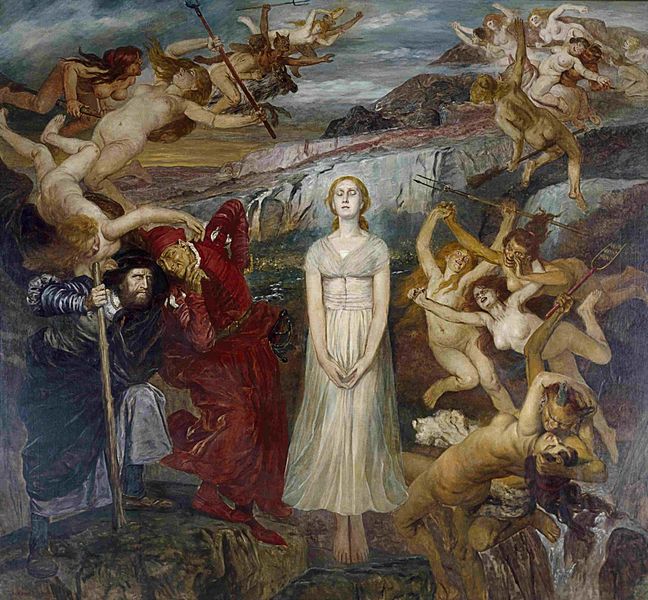
and not a Walpurgis Night!

Artist: Fritz Roeber (1851 - 1924)

Artist: Fritz Roeber (1851 – 1924)


Posted in Netherfield Witch, Writing fiction | Tagged , , , , , | 2 Comments

Chapter 7 of Summer of the Netherfield Witch, and the role of comedy in horror

One wouldn’t think comedy and horror go well together. Yet they do. It’s a matter of balance and perspective. If a book or movie just keeps piling horror on top of horror, they begin to pall after a while. Worse, it becomes harder and harder to have sympathy for the victims because it’s hard to relate to people who are defined by what is done to them, as opposed to what they do. This is probably the secret behind why slasher film series gradually take on the perspective of the killer: he/she/it is about the only person showing any character.

Comedy offsets horror. It gives us a chance to catch our breaths and relieve our nerves. It gives the people in the story a chance to act human. It also helps us keep on caring about them as they go into the next horror.

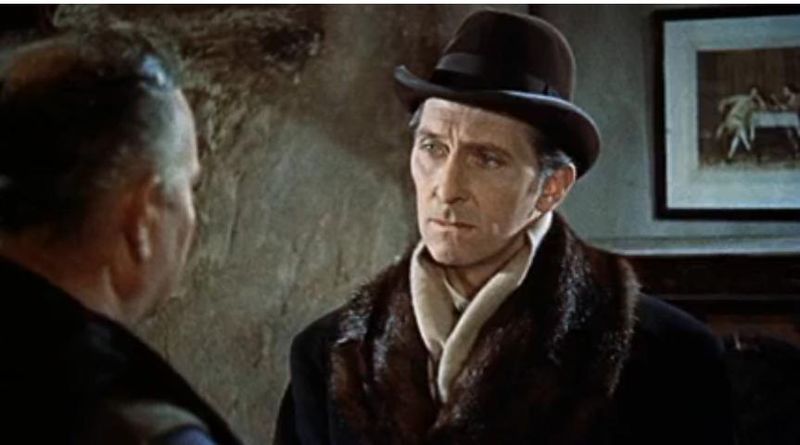
Dr. Abraham Van Helsing, M.D, D. Ph., D. Litt., etc., if you please . . . or at least Peter Cushing taking on the role in one of Hammer's Dracula films

Dr. Abraham Van Helsing, M.D, D. Ph., D. Litt., etc., if you please . . . or at least Peter Cushing taking on the role in one of Hammer’s Dracula films

And comedy offers a catharsis. There’s an episode in Dracula where Van Helsing makes a joke which at least one of the other men would consider in very bad taste, and then breaks down in laughter. The man is the only one who knows what’s really going on, and is fighting to save a young woman from a terrible fate. And so he takes refuge in laughter, breaks the strain, and is ready to deal with new horrors. That Bram Stoker, he was no fool. He knew how comedy and horror are connected.

And now to Jane. Summer of the Netherfield Witch is a comedy, but Jane Harris is about to confront the worst horror of the story so far. Because in chapter seven, “The relatives come to visit.”

Posted in Netherfield Witch, Uncategorized | Tagged , , , , , , , | 2 Comments

Chapter 6 of Summer of the Netherfield Witch

Blake's Urizen, the spirit of law and reason, sometimes a dark figure in his mythology

Blake’s Urizen, the spirit of law and reason, sometimes a dark figure in his mythology

Jane Harris is fourteen years old. So, naturally, she thinks she’s the most rational person around. It’s just the rest of the world that is so irrational. That includes authority figures, friends, enemies, and total strangers. So just where is Jane going to find any “Voices of Reason?” Why, in chapter six of Summer of the Netherfield Witch, of course, which you can read by following the link. That’s where Jane will find sweet reason. Well, maybe.

Posted in Netherfield Witch, Writing fiction | Tagged , , , , | Leave a comment

Chapter 5 of Summer of the Netherfield Witch

Jane Harris has spent most of her life in Boston. So when she came to Netherfield, she liked to think of herself as more sophisticated than her classmates. And among the lessons she’s learned is that you should pick your fights carefully, always making sure you have the favorable ground. Because not even Boston sophistication will save you in every fight. As we find out in “Jane embattled,” chapter 5 of Summer of the Netherfield Witch.

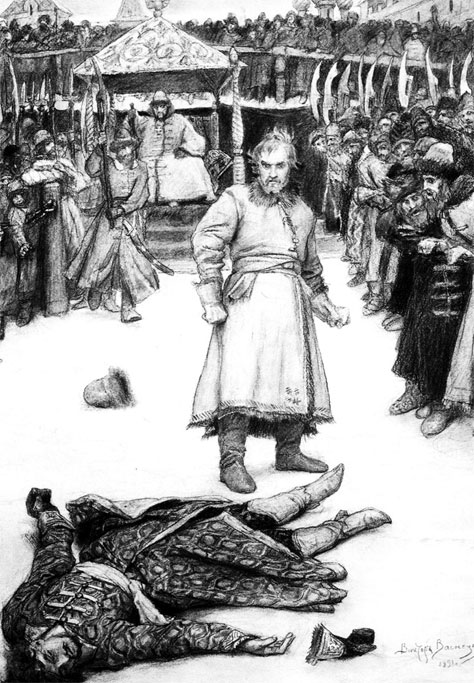
Jane is not the Merchant Kalashnikov, but her battles are going to have equally mixed results (Illustration by Viktor Vasnetsov (1848 - 1926) for the poem "The Song of the Merchant Kalashnikov" by Mikhail Lermontov (1814 - 1841))

Jane is not the Merchant Kalashnikov, but her battles are going to have equally mixed results.
(Illustration by Viktor Vasnetsov (1848 – 1926) for the poem “The Song of the Merchant Kalashnikov” by Mikhail Lermontov (1814 – 1841))

Posted in Netherfield Witch | Tagged , , , , , | Leave a comment