New Additions to the Zombie Reading Shelf (TM)

The Zombie Reading Shelf® is pleased to announce the following new titles for release in Spring, 2014:

Obese Americans: Health Hazard or Hunting Opportunity? by Dr. Gwen Ross (deceased) — Zombies have found the increasing number of overweight Americans to be easy pickings, but some worry that a diet so heavy in fat must lead to obese zombies and a shorter afterlife. Dr. Ross, a leading authority on zombie physiology since her death, clears away the myths to reveal the real advantages and disadvantages of fatty tissue in the zombie diet.

white zombie

Field Guide to Revenants, 3rd revised edition by Ewell Peters — Although designed for living humans, zombies should find this guide useful in understanding their competition in the ecosystem.  Peters treats the different varieties of the revived dead with precision and wit. I especially like his characterization of vampires as the “vegans of the undead, picky and absurdly proud of their restricted diet.”

1543,AndreasVesalius'Fabrica,BaseOfTheBrain

Eating Brains the Tex-Mex Way by various — Tired of eating brains raw? Burnt your right hand off trying to cook them? Then this book is for you! More than a cookbook, this volume offers instructions on how to prepare brains in a variety of spicy and flavorful dishes without risk of catching fire. Included are instructions on how to use ovens, which bowie knives are microwavable, and a detailed 3-D map  of the best cuts.

Zombie Reading Shelf® books are available in hardcover and paperback at finer bookstores everywhere. E-book editions require the ZombieRead™ app pre-installed, as zombies lack the mental and manual skills to install it themselves.


Posted in Uncategorized | Tagged , , , , | 6 Comments

Chapter 8 of Prophesies and Penalties, and maps

Emily now has a base of operations from which to conduct her investigation of Stephen Nash’s murder. So it’s time for her to take stock of her situation, and start planning her investigation. And maybe pump her new servant Tanya for information. It’s going to be an education for Emily, and for the reader, in “The geography of a religion,” chapter 8 of Prophesies and Penalties.

I grew up as a map fiend. Put a globe or map in front of me, and I would be all over it, getting a sense of the geography, looking for odd and intriguing features. Fortunately for me, my parents subscribed to National Geographic magazine in those days, which gave me a steady supply of maps with interesting geographic, historical, and anthropological notes.

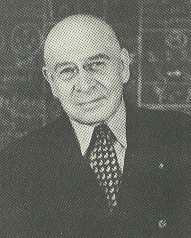
Korzybski (well, actually only a photo of Korzybski, since there is a difference)

Korzybski (well, actually only a photo of Korzybski, since there is a difference)

However, Alfred Korzybski (1879 – 1950) made the point that “the map is not the territory.” It’s something to keep in mind: maps provide only a simplified and often distorted rendition of only some of the features of a territory. People also supply their own interpretations of both the map and the territory. I hope my readers enjoy exactly how Emily does this in the opening section of chapter 8.

Posted in Prophecies and Penalties, Writing fiction | Tagged , , , , | 13 Comments

Misadventures while nearsighted

I’m nearsighted. Been that way for a long time. Don’t always have my eyes checked until I notice the prescription is off. So I tend to be cautious around things I haven’t really looked at.
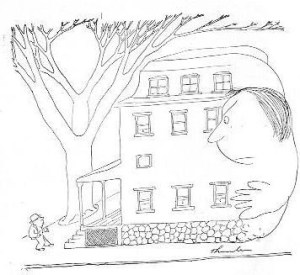
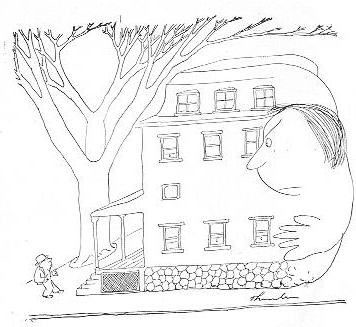
This image, for example, looks a lot like his home

This image, for example, looks a lot like his home

The cartoonist James Thurber (1894 – 1961) could find great humor in being nearsighted when he didn’t have his glasses on. He even wrote a story about it, “The Admiral on the Wheel.” I suspect many of his cartoons were engendered by something Thurber saw, or, rather, didn’t quite see.

My own experiences with blurred vision have been less happy. Though I did have one that revealed a funny aspect of child psychology. It happened in third grade. I was already quite nearsighted, so much that I had to walk up to the blackboard to copy down the assignments, but no one had noticed. Similarly, my playmates on the school grounds were nothing but blurs if they weren’t very close to me. In fact, everything was a blur. This is not ideal on an elementary school playground, where there are many hidden and obvious hazards just waiting to maim schoolchildren, and I’m not just talking about the pretend-game called “Knives” that we used to play.

This is the style of jungle gym that was on the elementary school playground

This is the style of jungle gym that was on the elementary school playground

One of those hazards was a jungle gym: a multi-tiered open construction of pipes that gave every child the chance to climb, jump, and dangle by their legs while five or six feet in the air. Originally, the playground had a sandy surface, but by third grade this had been replaced by asphalt, supposedly for our safety. I guess falling and grinding dirt into your scalp was unsafe, while falling and cracking your skull was an improvement. Certainly I had classmates that could have used a cracked skull.

Well, I was on the jungle gym one day, when I was kicked in the forehead by some girl wearing those nice pointed shoes young girls wore in those days in order to be respectable. I couldn’t tell you who did it, because she was too far away from me; well, her foot wasn’t, but I hadn’t gotten around to identifying my fellow pupils by their footwear. My forehead hurt, but I was a kid, and didn’t pay it much attention. Kids hurt themselves all the time. They get used to it. My brother Colin once laid open one of his fingers on broken glass, and just walked home to scare the daylights out of my mother when he showed it to her.

So, about two or three minutes later, the bell rang, summoning us back to class. I got down off the jungle gym and paused for a second before heading back into the elementary school building. Just then, I noticed something odd. There was a bloodstain on the asphalt in front of me. I touched my hand to my forehead. It came away with more blood on it. Let it not be said that I was altogether slow on the uptake. I put two and two together, and realized my forehead was bleeding from being kicked. See how the asphalt made me safer? It helped me realize I was bleeding.

Up to this point, I hadn’t really paid attention to the pain in my head. (Probably getting prepared for a lifetime of migraines.) But now I knew that not only had I been hurt, but I was bleeding! I immediately started crying out loud from the intense pain I hadn’t really noticed until that point, and ran shrieking to find a teacher who would do something for me, like make it stop bleeding, make it stop hurting, and no doubt save my life.

Well, whichever teacher I encountered first was used to kids getting injured, because she calmly took me to see the school nurse, who fixed me right up. And later that year, the annual vision test demonstrated that I was very nearsighted, and I’ve worn eyeglasses ever since. The next time a girl kicks me on a jungle gym, I will be able to identify her.

Once we become adults, we usually develop more reserved manners. We are told we should respect the rights of others, and sometimes we actually do. Which, combined with my weak vision, led to another misadventure.

It was 2003, and I was on a vacation with my girlfriend in Estonia. I had taken on the responsibility of learning Estonian, and could phrase simple questions whose answers were completely unintelligible to me. So I tried to be polite, more than I usually was. Politeness can be very helpful when you are faced with a menu you can’t read, and don’t want the waitress to bring you an order of braised tripe.

Ever since I was a kid, I had an interest in coin collecting. So one of our stops in Tallinn, the capital, was to the currency museum in the Bank of Estonia, a state institution that issues the nation’s currency. (This was before Estonia converted to the euro.) The currency museum was in the basement, and it pretty much looked like what you’d expect a museum to look like in a state bank: a single room, quiet, dignified, modern, with well-lit display cases.

At first I thought we were the only two people in the museum, as it was mid-afternoon. But, no, there were four or five people standing around. Far from staring at them, I did my best to pretend they weren’t there, even avoided glancing at them. After all, they were being quiet and considerate, too.

That was all fine and good until, as I moved along one wall, I got to the point where I was going to have to cut in front of one of the other individuals to continue looking at the display cases along one wall. I tried to formulate an apology in Estonian, failed, and figured I’d try to get by with a smile.

I looked up with a smile. The effect was completely lost on the other person. He didn’t understand that I was about to cut in front of him. And he didn’t move. It would have been hard for him to do so: he was a wax figure, a mannequin!

I nearly burst out laughing at my mistake. All the other “people” in the room, save my girlfriend, were mannequins. But what were they doing there?

In this country, we put our political leaders on our coins. In other countries, monarchs and military heroes are common. But Estonia doesn’t have a monarch, doesn’t have much in the way of native military heroes, and apparently doesn’t want their politicians to get too big-headed. So they had put literary figures on their paper money. And, with one exception, the mannequins were of some of those same literary figures. I don’t remember most of them, but there was one woman among them, the poet Lydia Koidula (1843 – 1886), who was on the 100 kroon note.

banknote-100-estonian-krooni-koidula

But what about that one exception? That mannequin was of Jüri Jaakson, the head of the Bank of Estonia in 1926 – 1940. In 1940, the Soviet Union occupied Estonia, which lost its independence and was incorporated into the U.S.S.R. Jaakson was removed from office, arrested, taken to Russia, and shot in 1942. The Soviets continued to rule Estonia until 1991. Their rule is not fondly remembered in many quarters . . . and that apparently includes the Bank of Estonia.

Posted in History | Tagged , , , , , , , , , , | 7 Comments

Chapter 7 of Prophecies and Penalties

Read the chapter, then you'll understand!

Read the chapter, then you’ll understand!

Last chapter concluded with Milltown’s treasurer, Sonia Hoopes, dropping a bombshell in Emily’s lap. This time, it’s Tanya, Emily’s new servant, who does the unexpected. See why Emily needs three hands in “Love and Authority,” chapter 7 of Prophecies and Penalties. And if you haven’t been reading this weekly serial of murder set in a religious community, you can start with chapter 1 right here. A new chapter goes up each week!

One of the practices that made writing The Dragon Lady of Stockbridge: A Tale of Magic in the Gilded Age so much fun was that I was writing three chapters ahead most of the time. I think it helped me in plotting and writing, because I could review each chapter several times, figure out whether a plot thread was going to work, and change earlier chapters if a later chapter demanded it. It was one of my great disappointments last year that I wasn’t able to get ahead while writing Martha’s Children, and I think it adversely affected the quality of that story. I should have included more groundwork building up to the climax. In contrast, it hardly mattered that I was writing the chapters of Nightfeather: Ghost each day before they were due, because I had a firm grasp of the characters and plot from the beginning, better than I had for either of the two previous stories.

I’m hoping Prophecies and Penalties will benefit from both practices. While its plot is still evolving in my head, it’s already quite rich, and, yes, I do know who the murderer is and how the story will end. And I’ve finally gotten several chapters ahead again. So I’m feeling quite good about it right now.

Of course, I could still come a cropper . . .

Posted in Prophecies and Penalties, Writing fiction | Tagged , , , | 17 Comments

Alchemists of alchemy: Principe and Jonson

Everything you know about alchemy is wrong. Well, not everything. Yes, some alchemists tried to discover the Philosophers’ Stone, which could turn base metal into gold and guarantee long life and health. Sort of like going to Vegas. In his oft-perused book, Extraordinary Popular Delusions and the Madness of Crowds (1841), Charles Mackay grouped alchemists with rogues, pseudo-science, and irrational fads such as the Dutch tupilomania. In short, it was bunk.

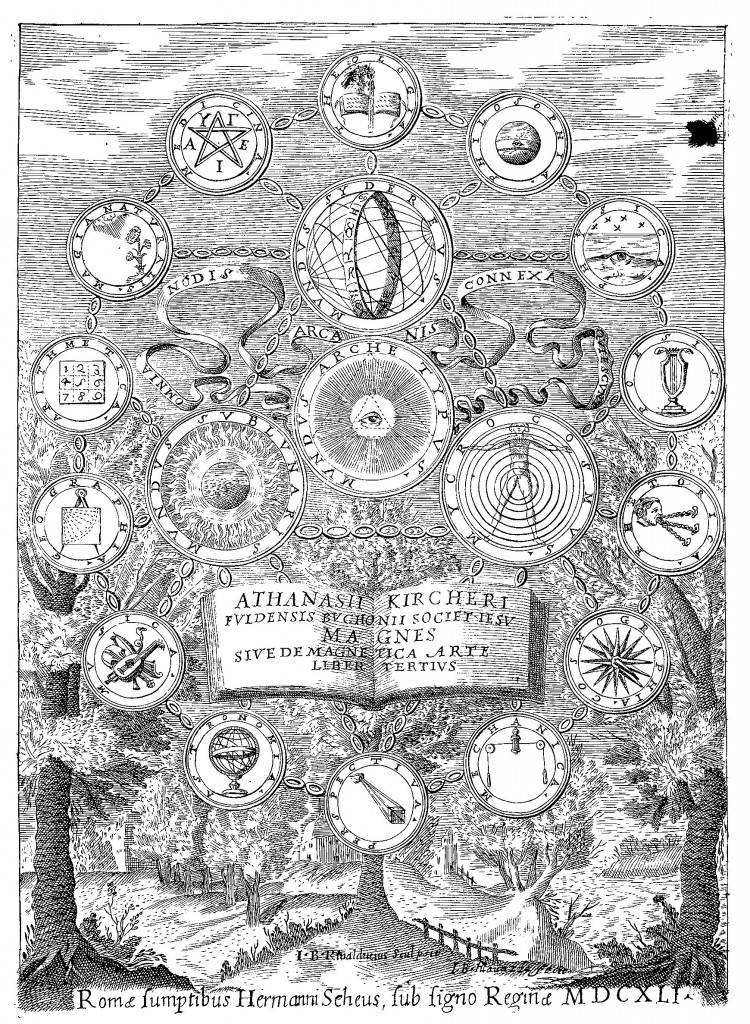
Principe decodes the allegories in several alchemical drawings

Principe decodes the allegories in several alchemical drawings to explain their logic and philosophy

Not so, says Lawrence M. Principe, in his new book The Secrets of Alchemy (2013). Principe, who is a professor of chemistry and the history of science, believes alchemy has been misunderstood, both in historical and scientific terms. He claims that there was no real distinction between alchemy and chemistry prior to the Enlightenment.

Principe’s claim rests on three arguments. First, Principe shows that Classical and medieval Arabic texts on alchemy contained valid chemical processes, some of which he has duplicated himself to prove the point. Second, that those valid chemical processes and what we would think of as fanciful alchemical thinking relied on a common theory about the nature and composition of matter, especially metals. Put these two arguments together, and alchemy appears no longer as a fanciful guessing game, but a serious attempt to understand and change the world — science, or at least proto-science.

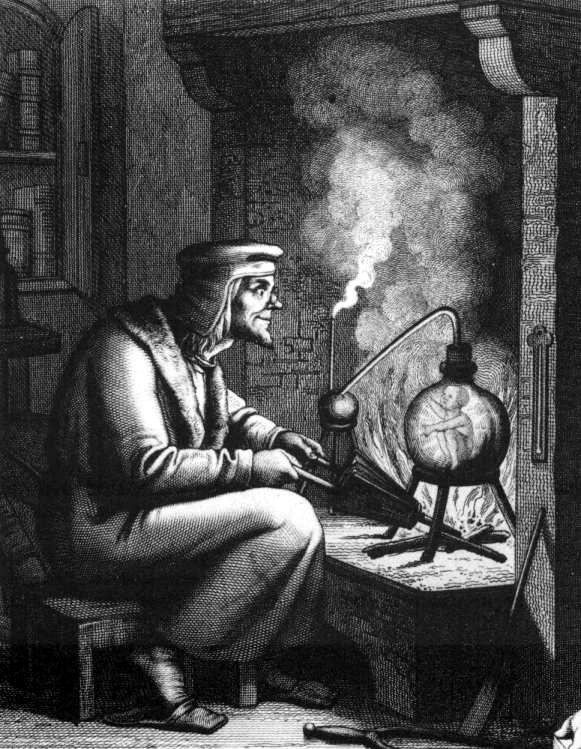
"I'm not mad, I'm just creating a homunculus."

“I’m not mad, I’m just creating a homunculus.”

But what of alchemy’s bad reputation? That’s where Principe’s other argument come into play. Unlike the other sciences, alchemy was a messy affair, and it was often put to dubious uses. One of the processes Principe duplicated was designed to make silver look like gold! (He even supplies a photo of the result.) And it had no mathematically theorized framework or an ancient pedigree, unlike, say, astronomy. So it was disreputable. As chemists tried to gain a prestigious position as scientists, they sought to distinguish themselves from the more dubious parts of their field, which they labeled alchemy.

Which brings us to the time of Mackay. By the mid-19th century, the chemists had succeeded. All that was useful of the old science was now “chemistry,” all that was fraudulent, impossible, and disreputable was alchemy. If we factor in the attempt by occultists of the late 19th century to refashion alchemy, as they incorrectly understood it, into a spiritual discipline instead of a physical one, we have the modern view of alchemy complete.

An 18th century production of the play

An 18th century production of the play

Ironically, the playwright Ben Jonson (1572 -1637) anticipated the occultists by using alchemical thinking and language in his plays, to mirror in the spirit what is happening in the material world. But far from turning lead into gold, Jonson uses alchemy to turn gold into dross. The Alchemist (1610) features a trio of rogues: a fraud of an alchemist, a whore, and a traitorous servant. They work together to fleece the greedy and lustful of their every gold coin and shilling with promises of the Philosophers’ Stone, good fortune, and a chance to seduce willing women. I learned more 17th century ways of cursing people in the opening lines of this play than I knew existed, and it overflows with alchemical knowledge. It also overflows with Jonson’s biting attack on human foibles, as all the rogues and their victims are thwarted in their designs. Jonson must have been well-versed in alchemy, for he used its language and philosophy repeatedly in his work. But to judge from The Alchemist and the other two works bound with it in my library (Volpone and Mercury Vindicated from the Alchemists at Court), he viewed alchemy unfavorably as a fraudulent attempt to mimic or surpass nature. A century before the Enlightenment, the seeds of the later division into alchemy and chemistry were already present in Jonson’s writing.

Posted in History, Reading fiction, Reviews | Tagged , , , , , | 8 Comments

Chapter 6 of Prophecies and Penalties, and Spring

In chapter six of Prophecies and Penalties, “Going among the Children,” Emily Fisher returns to the religious communities that she left with her family twenty years ago. Emily’s not exactly looking forward to this, since she’s on a murder investigation, and doesn’t want the Children to try to reclaim her. But what do the Children of the New Revelation think of Emily? Read the chapter and find out!

Yesterday was the official beginning of spring, the Vernal Equinox. In Cambridge, Massachusetts, where I live, it came in classic style, which is to say when the city looks at its worst. The trees are bare, except for a few straggling brown leaves. Small piles of dirty snow survive in shaded areas and where it had been piled up months ago. The lawns could use a good raking to get them ready for spring. And the street sweepers haven’t been on duty since December, so the detritus of a season hugs the sidewalk curbs.

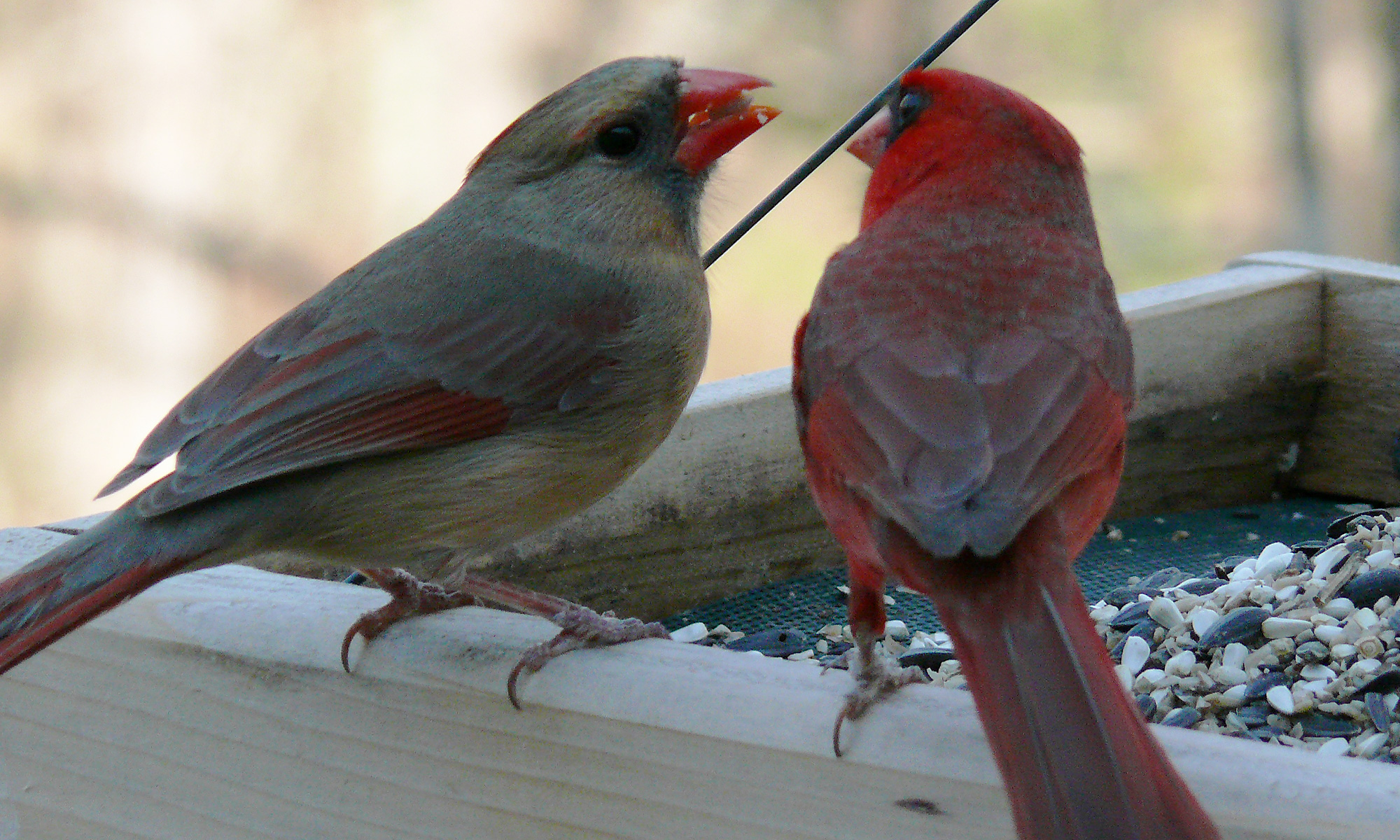
A females and male cardinal

A female and male cardinal

Oh, there’s a little bit of color. I saw two female cardinals courting a male. And the neighbor’s orange-and-white tom cat, a big fellow, was walking on a neighbor’s roof. That was a bit of a surprise; I have to wonder just how he got up there.

But better days are coming. In a month, the trees will be in bloom, and Cambridge will look at its best. I can wait.

Posted in Prophecies and Penalties, Writing fiction | Tagged , , , , | 6 Comments

Dreams

I don’t remember most of my dreams, and I remember few in detail. I don’t think I’m missing out on too much. When I wake up from a dream and try to recall it, I usually find it is logically and practically inconsistent, as if I were experiencing a sequence of events while shifting through related universes. One wonders if some science fiction authors who used the multiverse (multiple parallel universes) concept got their inspiration from dreams.

3redshirt

This is apart from whether what happened in the dream could happen in real life. I’ve had dreams in which impossible things have happened. Ever been killed in a dream? I have . . . twice, even. One of my colleagues at work killed me once. My mind didn’t like this, and edited the dream such that it was a doppelgänger of me that was killed. I think my mind likes me enough not to want to see me killed. The second time, I was killed by a Star Trek transporter. Yes, I was a red shirt. And once again, my mind stepped in, and decided I hadn’t actually been killed, just translated into a nearby dimension.

I’ve had this sort of experience in real life. No, I don’t mean being killed and somehow surviving, though someday I’ll have to mention how a ground-fault circuit interrupter saved my life from an example of stupidity that makes me cringe even now. I refer to those bad experiences we have where we spend hours afterwards just wishing we could somehow go back in time to a point ten minutes before the event, and do something different that would avoid the misfortune. The first time I dated my girlfriend, I chose an unusual route to drive home, and got into a car accident. (The other guy’s fault, by the way. The law and I agreed on that.) I spent the next month wishing that somehow I could reverse time and chosen to go home the usual way.

Clearly not a sexual image

Clearly not a sexual image

Freudians interpreted flying dreams as being sexual in nature. This bothered me when I was having a run of them. It seemed that no matter how much I tried, I could only hover at a height of 6 1/2 feet or less. I wasn’t sure if this was supposed to indicate sexual inadequacy, or sexual disinterest in birds. I hope the latter.

I’ve had few other dreams with repeating elements. However, one of them is indirectly connected to the serial I’m writing on the blog, Prophecies and Penalties. In my dreams, there was this ominous church that sat on a hill slope by the side of a road, a cross between two actual churches in the town centers of Townsend and Dunstable, Massachusetts. My imagination took the ominous feeling, and re-imagined the church as a burnt-out shell of a stone building that resembled the chapel at a school I attended, with the names of the members carved into the walls. Ominously, the last year listed had only one new member … before the church was destroyed by fire. The church doesn’t actually appear in the story, because it’s not in Quasopon, Vermont, where the story is set. Its location in my imagination is in North Naumox, Massachusetts, which is where the settlers of the Children’s North Village came from.

I’m currently running through another set of dreams with a repeating feature. It’s a house, a house with many levels, each of which functions as a separate entity, but they are all connected together. Think of it as nine ranch houses in three stacks of three placed end to end, with the middle stack one floor lower that the stacks at each end, and all connected by hallways and stairs. I think this evolved from dreams about the rambling old mill in which I once worked. In my dreams, that old mill had elevators that ran in shafts that didn’t go just up and down, but also ran horizontally, and, in one memorable dream, up a mountain slope. (Yes, I know that makes no sense. Remember, it’s a dream.)

At least this most recent series of dreams is moving upscale. The house used to actually look like a typical American ranch house on the inside, and I always seemed to be looking for the kitchen or bathroom. This last time, the house has taken on the proportions of a palace on the inside, and I was playing the role of the great man’s secretary and general factotum, the person really running the place.

When I say upscale, I mean UPSCALE (Pilsrundale, Latvia /credit Wikipedia/Wojsyl)

When I say upscale, I mean UPSCALE
(Pilsrundale, Latvia /credit Wikipedia/Wojsyl)

Posted in Uncategorized | Tagged , | 7 Comments

Chapter 5 of Prophecies and Penalties

So it’s time for Police Chief Bonnie Knowles and newly hired private investigator Emily Fisher to get down to the business of finding the person who murdered High Council member Stephen Nash. Emily’s trying to figure out what’s going on. Bonnie’s already got some ideas of her own. Read what they are, in chapter five of Prophecies and Penalties, “The frustrations of a police chief.” If you’re not already reading the story, you can start here, and follow as a new chapter goes up every week.

Posted in Prophecies and Penalties, Writing fiction | Tagged , , , , | Leave a comment

The Improved Order of the Guano Bats

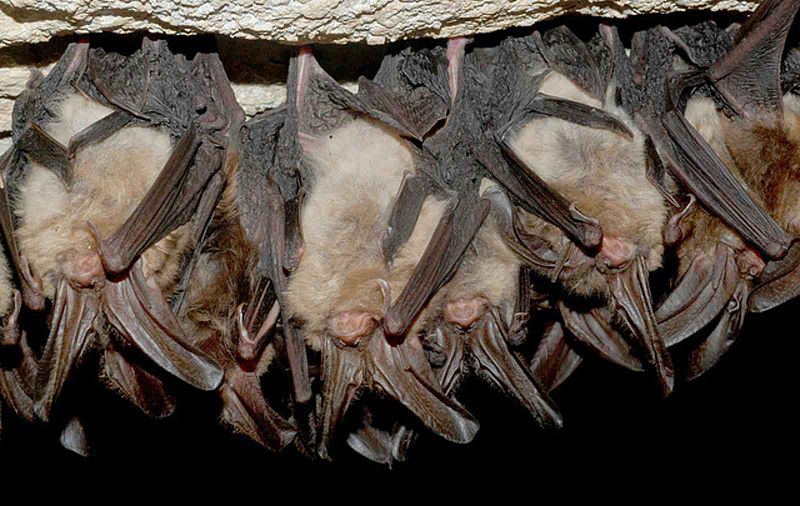
Do you really want to be known as one of these? Wouldn't you rather be a Guano Bat?

Do you really want to be known as one of these? Wouldn’t you rather be a Guano Bat?

If you are reading this, you are almost certainly not a member of THE IMPROVED ORDER OF THE GUANO BATS. But you can be a follower. Followers (a.k.a wannabe Guano Bats) are called “owls,” most definitely spelled in lower case, because they are inferior creatures. True, they follow bats and sometimes manage to kill them, but they are bird-brains, unable to ask any questions more complicated than “who?” And they are blind in the day, just as those who are not members of the Guano Bats are blind to the truth.

(Yes, bats are blind in the day, too. We’re talking metaphor here, get it? Don’t push your luck, especially if you want to rise from follower to member.)

Members of the Improved Order of the Guano Bats meet in caves, not lodges. But, like the Freemasons, on which most American fraternal orders are based, they have three entry degrees.

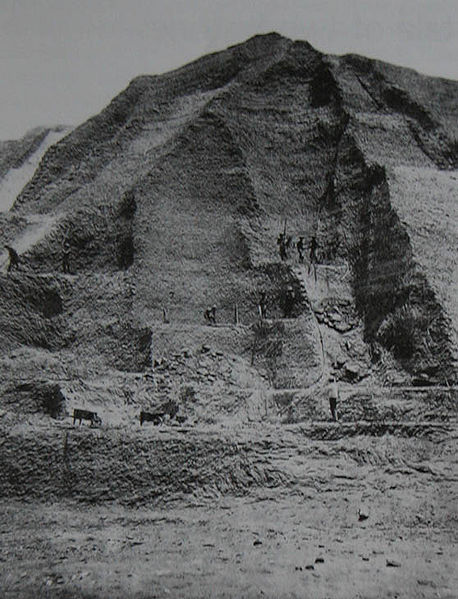
It's a 19th century mine of you-know-what

It’s a 19th century mine of you-know-what

The first degree is guano, because that’s what you are when you start in a cave: at the bottom of the totem pole. As guano, you get to do all the messy, stinky jobs, which so resemble your status in the cave.

The second degree is bat, simple. Not yet guano bat, don’t get pushy. As a bat, you have demonstrated the perseverance needed to be a successful member of the cave and a hunter of insects, which incidentally you will have to eat a plate of as your initiation rite in this degree. And you will have to pony up two years’ dues and the money for the fancy hat with bat wings you’ll get to wear during the ceremony, and when the Guano Bats go on parade. Surprisingly few members make use of this opportunity, though. We don’t know why.

Imagine the fun of hanging out with your fellow Guano Bats in the cave!

Imagine the fun of hanging out with your fellow Guano Bats in the cave!

The third degree is guano bat. This is a high spiritual aspiration, and also a matter of great convenience: there is so much guano in the world, that if you can live off of it you are set for life. Prospective members for the third degree have to spend three nights in an actual cave where the temperature is in fact 3°F. (None of your subversive French metric crap here.) You have trouble surviving at that temperature? There’s plenty of guano in the cave to insulate you and keep you warm.

Members who reach the third degree will find they have a new perception of the world, and we’re not just talking about their desire for revenge on the cave members who initiated them. They will understand the nature of truth, be open to higher spiritual realities, make a lot of money, and have spectacular sex lives. Well, as long as they don’t repeat some of the things that happened during their initiations. I can’t tell you about these things myself, because first of all, you’re not members, and second of all, I was sworn to an oath of secrecy. If I ever violate that oath, my cave brothers and sisters will publish photographs of me from the initiation ceremonies. And we so don’t want to go there.

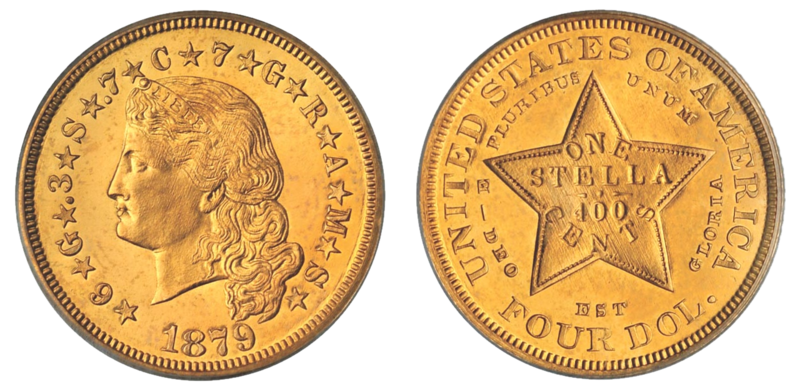
Gold coins are always welcome in payment, especially at face value!

Gold coins are always welcome in payment, especially at face value!

Membership in the Improved Order of the Guano Bats is open to members of any race, creed, color, gender, and planet, so long as they are sentient and can pay the dues and fees in cash. We also accept online payments, but don’t accept physical checks or credit cards — they are too hard to read in the caves. And besides, the treasurer of the New Haven Cave #21 (Masters of the Night Cave) absconded with a bunch of them some years ago, and we don’t want to see a repeat.

A legendary early Grand Panjandrum

A legendary early Grand Panjandrum

There are advanced degrees, which if you can afford them are great because they involve a lot less humiliation. Besides, they grant you access to the secrets of many occult disciplines, such as alchemy. (Secret: it doesn’t work.) Those members who rise to the Exalted Order of the Grand Panjandrums earn the special privilege of wearing jet packs in parades, though after the Great Indianapolis Thanksgiving Tragedy of 1997, they are asked not to use them.

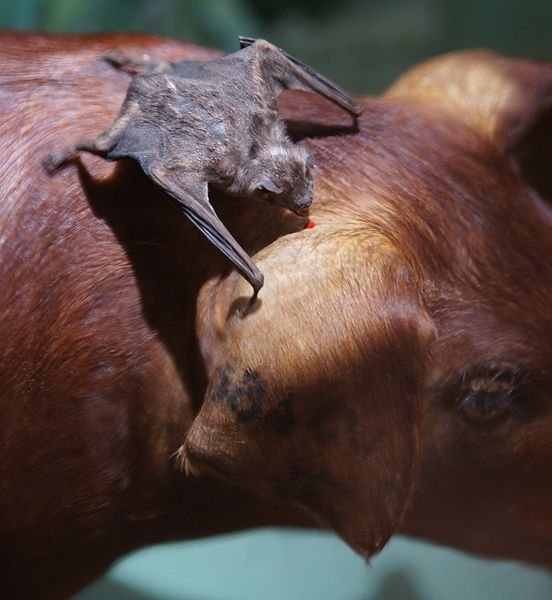
I conclude this discussion of the Improved Order of the Guano Bats with a warning. Certain evil-minded individuals (not you, Worthy Grand Bat, Mass. Cave #3) have diverged from the truth to follow a left-handed path. They hook you into what looks like a properly ordered cave, and then offer you initiation into a 4th degree they call the Order of the Vampire Bat. Beware of these impostors! They are evil!

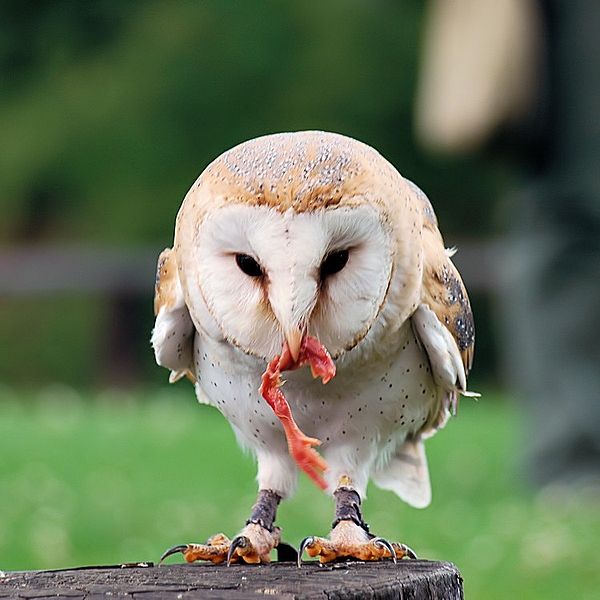
The face of evil! Preying on the unclean! Do you want to be like this?

The face of evil! Preying on the unclean! Do you want to be like this?

Posted in Uncategorized | Tagged , , , , , | 8 Comments

Traveling in imagination to Viking Iceland

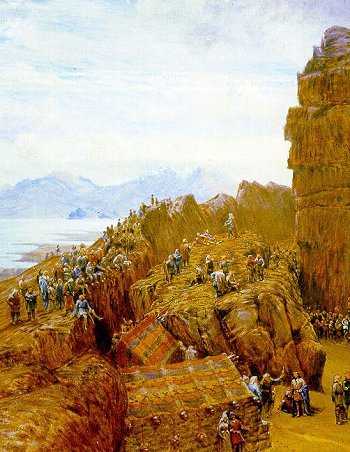
Commonwealth government: the annual Althing

Commonwealth government: the annual Althing, where the leaders met to try cases, mediate disputes, and pass laws

I’ve recently been reading books on medieval Iceland. It’s a fascinating period in a curious land. The island was settled by Vikings fleeing from the rule of the first major Norwegian king, Harald Finehair (c. 850 – c. 932), or so legend says. They founded a country that functioned with a government of chieftains who met only once a year, the Icelandic Commonweath or Republic, which endured until the Icelanders, exhausted by internal wars, submitted to the King of Norway in 1262. And these Icelanders of the Commonwealth era wrote many works about their history and their beliefs, works that survived into modern times, so we can learn quite a bit about them.

Much of their history, often fictionalized, is embodied in their sagas. Ironically, I started by reading one of their sagas about another land, the Orkney Saga, about the history of those Scottish islands under Viking rule. But I soon branched out into what are called the “family sagas,” sagas about how Icelandic families and individuals lived in Commonwealth days. In fact, I used two of these sagas, Egil’s and the Laxdæla, when teaching Western Civilization courses. Apart from general curiosity, I needed to know more about them than my students, so I did more reading in such books as Jesse Byock’s Viking Age Iceland (2001), a book which discusses life during the Icelandic Commonwealth, as interpreted through the family sagas. I’d recommend it, with one reservation: Byock’s explanation of Icelandic culture through interpretation of the sagas should not be taken as literal historical fact.

In the last century of the Commonwealth, the island was riven by conflict between political leaders who had accumulated unprecedented power. This is referred to as the Age of the Sturlungs, after one of the major families involved in these conflicts. And one of the Sturlungs, Snorri Sturluson, was responsible for several of the written works from this period, and is an important political figure as well.

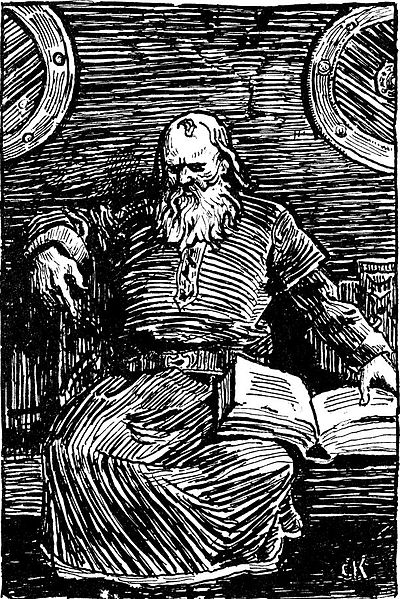
Snorri as imagined by the 19th century Norwegian illustrator

Snorri as imagined by the 19th century Norwegian illustrator

Now Byock, and most of the reference materials I’ve consulted, have been fairly vague on the Age of the Sturlungs. So I was pleased to see a popular biography of Snorri Sturluson come out, Nancy Marie Brown’s Song of the Vikings: Snorri and the Making of Norse Myth (2012). If you want to know who Snorri was, what political life was in the Age of the Sturlungs, what role Snorri played in those politics, his role as a writer, and the shaping of Norse mythology, this is the book for you. However, as with Byock’s book, I have a major reservation about Brown’s work. Because information on Snorri is often scanty (and in how many places have we seen that problem before?), Brown uses literary works attributed to him, including some for which the attribution is controversial or dubious, to illuminate his thinking and character. As a way to introduce the reader to 13th century Iceland, this technique cannot be faulted. It does a good job of giving the reader a sense of life in Iceland in this period. But it goes beyond what historians would find as acceptable reconstruction of Snorri’s life.

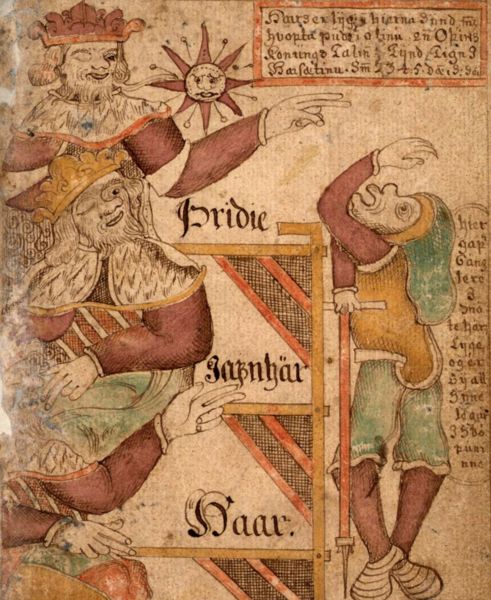
Much of the Prose Edda consists of King Gylfi asking question of three different aspects of the god Odin

Much of the Prose Edda consists of King Gylfi asking question of three different aspects of the god Odin

Still, it led me to track down and read one of the works attributed to Snorri, the Prose Edda (the Penguin edition of which is translated by Byock, which gives you an idea of how few English-language authorities there are on Icelandic culture). Together with the Poetic Edda, which comprises traditional poems, these works provide most of out knowledge of Norse mythology.

Now, I got most of my knowledge of Norse mythology from Edith Hamilton’s Mythology: Timeless Tales of Gods and Heroes (1942), and I always wondered why she gave it such short shrift compared to Greek and Roman mythology. After reading the Prose Edda, I understand. Thanks to the way people of my generation (and many previous generations) were brought up, we considered the literary corpus of Greek and Roman mythology as how the mythology of a polytheistic religion should look, as opposed to interpretations of that mythology according to the culturally-specific literary canons of Greek and Roman theater and poetry. However, the Vikings did not live as the ancient Greeks and Romans did, and Norse mythology was not interpreted in the same way. We have it in forms not far removed from oral poetry and story-telling. The main portion of the Prose Edda is in the form of a question-and-answer session between a human and Odin. And most of the rest is a commentary on poetry. Moreover, the fragments we have of Norse mythology were set to paper over two centuries after Christianity had supplanted the pagan faith. Much of the context and meaning of what survived is missing or obscure. So not only do we have less of the Norse mythology, what we have is not as easily translated into stories on account of the method and forms by which it was transmitted to us.

The other thing I learned from reading the Prose Edda is that ascribing it to Snorri Sturluson is too simple. Even in English, it’s clear that the Prose Edda is made up of several parts in different styles. Snorri definitely wrote one part of it. He may have written other parts, and he may have compiled it. But I think it unlikely that he wrote it all as it stands today. It’s too internally contradictory as well as being in several styles.

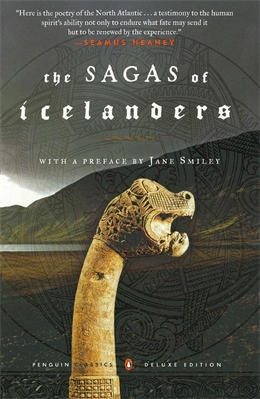
It includes both Egil's Saga and the Laxdaela Saga, by the way

It includes both Egil’s Saga and the Laxdaela Saga, by the way

If you’ve become interested in this material, and haven’t read any of it before, I’d start with the oversized Penguin paperback, The Sagas of Icelanders: A Selection (2000) and Byock’s book to learn about the sagas and the Commonwealth, and then tackle Brown’s book on Snorri and the Prose Edda to round out your study with the Age of the Sturlungs at the end of the Commonwealth and the mythology that prevailed at the beginning.

And, if you want a proper story telling you Icelandic history, then let me recommend the “graphic novel” that is volume 7 of the comic book Northlanders, written by Brian Wood. The bound volume collects a nine-issue story covering the whole history of the Icelandic Commonwealth, from settlement to their loss of independence, through the fortunes of one family. Wood told one other story about Iceland in Northlanders, a haunting short (2-issue) story called “The Girl in the Ice,” set in the dark days of the Age of the Sturlungs, but that’s in the collected volume 5, along with other material. Get volume 7 first, and if you like it, then try volume 5.

Northlanders 7

Posted in History, Reviews | Tagged , , , , , , , , , , | 7 Comments