Off to the movies: one old, one new: Hell House, Hell Baby

I live with someone who does not enjoy horror films, so when she’s away, I often rent them. This last weekend was one such occasion, so I watched two films, 1973’s The Legend of Hell House and this year’s Hell Baby. The former is an old standby, the latter a brand-new stink bomb.

Richard Matheson (1926 – 2013) wrote a lot of horror, fantasy, and science fiction, and wrote almost as many screenplays for television and film, often adapting his own work. So he knew what he was doing when he adapted his novel Hell House for the cinema. I recall reading the original novel many years ago, and the movie is a reasonable adaptation, given the desire to avoid getting a film rating that would bar teenagers from watching it.
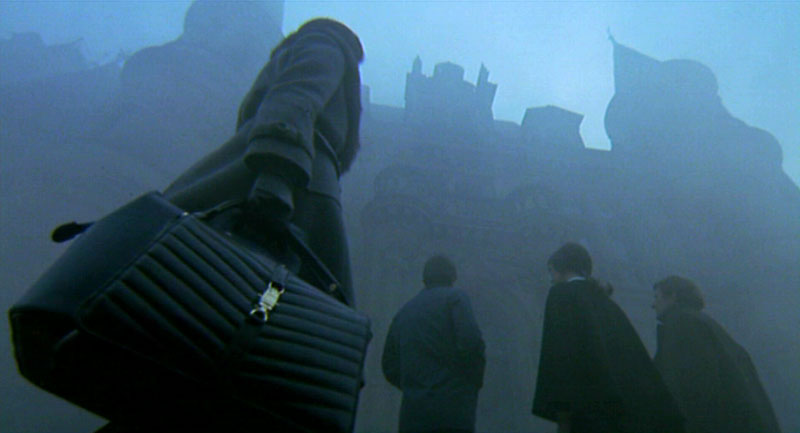
The Legend of Hell House: the house and the team

The Legend of Hell House:
the house and the team

The plot is simple: take a physicist, a spiritual medium, and a physical medium, and throw them against “the Mount Everest of haunted houses,” known for killing or crippling those who try to investigate it. And the house immediately sets to manipulating the investigators, pitting them against each other. If this sounds a bit like Shirley Jackson’s 1959 novel The Haunting of Hill House, you’ve got the right idea. The two bits that distinguish the plot from the former are a conflict between science and faith, and the presence of a survivor from the last failed investigation. (The book Hell House also had more explicit sexuality, but much of that was dropped from the film. For that matter, the sexuality in Jackson’s book was also toned down for its 1963 film adaptation, The Haunting.)

She's so earnest, he's so resigned to fate

She’s so earnest, he’s so resigned to fate

Pamela Franklin, who always looks so young in films, carries this picture as the psychic medium who is seduced in more than one sense by the house. But my favorite is Roddy McDowall’s performance as the survivor from the last investigation. While he has agreed to join this investigation, he is haunted by the previous failure, and refuses to actively investigate the house any further. Ironically, his refusal, by making it harder for the house to manipulate him, gives him the perspective to solve the mystery of Hell House.

All in all, a nifty bit of fun. The Legend of Hell House won’t knock your socks off, there’s not quite enough psychological tension for that, but you’ll appreciate it. And it avoids the splatterfests that dominate the contemporary horror film genre. It’s a restrained horror flick.
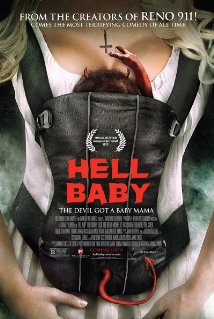
When the poster shows a scene that's not in the film, be on your guard!

When the poster shows a scene that’s not in the film, be on your guard!

“Restrained” is probably the last word one would use to describe Hell Baby. This film was apparently meant as a send-up of the horror film genre. It’s easy to see its roots in The ExorcistGhostbustersRosemary’s BabyPsycho, and a host of other notable and forgettable films. And that creates one of the problems that dooms this film. You have to respect the material to send it up effectively. Hell Baby is so busy making fun of everything, that it lifts only moments from films, not their context. For example, our ExorcistGhostbusterMen in Black pair of priests are so busy getting to plot points that they lack personalities. They just tell jokes and move on. There are so many possibilities for humor in giving these guys a bit of soul. But Hell Baby is soulless.

And that’s the other problem with the film. A comedy, a parody, should make one laugh. This one does not. Now it could be that there is a deep, sophisticated sense of humor going on here, laughing at the absurdities of the world through a grotesque reflection of its self-imagery. . . . Nah, the jokes are just bad. They lack wit, they lack build-up, they lack humanity, and they aren’t absurd enough to get you laughing on their own.

So what’s it about? A very pregnant woman and her husband move into a haunted house, where she is possessed by a demon. The woman is expecting twins. When they are delivered, one of them turns out to be a demon. It is killed. The end. Oh, and there are a lot of side plots and characters that are as funny as my description of the main plot.

The trailer for this disaster is actually quite entertaining. Had that been all they filmed, we might think we were missing a classic. And I’m a fan of Riki Lindhome, the blonde half of the singing duo Garfunkel & Oates (though don’t get me wrong, I’m a fan of Kate Micucci, the other half, too), so I thought I’d watch the film. Her character actually has comic possibilities, but falls as flat as everything else in the film. Though now I know what she looks like without clothes.

The sad thing is that I can see a truly funny movie buried in the ruins of Hell Baby. Or maybe I just saw the trailer too many times.

Posted in Reviews | Tagged , , , , , | 5 Comments

Chapter 34 of Martha’s Children, and op art

The last time we saw Nora O’Donnell, her brother was a vampire, her parents under the control of sorcerers, and she had just toppled backward into . . . nothing? Well, it turns out to be a very specific nothing, and Nora’s not alone. What price will she have to pay to get out of . . . nowhere? Find out in chapter 34 of Martha’s Children, my serial about cops, vampires, sorcerers, and a very bewildered teenage girl. If you’ve not been reading this story before, you can start here.

Escher's "Relativity" (1953)

Escher’s “Relativity” (1953)

Nora mentions M.C. Escher (1898 – 1972), whose artwork is justly famous for the way it distorts reality, often through distorted perspectives or impossible topological transformations. But Escher’s wasn’t the only art that made people dizzy in the late 1960s, even without drugs. It was a great period for what was called “op art,” art that made use of optical illusions to fool the eye and confuse the brain. While trompe l’œil art had been produced in Europe for centuries, it was the combination of those techniques with the forms of artistic abstraction that had developed earlier in the twentieth century that spawned the op art movement. Its popularity in the United States is said to stem from a show called The Responsive Eye at New York’s Museum of Modern Art in 1965. So

Bridget Riley's "Movement in Squares" (1962) is a representative example of black-and-white op art

Bridget Riley’s “Movement in Squares” (1962) is a representative example of black-and-white op art

popular were the images of op art that they were soon copied, altered, and reproduced everywhere. I remember buying book covers for my elementary school books that featured op art designs, and thinking they were rather cool. The black-and-white designs were the most common, and also the cheapest to reproduce. The craze lasted only a few years, and was definitely over by 1970. No doubt the limited range of op art designs available in popular culture wore out their welcome. While Escher’s work was often grouped with op art, and was also popular during the op art craze, it was more complex in conception, and continues to be popular.

Posted in History, Martha's Children, Writing fiction | Tagged , , , , , , , | 2 Comments

Playing at history: your author as George S. Boutwell

This is the real Boutwell

This is the real Boutwell

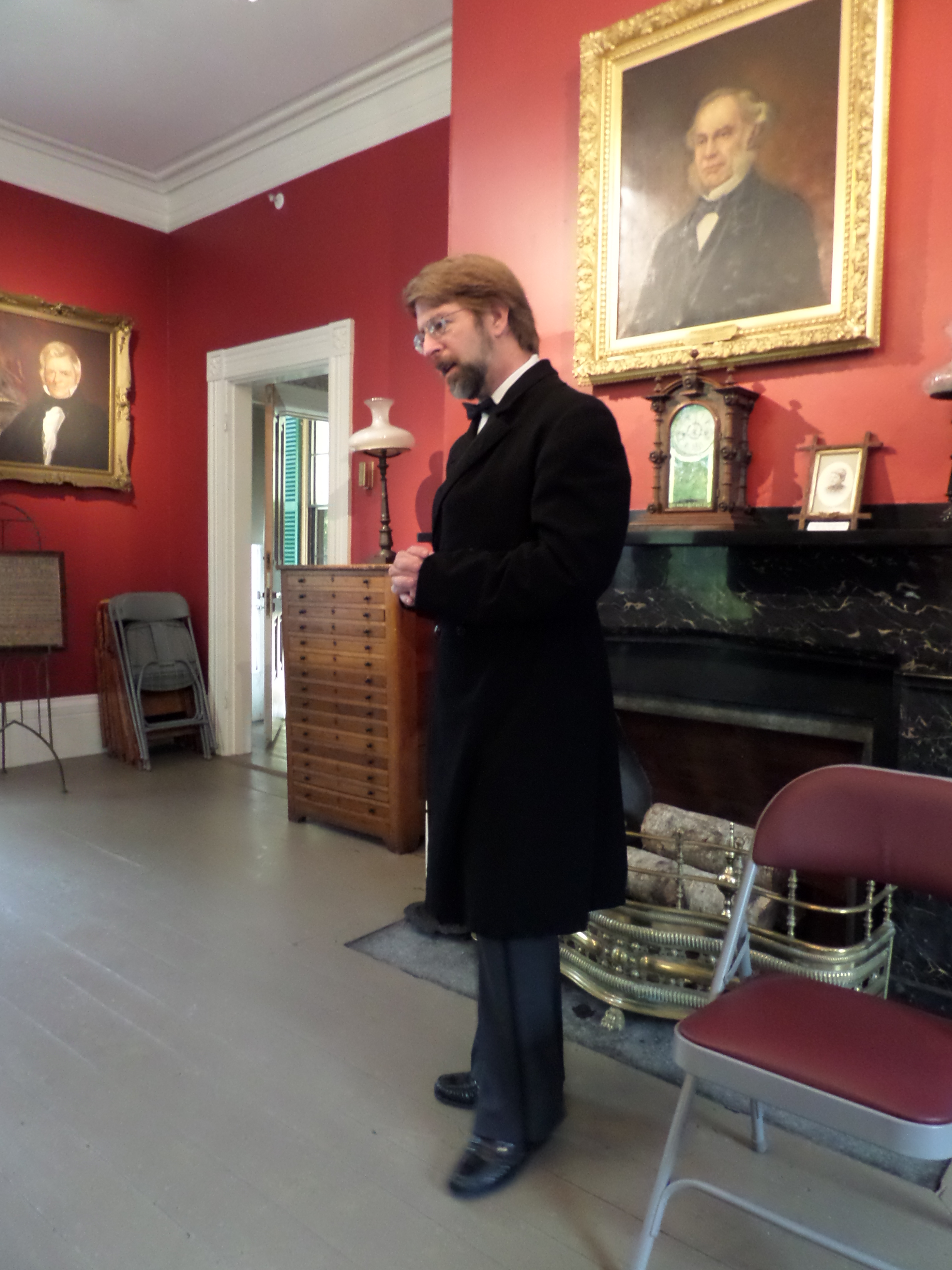
Me as Boutwell in the parlor of his house

Me as Boutwell in the parlor of his house

I mentioned in my previous post that I’d be spending this last Saturday in my old home town, playing a historical character. The character I was playing was George S. Boutwell (1818 – 1905), who served as a Massachusetts governor, United States Senator, and Secretary of the Treasury during his public career. My focus this time was on his life as a homeowner, gentleman-farmer, and citizen of Groton, Massachusetts, where he had built a home the year he became governor. That home now serves as the town historical society’s headquarters. It had been closed to the public for two years due to water damage from a frozen pipe.

But the society had done a bang-up job restoring it, and we had a nice, comfortably cool day to celebrate its reopening. I dressed up in an outfit similar to the one you see above. Boutwell tended to give speeches that ran over an hour; I managed to hold my audience for fifteen minutes. And then I stayed in character as Boutwell to greet people to “my home,” and answer their questions. As it turned out, people were more likely to ask questions that demanded I break out of the Boutwell persona, and assume my own identity as a historian. So I alternated back and forth between the two roles.

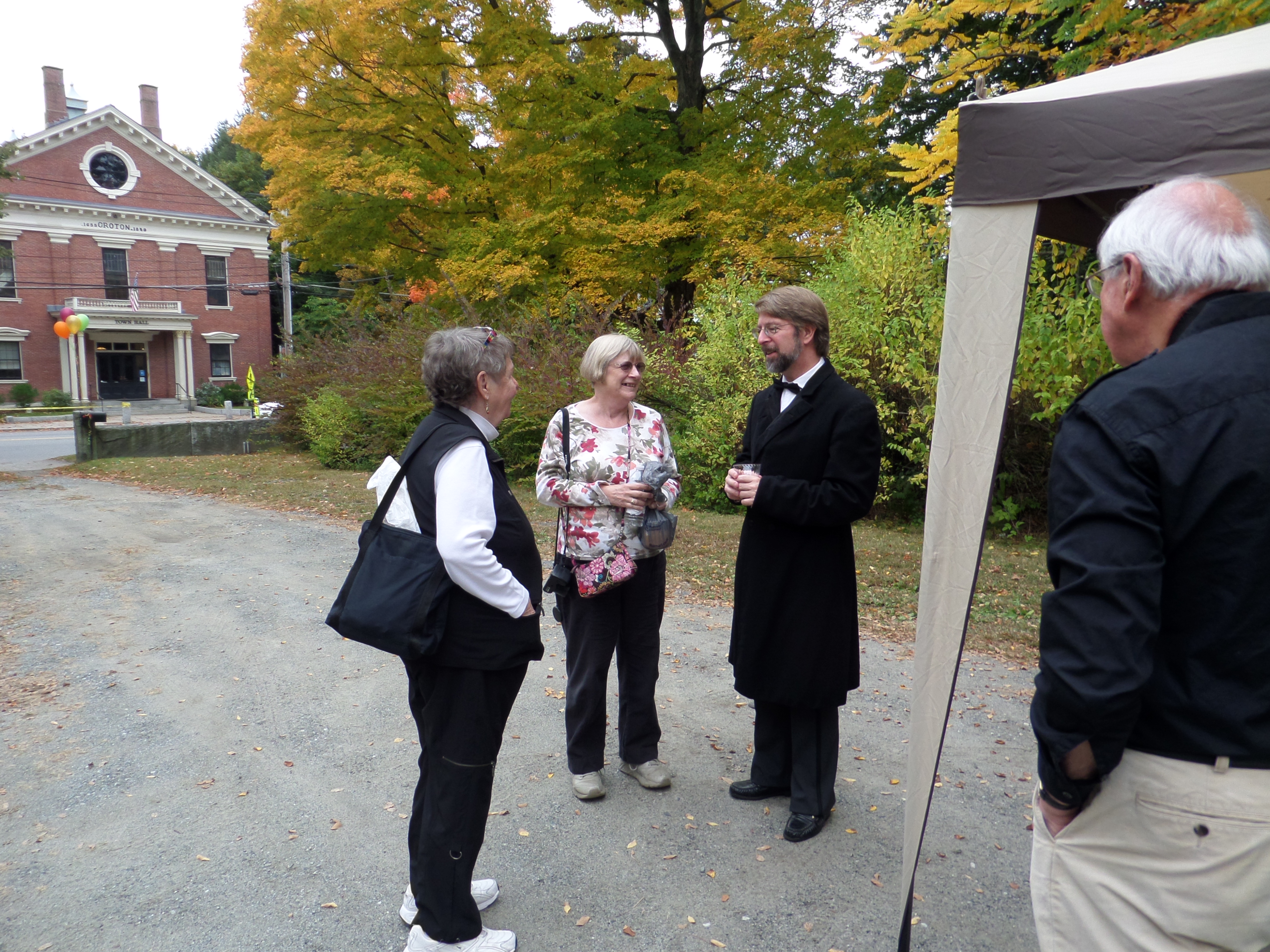
A moment relaxing outdoors, with the old town hall in the background

A moment relaxing outdoors, with the old town hall in the background

Historically, Boutwell was serving as Secretary of the Treasury when the first major Japanese diplomatic mission came to the United States. He spent some time advising them, and the banking system they implemented in Japan in the 1870s reflects Boutwell’s advice. The Japanese delegation gave Boutwell and his family several gifts. So when I wrote a fictional letter from Boutwell to his daughter Georgianna to explain the origin of the Japanese walking stick that figures in The Dragon Lady of Stockbridge, I wasn’t stretching the truth very much!

Oh, and there’s one more picture on my other blog, No Humble Opinion.

Posted in Dragon Lady, History | Tagged , , , , | 2 Comments

Chapter 33 of Martha’s Children, and taking on a historical character

Martha Fokker is not the most trusting of people. When her friends and allies start disappearing, she suspects foul play. Well, if there wasn’t foul play before, there will be by the time Martha gets finished! And Make Love Not War also takes a bow in chapter 33 of Martha’s Children, a story of Chicago cops, vampires, sorcerers, and disused basements.

Boutwell in the 1870s

Boutwell in the 1870s

I’m on the road for the weekend. My home town’s historical society has asked me to portray the town’s most politically important historical figure, George S. Boutwell (1818 – 1905). Never heard of him? Most people haven’t. Probably his proudest moment was his role in helping to secure the rights of the former slaves after the Civil War through the adoption of the Fourteenth and Fifteenth Amendments to the Constitution, which ensured that the former slaves would be citizens with the same right to vote as free whites. He also served on the committee in the House of Representatives that impeached President Johnson in 1868; a picture of that committee, with Boutwell in the center, serves as the banner picture for my other blog, No Humble Opinion.

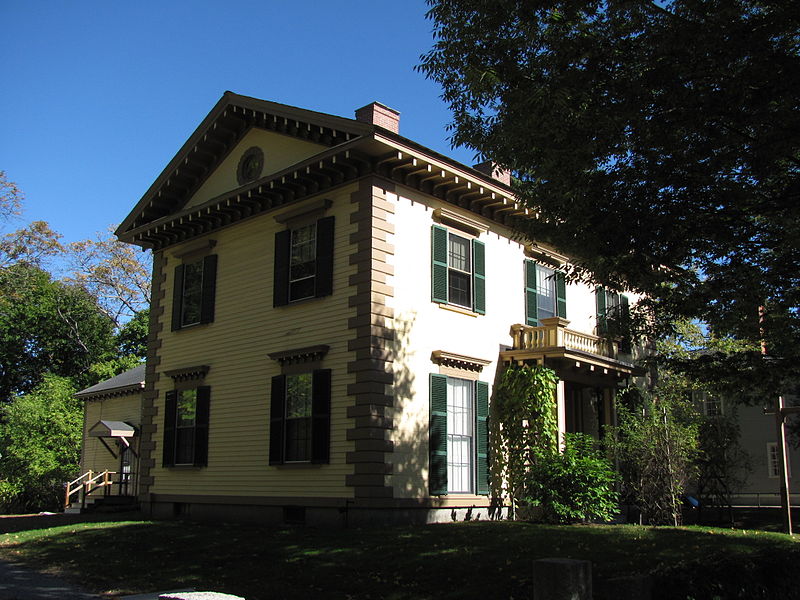
Boutwell’s house serves as the town historical society’s headquarters. I’ll be spending a day there, portraying Boutwell at his ease in the 1880s, greeting visitors and talking about life as a lawyer, elder statesman, family head, and gentleman-farmer in the small farming community that Groton, Massachusetts was in the 1880s.

Boutwell House Groton Historical Society (photo: John Phelan)

Boutwell House
Groton Historical Society
(photo: John Phelan)

Posted in History, Martha's Children, Writing fiction | Tagged , , , , , , , , | 6 Comments

Conspiracies, imaginary and real

The Queen of the Night from "The Magic Flute"

The Queen of the Night from “The Magic Flute”

On this date in 1791, Wolfgang Amadeus Mozart’s The Magic Flute had its premiere in Vienna. For those of you who don’t know, The Magic Flute is famous for incorporating a great deal of Masonic symbolism into both the music and plot of the opera. (Both Mozart and the librettist, Emanuel Schikaneder, were Freemasons.) The Masons were and are a secret society, and the subject of many conspiracy theories. In fact, it was only six years after the premiere of The Magic Flute that Augustin Barruel published a book claiming the Freemasons had engineered the French Revolution as a plot to overthrow the Christian religion and established governments of Europe.

While Freemasonry has sometimes had a political edge, it is hard to see it, and Mozart, as the secret agents behind something as complicated as the French Revolution and the subsequent upheaval in European politics and society. But there really was a conspiracy in Vienna. But not in 1791, no, not with Mozart and The Magic Flute. It began almost exactly 23 years later. It was an open conspiracy, which is to say that everyone knew about it, even though only a few people made the decisions, and they did so in secret. It was called the Congress of Vienna, and it ran from the end of September, 1814, until June of 1815.

The Congress of Vienna, showing the most important diplomats

The Congress of Vienna, showing the most important diplomats

Between 1789 and 1814, revolutionaries and Napoleon with his armies had overthrown or changed almost every government in Europe. With his defeat, the victorious great powers, Britain, Russia, Prussia, and the Habsburg monarchy, had to decide how much they were going to punish France for its role in these events, and to redraw the political boundaries of Europe. Metternich, the foreign minister for the Habsburg monarchy, whose realms of Austria and Hungary (and associated territories) had been badly battered during the Napoleonic Wars, wanted the great powers to meet in Vienna, the Habsburg capital, as a way of restoring the prestige of the Habsburgs. Oh, and it would make it easier for Metternich to control the proceedings. The other major powers agreed, and so the Congress opened as foreign ministers and other diplomats gathered in late September, 1814.

Many states had been drastically altered, created, or abolished in the years since 1789. Almost all of them sent emissaries to Vienna to plead their causes before the great powers. They hoped to take part in the deliberations. In that, they were to be disappointed. The great powers handled the negotiations among themselves.

Talleyrand in 1809

Talleyrand in 1809

There was one exception, though. France as the defeated power had not been invited to Vienna. Desperate to avoid being punished for their role in the Napoleonic Wars, the French put their trust in Talleyrand, a man of dubious morals and flexible political beliefs, and sent him to Vienna. Talleyrand did not let them down. A wily, intelligent man, he played off the great powers against each other, got admitted to the negotiations among the great powers, and saved France from being significantly punished.

The great powers treated political questions according to two major principles. First, there had to be a balance among the great powers. Second, they preferred “legitimate” regimes, which is to say regimes that had existed before 1789, regimes whose authority was based on tradition and hereditary power, not ethnic identity or democratic elections. So they reimposed the reactionary Bourbon monarchs on France, split up Poland between Russia, Prussia, and the Habsburgs, and enacted many other similar measures.

The Duchess of Sagan in her younger days

The Countess of Sagan in her younger days

It was not all business at the Congress. There were so many diplomats in town, all trying to make alliances and gain the attention of the great powers, that someone or other was throwing a ball, reception, or other party almost every day, and every night as well. Vienna became a constant social whirl. And sometimes the social life spilled over into the negotiations. Both Metternich (who was 41) and Talleyrand (who was 60) were noted lady-killers, and they both had their eyes on members of the same family: the Countess of Sagan (the former Duchess of Courland) and her daughters. Metternich had been bedding the Countess’s daughter Wilhemina. But she broke off with him during the Congress, which disturbed him so much he made several significant diplomatic mistakes. Talleyrand was more fortunate. He had loved and lost the Countess years before. But her daughter

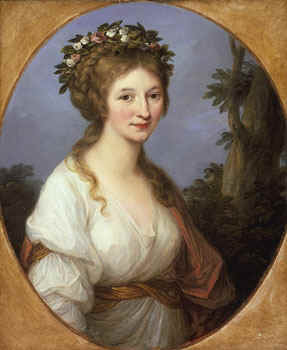
Dorothea in her youth

Dorothea in her youth

Dorothea had made an unhappy marriage with Talleyrand’s nephew. She became Talleyrand’s companion instead, and, it was rumored, his mistress. The Countess went to Vienna to confront Talleyrand about his relationship to her daughter, but to no avail. Dorothea would be Talleyrand’s companion until his death.

The decisions made by the great powers at Vienna in 1814-15 settled the political order of Europe for decades. The great powers didn’t go to war with each other until 1854, and there wasn’t a major European war involving all the great powers until 1914. It would take repeated revolutions, and finally the First World War (1914- 1918), to overthrow the system of legitimacy and hereditary rule for one of democracy and nationalism. Simply put, the Congress of Vienna was one of the most successful conspiracies of all time.

Posted in History | Tagged , , , , , , | 3 Comments

Chapter 32 of Martha’s Children, and Mudd

What’s a good Catholic girl to do? Nora’s brother is leading a group of vampires who want reinstatement as cops, and Nora herself has been bitten by the same vampire who killed all those cops. So she turns, naturally, to the Church. Hasn’t she seen any vampire flicks with crosses and stakes? Find out what happens when Nora O’Donnell tries to explain vampires to good Father Quinn, in chapter 32 of Martha’s Children, my serial of cops, vampires, and sorcerers in 1969 Chicago. If you’re not reading already, you can start here.

A change of pace today. The L. Palmer Chronicles recently mentioned this blog in a new post entitled, “What Keeps Me Reading (Blogs),” citing Sillyverse for its intellectual/educational content. Well, I tell you! It’s not why I started writing the blog, but I’m happy to provide knowledge and other food for thought. To any reader who has followed her link, check out the posts in my “History” category as the best way to find examples.

However, L. Palmer is more into nerd/geek culture, so today’s post is for her.

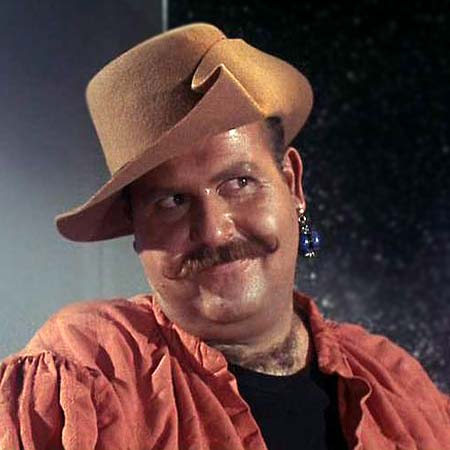
Carmel as Mudd in "Mudd's Women"

Carmel as Mudd in “Mudd’s Women”

It is the birthday today of Roger C. Carmel (1932 – 1986), the only actor to twice play the same guest character in the original Star Trek, and then reprise the role for an episode of the animated Star Trek series. Carmel played Harcourt Fenton Mudd, commonly called Harry, a roguish trader whose antics always seemed to backfire while almost bringing the starship Enterprise to the brink of destruction. In “Mudd’s Women” (1966), he used crystals to make plain women look beautiful, while almost causing a failure in the Enterprise‘s engines. In “I, Mudd” (1967), he ruled over a planet of androids who took over the Enterprise. And the animated “Mudd’s Passion” (1973) crosses “Mudd’s Women” with the original series’s “The Naked Time,” to have Spock fall in love with Nurse Chapel, thanks to Harry’s crystals. Personally, I’d never seen the animated episode until last night when preparing this blog post. It was amusing, and was greatly in the same spirit as the two original episodes. On the other hand, in these post-feminist days, the attitude toward women in all three episodes (especially Nurse Chapel’s role in the animated episode) will grate on many people’s sensibilities.

Carmel’s acting career was hardly confined to Star Trek. He also performed in The Alfred Hitchcock HourThe MunstersThe Man from U.N.C.L.E.Voyage to the Bottom of the Sea, and Batman, along with many other television series and some movies in a career that lasted three decades.

So a toast to the late Roger C. Carmel on his birthday. Someday I want to write a lovable rogue like his Harry Mudd.

Posted in Martha's Children, Writing fiction | Tagged , , , , , , , | 4 Comments

For once, a video that does justice to the book: The Green Man

You’ve heard the refrain: if only the movie had been true to the book, it would have been so much better! Of course, much of what can make a book good are things that are difficult to capture in a visual medium. And then there’s the problem of one’s own visualization being different from the movie. All of which leads to the conclusion that there is no mechanical way to transfer a book to the screen.

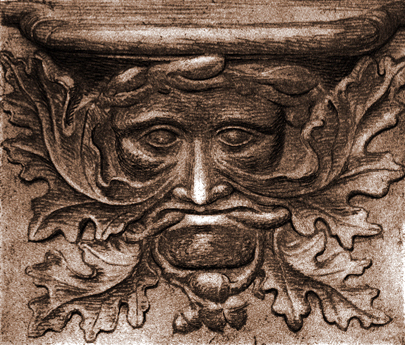
Etching_of_Vendome_Green_Man_misericord

A green man
(Attr: Simon Garbutt)

Partly because his name came up in Brian Aldiss’s Billion Year Spree (and Trillion Year Spree, which I’ve also finished reading), and partly because I’d heard of the story, I recently picked up Kingsley Amis’s 1969 ghost story, The Green Man. Although I enjoyed the story, I didn’t think that much of it at first. However, as I reviewed it in my mind I had to admit it was a nifty bit of work. It reads something like a slapdash ghost story, but it’s actually carefully constructed, with numerous comparisons and contrasts being drawn. Amis also gets his digs in at some of the sillier notions from the late 1960s, while suggesting there may not actually be all that much new under the sun.

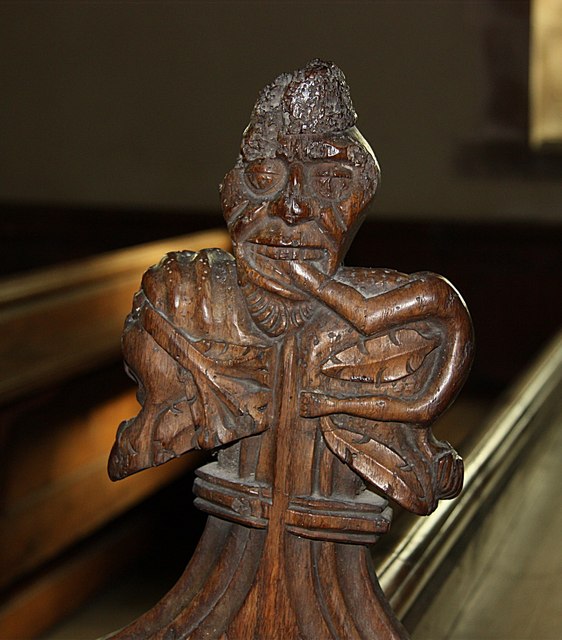
A silver ornament that looks similar figures in the story. (Photo: Wikipedia/Richard Croft)

A silver ornament that looks similar figures in the story.
(Photo: Wikipedia/Richard Croft)

So what’s it about? Our protagonist, Maurice Allington, is the keeper of the Green Man, an inn a bit off the beaten path in Hertfordshire. He is, shall we say, a charming cad. He has his difficulties: a family falling apart, a drinking habit that is ruining his health, and a ghost. For the inn is haunted by one Dr. Thomas Underhill, late of Cambridge University. Very late, in fact: Underhill lived in the 17th century. In his own way, he was a charming cad, too. And that is one reason he’s going to be a problem for Maurice Allington.

(By the way, this is definitely a story for adults, in both the book and video versions. There’s a fair bit of nudity and sex, the latter not terribly explicit in either the book or the video adaptation.)

Underhill on the left, Allington on the right

Underhill on the left, Allington (Finney) on the right

The British Broadcasting Company and the American network Arts & Entertainment collaborated on a three part adaptation shown on TV in 1990. It’s a good adaptation. The producers and screenwriters followed the book where they could, and came up with clever ways to cover some material in cinematic fashion. Underhill’s history, for example, instead of being dumped in our laps at the beginning as in the book, is unveiled step-by-step as Maurice has to cope with the ghost. It’s hard to imagine anyone else playing Maurice Allington after you see Albert Finney in the role. He looks like one would imagine Maurice Allington: an older man, once handsome, still with some of his looks, and a bit of weight around the middle, charming without being good.

What makes the story work, both as a book and TV movie, is the dynamic between Maurice Allington and Dr. Thomas Underhill. They are both “bad boys,” as Maurice’s father puts it. And when they come to deal with each other, each will stay true to his character. The results will not be what you expect, unless you’ve been paying very, very close attention. But they are satisfying.

Posted in Reviews | Tagged , , , , , , , | 6 Comments

Chapter 31 of Martha’s Children, and getting rid of ghosts

As the sorcerers’ war between Edward Cross and Martha Fokker heats up, Ivy McIlwraith finds herself on the sidelines, unable to help directly. But Ivy’s stock in trade, as a scholar and librarian, has been information, and she decided to unravel some of the mysteries surrounding the two combatants. But before the night is over, Ivy will confront a new mystery that she must solve! Read chapter 31 of Martha’s Children, my serial of cops, vampires, and sorcerers in 1969 Chicago, to find out what dire threat Ivy faces!

A ghost with a mission: Maria Marten appears to her mother in a dream

A ghost with a mission: Maria Marten appears to her mother in a dream

Considering that they are usually considered undesirable creatures, I’ve found surprisingly little on how one gets rid of ghosts. The traditional ghost in British-American folklore comes back to finish business left undone in life, such as taking vengeance on the person who killed it. It generally goes away once the business is completed. More recently, people have called in mediums or other spiritualist, who either try to communicate with the ghost and get it to “move on,” or engage in some sort of spiritual cleansing ceremony to banish it. (Sometimes this is called an exorcism. I thought that term applied only to demons, but I’ve found out I was wrong.)

The horror movie classic, The Legend of Hell House (1973) supplemented the use of mediums with technology. In the movie, a physicist theorizes that ghosts are manifestations of electromagnetic energy, and deploys a machine to eradicate such entities. While the device fails, subsequent events show that the theory was correct. It was just that the ghost had anticipated such an attack, and had shielded its source of power! 1984’s Ghostbusters took the technology a step further. It featured ghost traps, technological devices that somehow sucked in and imprisoned ghosts.

But even before modern technology, it was possible to build a ghost trap. Ghosts are the souls of the dead, and any magic that could trap the soul of a living person could at least in theory do the same for a dead one. Mirrors not only reflected the image of souls (which is why vampires are often said not to have reflections), but could conceivably capture them. So a mirror ghost trap seems a likely possibility. Certainly I’ve encountered them in fiction.

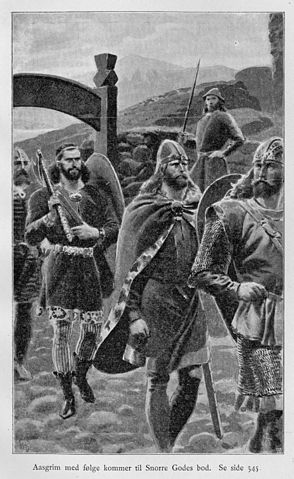
Snorri the Godi was so clever, he was an Icelandic ghost buster

Snorri the Godi was so clever, he was an Icelandic ghost buster

Outside of the British-American tradition, the power of ghosts and the methods of removing them vary greatly.  For example, several Icelandic sagas mention ghosts that materialize as superhumanly strong physical entities, and yet vanish into their graves. One of these is called a draugr. Just as they seemed both physical and spiritual, they could be banished by both physical and spiritual means. If one could wrestle them into their graves, something only a hero could manage, they would cease to trouble the living. Destroying the body by fire also worked, sometime. And in at least one case, in the Eyrbyggja saga, two gangs of them were forced out of a house through a spiritual judgment.

Ultimately, how you trap a ghost depends on whether you think it is a spiritual entity or a physical entity. Against the former, magic should prove effective. Against the latter, best hope that someone builds a Ghostbusters trap soon. The machine in The Legend of Hell House was too big to be portable.

Posted in Martha's Children, Writing fiction | Tagged , , , , , , , , | 6 Comments

Stoker devolution: from Dracula to Seven Stars to The Awakening

Mummy is a baaad girl!

Mummy is a baaad girl!

Between having some idle time, and doing some Egyptian-themed reading, I decided to watch a movie I’d been meaning to see for some years, The Awakening. No, I’m not going Kate Chopin on you, nor am I talking about the 2011 film of the same name. The one I’m talking about was released in 1980. It starred Charlton Heston, Susanna York, and Stephanie Zimbalist. And it was based on a Bram Stoker novel from 1903, The Jewel of Seven Stars.

As it turns out, the movie is so-so. And the reasons can be traced all the way back to Stoker’s most famous novel, Dracula, which had been published only six years before Jewel.

What made Dracula work? Stoker drew us deeper and deeper into the mystery of the Count through multiple narrative threads, brought in Van Helsing to explain the deep history and supernatural elements, and then led us through a chase of the hunted vampire. The plot was chock-a-block with surprises and suspense. Oh, and it was all coated in a romantically superstitious Victorian Christianity.

Stoker doesn’t seem to have fully understood what he had done, because he tried to recreate it several times and failed. This is what happened in The Jewel of Seven Stars. Instead of being about a vampire coming back to life, Jewel was about an ancient Egyptian queen coming back to life via her mummy. Stoker began with a mystery, developed a historical and supernatural background, and then led us to what he hoped would be a thrilling conclusion. So far, Jewel was an Egyptian Dracula. But Jewel‘s plot was simpler, its pace slower, the surprises fewer, the suspense dulled. Worse for its original readers, Stoker suggested that Egyptian gods could have been real and rivals to the Christian God, and the novel ended with an unhappy conclusion. So disliked were these last two elements that the publisher eventually forced Stoker to rewrite the end of the story, eliminating the offensive metaphysics and giving the story a happy ending.

Valerie Leon's um, pulchirtude is often said to be the best part of this Hammer film

Valerie Leon’s um, pulchritude is often said to be the best part of this Hammer film

The screenwriters for The Awakening chose to keep Stoker’s original plot. However, they wisely abandoned Stoker’s treatment of the story, which would have imprisoned the movie in a sick room for its first half, and updated the story to contemporary times. And they tossed in two new elements to drive the plot. The lesser element was a romantic triangle between the archaeologist who finds the mummy, his wife, and his young female research assistant. The more important element is the characterizing of the mummified Egyptian queen as a supernaturally evil woman. When this movie came out, many critics felt this was an attempt to capitalize on the success of The Omen, by echoing its plot of the rebirth of evil. But the writers may have also taken a page from an earlier adaptation of Jewel, Hammer Films’ 1971 film Blood from the Mummy’s Tomb, which depicted the mummy queen as evil. The notion can even be traced back to the original novel, for Stoker hinted that the mummy queen might in fact be a vicious and ruthless woman. Whatever the origin of the idea, it added needed suspense to what otherwise was a bland story.

It could have been a very good movie of its kind. What went wrong? I blame the screenwriters at two critical points. First, writers are told to “show not tell,” and that advice goes double for movies. Queen Kara is supposed to have been this evil black magician? Then do a flashback and show her in ancient Egypt, carrying out just one of her crimes! All we get instead are hints and one story, told in a perfunctory manner. Second, when Heston and Zimbalist come together, apparently viewers are supposed to be confused about whether they are obsessed, possessed, or simply psychotic. Unfortunately, the two actors come across simply as confused as the viewer. One can imagine Zimbalist, who was just starting her career, asking Heston how to handle the dialogue and scenes between them, and him replying that since the dialogue was confusing and didn’t make sense, they might as well play it that way.

It doesn’t help that almost all of the supporting characters developed for the movie are just thrown away. The movie could have been infused with tragic passion, between Drury and Zimbalist, or between Heston and his two wives. Instead, Patrick Drury, Zimbalist’s love interest, gets a passionless date and then gets killed off camera. And Heston treats his two wives as blond trophies. One wonders what his wives saw in him. Or for that matter, what he saw in them. Jill Townsend as Heston’s first wife and Zimbalist’s mother spends her time being petulant. Only Susannah York among the supporting characters gets to play a real personality in the early part of the movie, when she’s Heston’s enthusiastic research assistant who doesn’t want to cause waves in Heston’s marriage. There could have been some wonderful chemistry between the two of them. But we never see it. York is chaste as a graduate student, and dull as a married woman. When she gets added to the victims, we shrug our shoulders, and wonder why Townsend doesn’t get killed, too.

So, let me give an enthusiastic “eh, what?” to The Awakening. Stoker’s story has been made into a film or TV production at least four other times, including the aforementioned 1971 Hammer film, “The Curse of the Mummy” (a 1970 ITV episode from the Mystery and Imagination series), 1986’s The Tomb, and 1998’s (Bram Stoker’sLegend of the Mummy (not to be confused with The Mummy, which was remade around the same time). If you have seen any of these five productions, feel free to offer your opinion in the comments.

Posted in Reading fiction, Reviews | Tagged , , , , , , | 11 Comments

Chapter 30 of Martha’s Children, and Mayor Richard J. Daley

Blood has been shed in the sorcerers’ war, and Ned’s vampire cops are caught in the middle. “Mother” Fokker isn’t happy about that, and she’s not exactly known for her good temper. But you don’t get to be a centuries-old vampire-sorceress by being stupid. So in chapter 30 of Martha’s Children, Martha Fokker decides to go the diplomatic route . . . by invading the home of Chicago’s legendary mayor, Richard J. Daley!

Daley (1902 – 1976) was one of the last and most powerful of the Twentieth Century urban machine politicians. He ruled Chicago from 1953 until his death. From his urban power base he dominated Illinois state politics, and even swayed Presidents. He’s credited with saving Chicago from the precipitous decline that affected many other Rust Belt cities. But he’s also blamed for keeping Chicago one of the most segregated cities in the nation.

Daley in a favorite role, greeting a President

Daley in a favorite role, greeting a President

How did he do it all? Well, it helped that he was mayor of the city from 1955 onward, repeatedly reelected. He enjoyed the title and prestige. But Daley was more about power. He controlled the Democratic machine that ran Chicago.

The machine was essentially a parallel government, the Democratic Party’s apparatus in the wards and precincts. It handed out favors in exchange for votes and campaign contributions. Those favors ranged from getting a new street light put in, to fixing a parking ticket, to handing out jobs regardless of ability. Nominally, Chicago had a civil service exam system for new hires. But the exams were rarely held, and one didn’t need to take the exam if one was a “temporary” employee. Many so-called temporary employees worked for the city for decades. Although how much work they did was another matter. If one had enough political pull, one might never even bother to show up at one’s city job.

How the machine works

How the machine works

It was corrupt, hopelessly so, essentially so. But before you get worked up in a moral outrage, consider that it’s not too much different from national politics today. Wealthy individuals and organizations make contributions, and expect favors when legislation is being drafted and voted upon. And they get it. You can usually tell which way a member of Congress will vote based on who financed the member’s election. In one respect, the machine was superior to our “officially” clean system: a lot of the perks went to people who weren’t all that well off.

Not that some people higher up in the system didn’t make a bundle from corruption. Many did. Daley doesn’t seem to have been one of them. He was unusually strait-laced for a machine politician. He didn’t get drunk, he didn’t fool around with women other than his wife, and (with one possible exception) didn’t use his position for personal financial profit.

The machine didn’t just control favors. It also controlled who was put on the Democratic primary ballots, which in overwhelmingly Democratic Chicago meant who would win the election. And the number of voters in Chicago was so large that Daley and the machine were often able to take control of the state government. Since Illinois was a swing state with a lot of electoral votes, Presidents and would-be Presidents courted Daley. He showed he could deliver, most famously in 1960 when Chicago votes helped win Illinois for John F. Kennedy, and made him President. If Daley’s machine had to stuff the ballot box to make that victory possible, well, then the President owed him all the more.

Daley’s greatest success was in reviving downtown Chicago, “the Loop,” as it was called, and the nearby neighborhoods. Daley collaborated with the business leaders of downtown, by building the transportation they needed and easing regulations for them, and they responded by building office and retail space in the heart of the city. Unlike many Northern cities, Chicago’s downtown did not fall into decay and did not become a slum district.

But there was a dark side to that downtown revitalization, and it had to do with Chicago’s race problem. Even before Daley took office, the city was almost entirely segregated. Whites used racial covenants to keep blacks out of their neighborhoods. When covenants didn’t work, mob violence would often drive out blacks who dared cross the color line. The black population had grown enormously in recent decades due to migration from the South, but the South Side Black Belt, the old Bronzeville, had barely expanded at all. Despite the best efforts of whites, the Black Belt was expanding, block by painfully converted block.

The Loop’s business people wanted to keep blacks out for fear they’d ruin downtown. The white neighborhoods felt the same way: let one black family in, and all the whites would leave for the further suburbs (“white flight”), and it would become a black slum. The blacks, on the other hand, were desperate for more housing, period, and if it were in the Loop, or in white neighborhoods with better schools, so be it. (And they were better schools: the school system spent more on white neighborhoods per capita than black ones, and they had smaller class sizes, too.)

Daley’s problem was that he needed the business people’s money, and the votes of both the “Bungalow Belt” whites and the South Side blacks to ensure his power. He pursued a policy of paying lip service to integrated public housing, while in practice supporting policies and construction projects that reinforced segregation. For example, it was no coincidence that a major expressway was built to separate the white neighborhoods on the west from the black neighborhoods to the east. The highway served as a formidable barrier. Preserving segregation also preserved the existing power of white and black ward leaders, whose positions might be jeopardized if the color line eroded more quickly.

1968 marked the beginning of the decline of Daley’s power and reputation. He’d weathered challenges to his power and charges of corruption in past. But the riots after Martin Luther King, Jr.’s assassination and at the Democratic National Convention, and the police’s overreaction to the latter, revealed Chicago to be a troubled city. In the November election, Daley wasn’t even able to deliver Illinois for the Democratic Party. The Republican Administration that took power in Washington was more than willing to investigate charges of corruption in Democratic Chicago. Daley and his machine suffered repeated reverses in elections and court rooms, and the press was no longer so fawning as it had once been. Daley himself was older, more tired, and more erratic in his proclamations. Still, despite suffering a serious stroke in 1974, Daley and the machine still clung to power, right up until Daley expired of a massive heart attack in his doctor’s office in 1976.

He served as mayor even longer than his father

He served as mayor even longer than his father

Many observers at the time of his death assumed that Chicago’s Democratic machine was in terminal decline when Daley died. But his heirs, including his son Richard M. Daley, have continued to dominate Chicago. And although the situation has improved since 1976, Chicago remains among the most segregated cities in the nation.

Posted in History, Martha's Children, Writing fiction | Tagged , , , , , , | 8 Comments