Off topic, off blog: 9/11 commemorations

“9/11” gets a lot of attention in the United States, for good reason. But it doesn’t generate much thought.

I don’t normally touch contemporary political issues here on Sillyverse, by design. Still, I have a few words to say about the significance of 9/11. So I’ve sent them over to another blog, No Humble Opinion. The posting is entitled “Twelve years since 9/11 — so are we better off?

I’m not going to be regularly cross posting between blogs. They have different purposes, and different intended audiences. So you won’t see any links to new postings on No Humble Opinion over here after this.

Posted in Uncategorized | Tagged , | 4 Comments

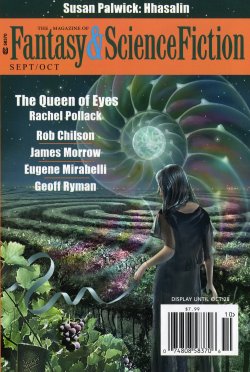
Review: The Magazine of Fantasy and Science Fiction, Sept./Oct. 2013

Atmospheric cover art by David A. Hardy

Atmospheric cover art by David A. Hardy

I wanted to like the current issue of The Magazine of Fantasy and Science Fiction more than I did. The writing is polished and there are some clever ideas here. That’s the problem: the stories are more successful going for my head than my heart.

F&SF has been around longer than I’ve been alive. It’s currently a digest-sized magazine published bimonthly. Besides some review columns, this issue contained twelve stories of various lengths (“short stories,” “novelets,” and “novellas,” terminology almost as precise as Starbucks cup sizes). While the dividing line between fantasy and science fiction is a slippery one, F&SF leans more toward fantasy, with perhaps three-quarters of the stories in this issue best categorized that way. Reflecting a long-standing tendency in the genre, two of the stories explicitly feature characters introduced in previous issues of the magazine.

Cleverness abounds; in fact the inventiveness and humor are the most successful aspects of the stories in this issue. We have time travelers who take a perverse view of slavery’s hiring practices (“Affirmative Auction” by James Morrow), a house that changes itself (“The Game Room” by KJ Kabza, the most successful story in the issue), and an encounter between Shakespeare and Doctor Dee (“Rosary and Goldenstar” by Geoff Ryman). A fair bit of fun.

But there’s not much weight to these stories. The longest story in this issue, Rachel Pollack’s “The Queen of Eyes,” is a fair example of what goes right and wrong. Pollack’s writing is smooth, the idea behind the titular character is a good one, and the protagonist (not the same character) who leads us through this adventure has potential. But the protagonist is bogged down with far too many references to material external to this story, and the resolution depends on a magical turn that seems arbitrary. It undercuts both the detective story structure and the emotional impact of a complex betrayal. I wish Pollack had spent less time letting her protagonist indulge in reflections on his past, and more on either building up the magical framework or the emotional development of the Queen and her family.

Cleverness has won out over heart. Susan Palwick’s “Hhasalin” is about heart, about tragedy, but we’re told of the tragedy, and her alien protagonist’s response seems more forced than felt. Robert Grossbach’s “myPhone20,” has a neat science fiction idea, but develops it from an outsider’s perspective, an annoying Luddite in fact, and in the process the story loses our sympathy. I’d loved to have seen him write the story from the perspective of the eventual victims. It could rival Dick’s A Scanner Darkly.

I’m going after Pollack, Palwick, and Grossbach, not because their stories are bad, because they aren’t, but because they aren’t the stories they could be, stories that would have moved me. I suspect the writers could do the job, given more time to write and some more pages. There’s an entertaining and moving detective novel in “The Queen of Eyes,” a trenchant analysis of kindness, cruelty, and hope in “Hhasalin,” and a cutting commentary on our society in “myPhone20,” if they lived up to their potential.

It’s indicative of what ails this issue of F&SF that one of the more successful serious stories is the impressionistic “After the Funeral” by Daniel Marcus. It captures an emotional moment, but why and how that moment came to be is undeveloped, and meant to be. It’s not so much a traditional story as a vignette. One can leave emotions undeveloped in a vignette, but not in a traditional story. And most of what’s in F&SF are traditional stories that need more emotional development. Cleverness is fun, but unless it’s balanced with heart, it won’t stick with the reader.

Posted in Reading fiction, Reviews | Tagged , , , | 2 Comments

Chapter 29 of Martha’s Children

Politics isn’t the only thing that makes strange bedfellows. For the sake of her vampire cop brother, Nora O’Donnell has agreed to carry out two assignments from the very same vampire who “turned” her brother. In doing so, she finds out just how strange bedfellows can be. For the strangeness creeps even into her own bedroom . . . in chapter 29 of Martha’s Children.

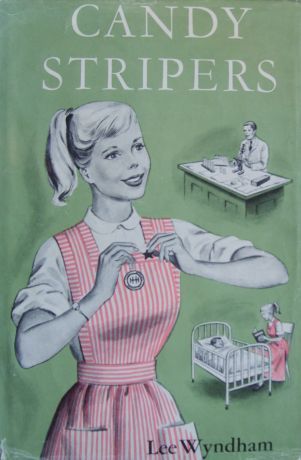
What we’re reading by Nora are actually extracts from her diary of those days in 1969. (How it is we happen to have them will eventually be explained. Well, mostly.) Nora takes for granted certain things which may not be familiar to readers today. In this chapter, she mentions that she was a candy striper. For those of you who don’t know, candy stripers were young girls, typically in high school, who did volunteer work at hospitals. They wore red-and-white striped jumpers, hence the name. I didn’t know this until I just looked it up, but the uniform and name comes from an East Orange, New Jersey high school project with the local hospital in 1944.

The cover of this book for young readers conveys both the helpfulness and the gender stereotype

The cover of this book for young readers conveys both the helpfulness and the gender stereotype

Candy stripers helped keep hospitals going. We owe them thanks for their volunteer service. That said, it’s a pity the program relied so much on a gender stereotype. This was what young girls were supposed to do: human service work for no pay. That was going to be the rest of their lives, after all, being wives, mothers, and volunteer workers for noble causes.

It appears that as gender stereotypes changed, candy striper programs went into decline. In many quarters they have abandoned the jumper, and have become simply “hospital volunteers.” Thanks to the old stereotypes, the term “candy striper” has become one of ridicule in some quarters, satire in others, and a subject for sexual humor as well. In fact, when I went looking for an image of a candy striper, it was a lot harder to find authentic images of working candy stripers than it was to find pictures of women dressed in sexually suggestive modifications of the original outfit.

Posted in History, Martha's Children, Writing fiction | Tagged , , , , , | 4 Comments

What would Labor Day (U.S.) be like without a union meeting and cookout?

This Labor Day meeting of the Amalgamated Union of Supernatural Creatures is called to order.

First agenda item: An admonishment to our werewolf brothers and sisters. Much as though you enjoy it, this practice of moonlighting must come to an end. Our solidarity is at stake!

Speaking of stakes, that brings us to our second agenda item: escalating health insurance costs. The biggest expense this last year has been for blood bank withdrawals. May I remind our vampiric brothers and sisters that use of the blood banks is for emergencies only. Normally, we expect you to subsist on your non-union managers. They suck you dry; you return the favor.

Now to the third agenda item: on behalf of our invisible brothers and sisters, we’ve brought a lawsuit against fifteen different employers. “Out of sight, out of mind” simply will not cut it when we’re discussing wages and benefits with these firms. Our biggest problem is the countersuit that’s been filed alleging rampant absenteeism. We remind our invisible brothers and sisters that punching the time clock is especially necessary for you to claim the fruits of your labors.

Fourth on the agenda: I am happy to announce that last year’s lawsuit by the union of sextons and  gravediggers, complaining about unfair competition from our ghoul brothers and sisters, has been settled by splitting the workday between the two unions, with the ghouls having all nighttime excavation. We were assisted by the union of mortician, undertakers, and funeral directors, who recognize a cost savings when they see one. They know the ghouls will not only dig a grave, but they’ll often also eat the contents, making the grave reusable.

Our fifth agenda item refers to unfair overseas competition. The witches and warlocks have been complaining that foreign spell-casters not only undercut them in pricing services, but are providing shoddy spells under the claim that they are more portable. It is with great reluctance that we observe brothers and sisters have been resorting to these foreign spell-casters, even when a perfectly good domestic witch is available. Attempts to litigate this matter at the WTO have proved fruitless. So the witches and warlocks are called to a special meeting tonight at midnight, when they will collectively engage in imposing a curse on their foreign competition.  Attendance is mandatory, and we expect you to show up in union-made ceremonial garments.

We’ll take a break for refreshments now, and come back for the election of officers in one hour. A reminder to flesh-eating zombies that other union members do not constitute refreshments. There was that unpleasant incident last year with Brother Henri, may he rest in peace, and we don’t want it to happen again.

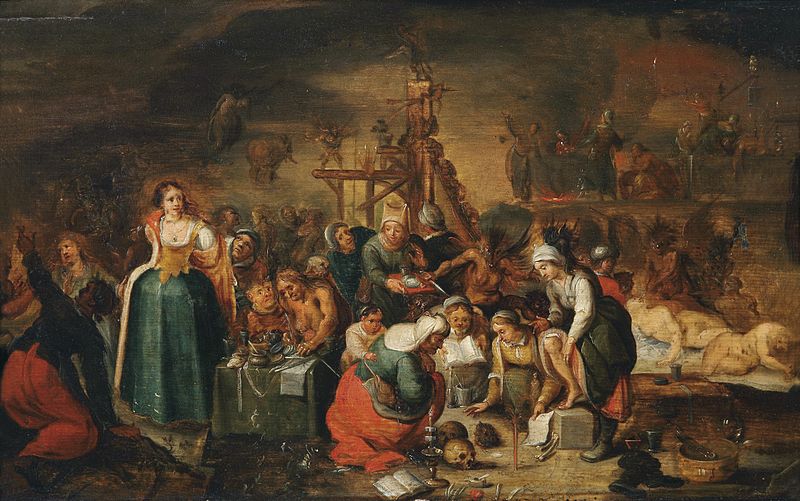
The kitchen crew, local 13 of witches

The kitchen crew, local 13 of witches

Posted in Uncategorized | Tagged , , , , | 4 Comments

Chapter 28 of Martha’s Children, and dreams

Detective Kammen warned Nora O’Donnell that something bad might happen to him or to her brother. So when Kammen appears to be missing, Nora goes searching for help. And in chapter 28 of Martha’s Children, she find it . . . in the very last person she would expect to offer it!

Martha’s Children is my serialized story of vampires and cops, and sorcerers, too, in 1969 Chicago. If you’re not already reading it, you can start here. A new chapter goes up every Friday.

I rarely have memorable dreams. More typically, I’ll wake up from a dream, recollect that it involved an impossibly shifting and incoherent combination of elements, and quickly forget about it once I’m up and about. I’ve twice been killed in my dreams, once by a co-worker using a pistol, and once in a situation involving a transporter much like the ones in Star Trek. Both times, my mind has retroactively edited the scene such that what was actually killed was a doppelganger. Guess I wasn’t wearing a red shirt.

This is usually not considered a good thing

This is usually not considered a good thing

Which brings me to this morning’s dream. I had recently gotten into an online conversation with a Facebook acquaintance over fetches and doppelgangers, and she recommended I read Henry James’s short story, “The Jolly Corner.” This being the man who wrote The Turn of the Screw, you know it’s going to be a story of subtle psychological horrors hinted at. One can read it as a story about an extraordinary doppelganger. Or . . . one can read it as the story of a haunted house, the actual jolly corner of the title.

Now I’ve wanted to write a haunted house story for a long time. I’ve even got a great ending for one. Of course, the beginning and middle are missing, so the ending is completely worthless, so far. And that’s because I couldn’t think of a new or worthwhile angle for a haunted house story.

I'd go to "the most haunted house in England" for inspiration, but it burned in 1939.

I’d go to “the most haunted house in England” for inspiration, but it burned in 1939.

And then this morning I woke from a dream. It was a dream about a house, a house which, in the dream, I had grown up in. There were grotesque events involving strangers that could have come out of Twin Peaks. And I was negotiating with the house, bargaining over how much we’d get from each other of what we wanted . . .

No doubt reading “The Jolly Corner” inspired this dream; I don’t usually dream of haunted houses. While memorable, the dream is not a viable story as I remember it. Like many dreams, it contains inexplicable and inconsistent elements. But somewhere in there, I can see the glimmer of an idea, a different angle on the haunted house story. So if, in the course of the next year, you see a haunted house story, or something that might once have been a haunted house story, you’ll know the answer to that age-old question directed at authors, “Where did you get the idea for that story?”

Posted in Martha's Children, Reading fiction, Writing fiction | Tagged , , , , , , , , | 9 Comments

The Shell Grotto, Margate

And here’s a genuine mystery of a construction, from the blog “My Search for Magic.”

The Shell Grotto, Margate.

Posted in Uncategorized | Tagged , , | 1 Comment

The comparative anatomy of glamorous vampires: two novels

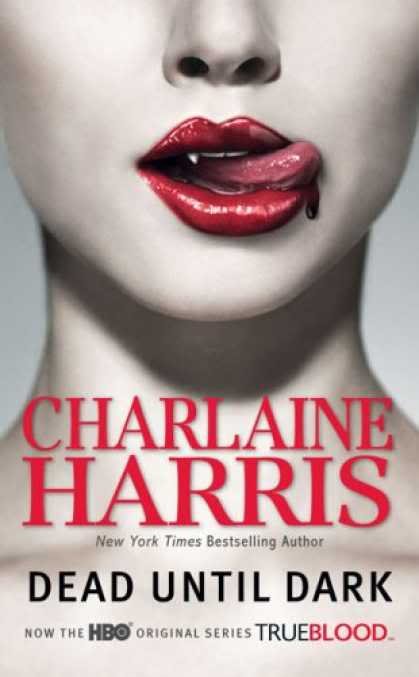
Since the serial I’m writing, Martha’s Children, is a vampire story, I figured I should get caught up on some of the contemporary literary depictions of vampires. As luck would have it, I stumbled into two novels of vampires of the glamorous kind: Charlaine Harris’s Dead Until Dark (2001), and Christopher Moore’s You Suck: A Love Story (2007).

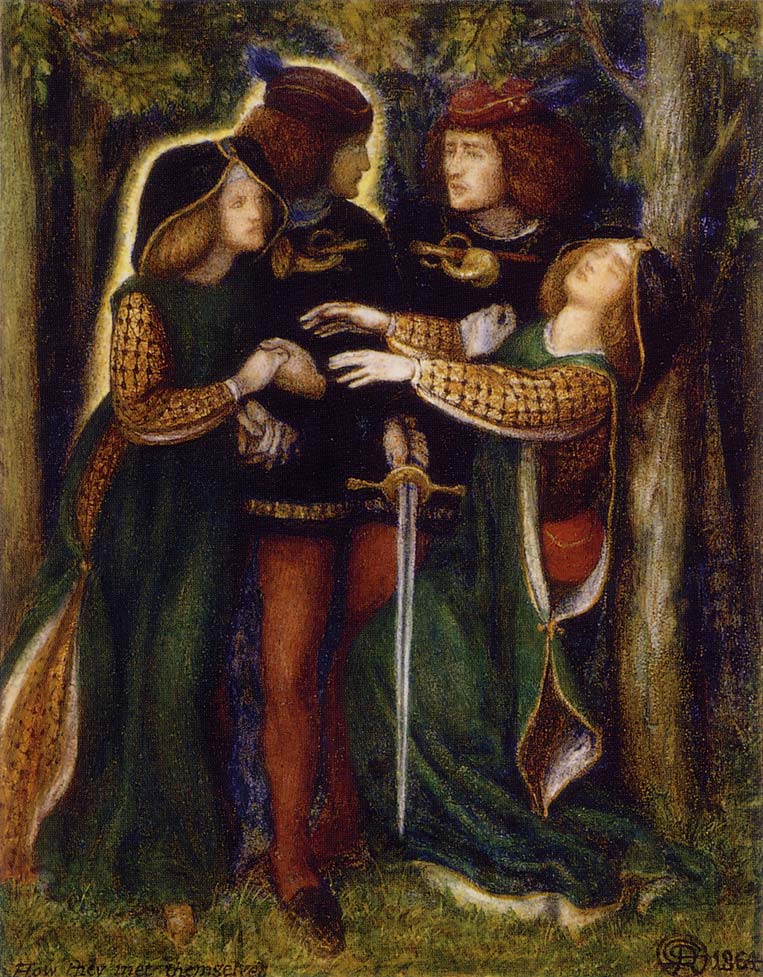
Oh, my true love! Your hands! Your hair!

Oh, my true love! Your hands! Your hair!

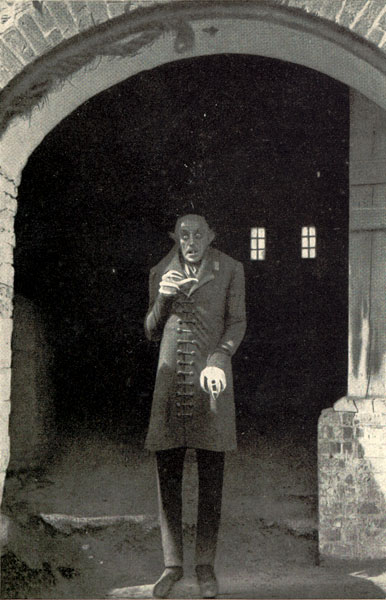
What’s a glamorous vampire? Well, it’s certainly not Varney the Vampire, Count Orlock, or even Dracula. They were often repulsive, being ugly, old, or stinking of blood. No, these are vampires who look very attractive, better than most humans, and have sexual drives that surpass most people. Sheridan Le Fanu’s Carmilla bordered on this territory. I gather Twilight‘s sparkly vampires are deep into it. So is the leading man/vampire in Deborah Harkness’s A Discovery of Witches.

It’s easy to see why the glamorous vampire is a draw. He’s (apparently) young, hot, forbidden, and your love will be eternal. At least that’s the hope.

Think there might be sexy vampires in this book?

Think there might be sexy vampires in this book?

Dead Until Dark is primarily a love story. Crazy Sookie Stackhouse, whose ability to read minds causes her problems and whose gift is sort of known by the townspeople, falls in love with Bill Compton, local boy who also happens to be a vampire who fought in the Civil War. Bill has the usual super-strength, super-speed, and, oh, he’s very handsome and super-good in bed. Like most vampires, his kind don’t do well against silver, garlic, sunlight, or fire. Most importantly, they are legal. Since a synthetic substitute for human blood has been found, vampires have come out of the closet/coffin to mix in human society. Because her focus is on Sookie and Bill, in this volume Harris didn’t work out many of the details of how humans and vampires coexisted, though the ones she offers are thoughtful and telling: there are vampires serving as police, and some humans, called “fang-bangers,” have sexual liaisons with vampires by choice. Even so, her vampires are still primarily predatory outlaws in behavior. They interact with each other on the basis of force and custom. And some show little respect for humans. No doubt, subsequent books and the TV series have developed Harris’s concept of vampires living legally among humans.

My name is Christopher Moore. I don't look mad, do I?

My name is Christopher Moore. I don’t look mad, do I?

Harris treated her vampires seriously. Christopher Moore doesn’t seem to treat anything seriously. I’d previously read two of his books, The Lust Lizard of Melancholy Cove (1999), in which a Nessie-like creature tries to mate with a fuel truck (read the book, I can’t explain), and Fool (2009), a revamping of King Lear in which the jester manipulates everyone else to bed Cordelia. In You Suck (2007), which is actually the middle story in a trilogy, Moore decided to take on vampires, goth culture, young love, and oversized bald cats wearing sweaters.

Superficially, Moore’s vampires aren’t much different from Harris’s. They aren’t legal, but they lose all their bodily imperfections, such as scars or tattoos, when they transform, and they have incredible sex with each other. They have the traditional fear of sunlight. On the other hand, Moore varies from tradition by having vampire bites vanish in seconds, and some other peculiarities when vampires drain their human prey.

But this is Moore. He doesn’t take anything seriously. So his glamorous vampires are not actually glamorous, because they are young adults (late teens, early twenties), and are fumbling around with sex and vampirism without much of a clue. Moore doubles down by throwing in Abby Normal, a sixteen-year-old goth girl who outdoes Jane Austen’s Catherine Morland (from Northanger Abbey) in having all sorts of ridiculous romantic notions about the dark side. Abby imagines the vampire couple, Tommy and Jody, as mysterious and romantic creatures, “Lord Flood” and “the Countess,” and seriously wants to be their minion. Once she gets to know them better, Abby gradually becomes disillusioned, but manages to transfer her fantasies to a biochem grad student who lives at home with his parents, who becomes her “sweet Ninja Romeo.”

You Suck is ultimately a satirical take on glamorous vampires and the more absurd aspects of goth culture. It’s a reminder that people are real, imperfect beings, and even if they get a physical makeover in becoming vampires, their characters will reflect their past. I’d like to think I’ve lived up to that lesson in writing Martha’s Children.

That said, you’d think I’d condemn Harris’s book outright, and you’d be wrong. Even glamorous vampires are acceptable, if they tell a good and interesting story. I think Harris did an excellent job in giving the book a real feel for its setting, and the bits she does throw out about how vampires interact with humans and each other are interesting. “Crazy Sookie,” as she’s called at one point, is the narrator, and I suspect an unreliable one, which raises intriguing possibilities about her romance with Bill. I’m curious to know whether Harris could sustain that device over the whole series, or if it recedes into the background. The one piece that doesn’t work at all for me is the mystery of the murdered women; too much isn’t known until the killer is revealed.

So what should a would-be writer take away from these two books? I offer two lessons from each of them.

1. Character is of the utmost importance. You Suck feels more realistic than Dead Until Dark because its characters are more intelligible, and drawn in more detail. Their natures drive the plot most of the time. Dead Until Dark‘s characters are both idealized and odd at the same time, which combined makes them feel less realistic.

2. A strong setting with colorful descriptions won’t carry your book, but can make it much more enjoyable to read by drawing your reader into the story. Harris wins this comparison, though Moore’s description of San Francisco isn’t bad.

3. The unreliable narrator is a sophisticated technique, tough to master, but it can throw a new perspective on events (Abby Normal’s journal in You Suck) or make one question and think about what’s going on (the odd Sookie as narrator in Dead Until Dark).

4. Satire, especially at length, is an even tougher technique to master. Harris uses it only occasionally, but tellingly, to criticize the way we glorify things in unreal terms. Ironically, one of her targets is the idea of the glamorous vampire, quite a mixed message there. Moore is a satirist, period. But You Suck isn’t his best. The targets are too obvious: teen/twenty singles culture and goth culture. It’s fun, but once he introduced Abby Normal’s journal, with its pretentious attitude, everything else is anticlimax. Fool is more on target; it’s hard to read King Lear thereafter without a smile creeping in.

Posted in Reading fiction, Reviews | Tagged , , , , , | 6 Comments

Chapter 27 of Martha’s Children, and Rick Springfield’s Nick Knight

Martha’s had a bad day. A dead sorceress has hauled her out of her coffin, one of her offspring left behind a dismembered corpse, and she passed out unexpectedly. But it’s now nighttime, and nighttime is the right time when you’re a sorceress-vampire, eh? Well, maybe some nights, but not tonight. Martha’s bad day continues to deliver ugly surprises in chapter 27 of Martha’s Children, as she tries to get a handle on the sorcerers’ war.

If you’re not already reading Martha’s Children, my serialized story of vampires and cops in 1969 Chicago, you can start here. And a new chapter goes up every Friday.

Rick Springfield in 2010 (photo: Adam Bielawski)

Rick Springfield in 2010
(photo: Adam Bielawski)

There have been vampire cops before in books and movies long before I conceived of Martha’s Children. I’ve just been reading the first of the Sookie Stackhouse/Southern Vampire series, Dead Until Dark (2001), which mentions vampire cops in passing. And so because it’s Rick Springfield’s birthday (he’s 64), I thought I’d review the earliest movie I know of to feature a vampire cop as the main character, Nick Knight.

Australian-born Rick Springfield had been one of those rare celebrities who was successful as a singer, actor, and heartthrob simultaneously. His biggest hit, “Jesse’s Girl,” was in 1981, at the same time he began playing Dr. Noah Drake on the soap opera General Hospital. But by 1989, his career had faded.

The TV movie Nick Knight was an attempt to recover his fame. He would play a handsome brooding Los Angeles cop who also happened to be a vampire tormented by his murderous nature. The soundtrack would feature contemporary pop hits, maybe even some by Springfield himself. (That last did not pan out.) And it would serve as a pilot for a TV series.

If all this sounds a bit familiar, it’s because it did get made into a TV series, Forever Knight. But that would be three years later, set in Toronto, and using an almost entirely new cast. Springfield’s movie would be recycled as the opening episodes of the series, but otherwise he did not appear in it. Geraint Wyn Davies would take on the Nick Knight role.

But what about Springfield’s movie itself?

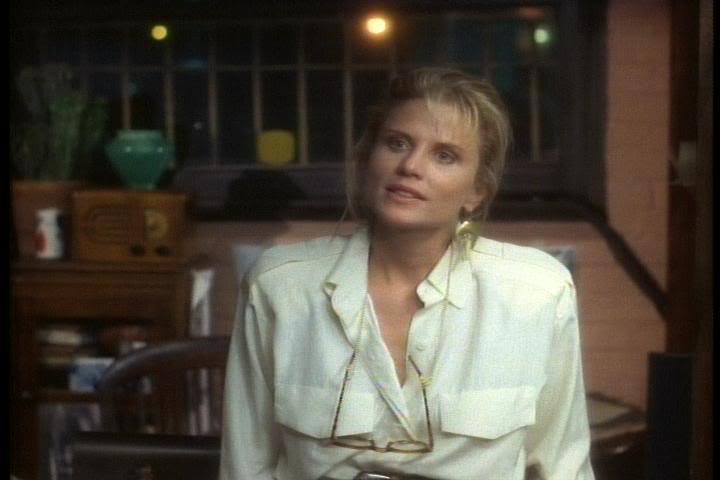
First of all, it’s a TV movie from 1989. Production values aren’t bad, but they aren’t great. Springfield is about the biggest name here, playing protagonist Nick Knight. Laura Johnson, who had been on the nighttime soap Falcon Crest a few years before, plays the romantic interest, an archaeologist who eventually figures out what Nick is. Nick’s residence is impressive, indeed, far too impressive. I think whoever devised it has seen Connor MacLeod’s New York lair in Highlander and decided to go one better.

Because she's supposed to be a serious figure, Johnson was given the dowdy treatment.

Because she’s supposed to be a serious figure, Johnson was given the dowdy treatment.

On the up side, the movie has an intriguing start, with a confusing set of crimes and some great video work. Springfield gets to play Nick Knight as a vampire trying to “mainstream,” get himself away from his vampire nature back to being more human. While this is often played for humor, the script deserves credit for showing how this would not be an easy process. The murder mystery turns out to be more complicated than one might think. Johnson actually gets to use her brain a few times as an archaeologist with a connection to the Mesoamerican ritual on which one subplot turns.

On the other hand, it’s a Springfield movie. We are not allowed to forget that Springfield is a rock musician and heartthrob. (Hence the scene in the TV movie’s trailer, seen here on YouTube.) He gets quite a bit of time with his shirt off, which should make feminists happy that this time it’s a guy who’s being sexually exploited. On the other hand, they’ll be furious that all the women under 60 seem instantly ready to fall in bed with Nick Knight. This includes Laura Johnson’s archaeologist character, setting up one of the least convincing instant attractions and romances I’ve seen. As I said, Johnson gets to use her brain a few times. But not when Nick is around; then she’s all hormones.

There are other problems with this picture. The movie is coy about revealing that Nick is a vampire: the definite revelation scene is about halfway through the film. Instead, the dialogue constantly hints at Nick’s nature. At first, these hints come across as sly jokes. But after the 2,384th such joke, they have all the subtlety of the Three Stooges. The subplot of the vampire parent come to chastise his wayward offspring seems hackneyed now. And the ending is simply hokey. Nick’s had his ass whipped by his evil parent vampire repeatedly, but at the sight of his girlfriend (Johnson’s archaeologist) dead at the fangs of his parent vampire, his rage gives him the strength to defeat the cur.

Nick Knight did not prove to be a career restarter for Rick Springfield. Yet he’s still around, singing and acting. He even reprised his role as Dr. Noah Drake on General Hospital this year. So give the man a tip of your hat on his 64th birthday!

Anyone know of any earlier vampire cops on TV or in the movies? Anyone who saw the TV series Forever Knight (1992 – 1996) who can offer some thoughts and maybe even comparisons?

Posted in Martha's Children, Reviews, Writing fiction | Tagged , , , , , , , , | 9 Comments

Sillyverse is a year old!

The Dragon Lady of Stockbridge

The Dragon Lady of Stockbridge

I started the blog on August 21, 2012, promising “stories of magic and mystery.” Since then, I’ve offered you two novel-length serials (one in progress), with a new chapter every week, two posts most week on varied topics, usually related to the serials, if sometimes tenuously. And I’ve had the art of E. J. Barnes to provide the blog’s signature images. In turn, I’ve had over 8,000 views, over 1,000 comments, and 192 people following this blog, one way or another.

Martha's Children

Martha’s Children

What’s next? In the short term, the remaining chapters and conclusion to Martha’s Childrenmy story of vampires and cops in 1969 Chicago. Beyond that, I’m not sure yet. I had planned to start a restructuring of this blog a few months ago, but I haven’t got far on it. And the next long story . . . hmmm, I’m guessing will be a return to the Sillyverse, the universe of The Dragon Lady of Stockbridge, possibly for a story set in either 1930 or 1934. Or it might be the nearest thing to a sequel to Martha’s Children, set roughly in the present in New York City. I’m open to suggestions, which you can include in comments to this post.

Thanks for reading my blog and sending me your comments, all of you!

Posted in Dragon Lady, Martha's Children, Writing fiction | Tagged , , , , , , | 5 Comments

A forgotten chapter in the history of the Sillyverse

Frank Wilson (1886 – 1970), Chief of the Secret Service from 1937 to 1946, decided to write his memoirs in the aftermath of the JFK assassination. They were published as Special Agent: A Quarter Century with the Treasury Department and the Secret Service (1965). Wilson  wrote a draft of some chapters before enlisting a professional writer as a co-author. It was assumed that the drafts were used and destroyed as the published version was written. However, one draft chapter of material with no counterpart in the published book has surfaced. Given the continued secrecy surrounding the Office of Occult Affairs, the reason why this material was never used is self-evident from the contents. It is here published for the first time.
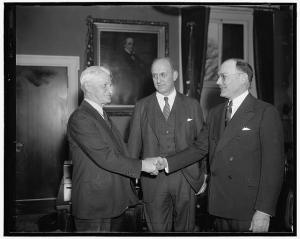
Retiring Chief Moran, Secretary of the Treasury Morgenthau, new Chief Frank Wilson

Retiring Chief Moran, Secretary of the Treasury Morgenthau, new Chief Frank Wilson

When I took over the United States Secret Service at the end of 1936, I spent some time with my predecessor, Chief William H. Moran, discussing the Service’s organization, goals, and practices. Moran was helpful in explaining the closed culture of the Service. To a new Chief like me, who was coming from outside the Service, this was an essential introduction.

After he had discussed everything else, Moran gave a chuckle, and said to me, “There’s something I almost forgot. You have one other person reporting to you. Her name is Silly Hughes, and she’s head of the Office of Occult Affairs.”

I’d never heard of the Office, and Moran’s use of the pronoun “she” made no sense. There were no women agents in the Service. So I asked the obvious, “What is this Office, and did I hear you say ‘she’ is named Silly?”

Moran leaned back in his chair and smiled. “You’ve never heard of the Office of Occult Affairs because it is secret, really secret, unlike the Secret Service as a whole,” he told me. “And yes, the head of the Office is a woman, and her name is ‘Silly.’ Well, her nickname, actually. But that’s what all her magicians call her.”

My puzzlement was obvious, because Moran launched into an explanation. In short, the Office of Occult Affairs was an organization of magicians that was under the Service but not part of it. There were agents who were magicians in the Office, and the head of the Office had traditionally been one of those. And there were women magicians.

The Office had been around for decades, but had become so ineffective no one could say what they actually did. When the head of the Office in 1930 resigned, Moran couldn’t find anyone who was qualified to head it who was both an agent and a magician. Nor did any of the regular agents who were qualified want the job. Moran was about to shut down the Office when he agreed to hire a young woman named Priscilla Hughes as the new head. Hughes was not an agent, naturally, but she wasn’t a magician, either. Moran never offered an explanation of why he hired her.

Miss Priscilla Hughes had revitalized the Office of Occult Affairs. The organization had gone from 17 people to about 150. Unlike the Service, which was prohibited by law from accepting funds from outside the Treasury Department, the Office received the majority of its funding from outside the organization. Officially, Miss Hughes reported to the Chief of the Secret Service, but she was on friendly terms with Treasury Secretary Morgenthau, and was well-known to the President. At least one of her magicians was on duty at the White House at all times protecting the President. Moran added with a laugh, “The magician most often on duty there is Sylvia Thompson, whom you will find very easy to spot once you’ve met her.”

I met Priscilla for the first time a few days after I officially became chief at the beginning of 1937. I was booked for a meeting with a Mrs. Alvin Andrews, whose name was unfamiliar to me. When I questioned my secretary, I was informed this was the head of the Office of Occult Affairs. It turned out that Priscilla had married in 1935, and used her married name for most purposes, but was still known within the Office by her maiden name.

That morning, my secretary announced Mrs. Andrews. At first I thought there had to be some mistake, for the woman who came sweeping in looked to be far too young, despite being visibly pregnant. Yet she introduced herself with a smile as Priscilla Andrews, and offered me a thick report on the Office of Occult Affairs. She then announced that she was there to answer any questions I had, and to ascertain my program, for, as she put it, “Either I or my successor should know what you are planning so that we may co-operate with you.”

I naturally asked, “Are you planning to resign when you become a mother, Mrs. Andrews?”

She shook her head. “No. But you may have other ideas. And it is settled policy in the Office that nothing takes priority over the success of the organization. That certainly applies to whoever occupies the position of head of the Office.”

My respect for Priscilla Andrews went up a notch with that statement. And the subsequent discussion raised it several more notches. Priscilla had modernized the Office in many ways that I was considering for the Service as a whole, and indicated her willingness to co-operate in sharing procedures. And, in truth, she did share a great deal of information. On the other hand, this co-operation almost never extended to implementing a common system across both organizations, a pattern I did not notice for some time.

And that sums up my relationship with Priscilla Andrews and her Office of Occult Affairs. Despite having an independent relationship with Secretary Morgenthau and President Roosevelt, Priscilla was a loyal subordinate who almost never used her access to work around me. She was careful to file regular reports with me and co-ordinate her work with the other branches of the Service as needed. On the other hand, she could switch to being evasive, vague, and misleading when she felt it appropriate, and Priscilla alone determined when it was appropriate. It was hard to tell when she was being cooperative and when she was not. I found her unfathomable.

It was slim comfort to me that my boss, Secretary Morgenthau, thought of Priscilla in similar terms. He laughed when I mentioned my first meeting with her. “Trust me on this, Frank,” he said to me, “Priscilla will do whatever it takes to work with you, but don’t ever expect to understand how she operates the Office of Occult Affairs.”

I frowned. “That doesn’t seem wise, Mr. Secretary. I’m not sure I can work with a subordinate who can’t explain the work she does.”

Morgenthau shook his head, smiling. “If you can find anyone who can explain what goes on there, and can manage it as successfully as Priscilla has, you are welcome to replace her, Frank. But I wouldn’t be in any hurry. It’s a curious and complicated organization, and perhaps it takes a curious and complicated person to run it. Certainly Priscilla qualifies. I presume she was all professional and attentive to business while she was talking to you?”

I nodded.

Morgenthau’s smile broadened. “Go visit the Office and watch her there. You won’t recognize her. She acts like the mischievous leader of a college sorority when she’s among them, much of the time. They’re all magicians who could make her do whatever they want, and yet when she tells them to jump, they jump. I don’t understand it, myself.”

And that was perhaps the most curious thing about Priscilla: she was not a magician, but she ran a group of magicians successfully. No one could explain why, not even Sylvia Thompson, her close friend and trusted subordinate.

As Chief Moran has said, Sylvia Reynolds Thompson was “easy to spot.” She was an albino with wild white hair who stood six feet, three inches tall. She was intensely loyal to Priscilla, and a great favorite with the President when she was on duty at the White House. Like her boss, she could be inscrutable at times, but she was genuinely one of the nicest people I have ever met, and did her best to explain the Office’s  magic to me.

More mysterious was Priscilla’s “left hand man” as she sometimes called him, the magician who went by the name of “Brandywine.” He was a wild man even by the Office’s standards, eccentric, unpredictable, and yet reliable when it came to getting his work done. Priscilla was very reticent about explaining what Brandywine did, telling to me that he handled those assignments in which the Federal Government would not want its involvement known. Ultimately, Brandywine would be killed by the Nazis in 1942 on an undercover assignment in Europe.

Brandywine’s successor was William Harmon. Harmon was a marked contrast to his predecessor. He was a magician, but he had no air of mystery about him. Instead he was a disciplined and affable individual. I soon grew to like him, and relied on him to help me understand at least some of what was going on in the Office. When Priscilla retired in 1945, I was happy to agree with her recommendation and appoint Bill as her successor.

My one major dispute with Priscilla was in early 1942. In the wake of our entry into the Second World War after Pearl Harbor, I was tightening up security at the White House, and across the District of Columbia generally. The Office of Occult Affairs had received information that an important Nazi magician had come to the United States, and was planning to assassinate our political leadership, or bend them to his will. Priscilla was very uncommunicative about how she planned to deal with this threat, and what she would tell me seemed inadequate to the threat.

Meanwhile, the Federal Bureau of Investigation’s director, J. Edgar Hoover, began a push to have Priscilla removed and the Office transferred to the FBI. Hoover alleged that Priscilla, who was nursing her third child (born on December 7, 1941), was unfit as a wartime leader and that all intelligence-gathering functions should be consolidated under the FBI. I was becoming so frustrated with Priscilla’s lack of cooperation, and went so far as to complain to Secretary Morgenthau that we should either replace Priscilla or turn her and the Office over to Hoover. Knowing that the President liked Priscilla Andrews, Morgenthau asked me to hold off until he had spoken with the President. A few days later, a visibly irritated Treasury Secretary summoned me to his office, and made it clear that nothing would be done about Priscilla until the fall.

As I later found out, Priscilla had set a trap for the Nazi magician that depended on absolute secrecy. She had told the President and her magician Sylvia Thompson, but no one else. The trap worked and the Nazi magician was killed. Priscilla came to my office a few days later to explain and apologize for the misunderstandings. When the President subsequently promoted her and gave her the title of Director, he offered her the opportunity to separate the Office from the Secret Service. She declined, stating she would rather continue working within the Service and with me. Thereafter, we had only minor misunderstandings.

Posted in Dragon Lady, History, Writing fiction | Tagged , , , , , | 2 Comments