How to argue politics on a thread

We’d all love to be triumphant word warriors online. But sometimes other people fail to recognize our genius. They try to engage us in discussions, using “reason” and “evidence” to convince us. Well, saddle up, word warriors, because we have the advice you need to win every political argument.

The more trivial the issue, the more important it is to win

The more trivial the issue, the more important it is to win

Rule #1: You are always right.

Corollary: The purpose of an argument is to demonstrate you are right. Note we say “demonstrate,” not “prove.” You don’t need to prove anything. After all, you are right.

Rule #2: Your opponents are evil. Not just honestly mistaken, evil.

Corollary: Any trick or sly maneuver is justified in the face of evil.

Corollary to the corollary: It is perfectly OK to insult your opponents. In moderated forums, it is preferable to put this in indirect form, say, claiming that “some people who hold my opponent’s position are idiots.” It’s a tissue-thin excuse, but some moderators will accept it. And if your opponents object, you can always say, in all insincerity, “I didn’t mean it to apply to you, necessarily.”

Rule #3: Never admit you are wrong. Because you aren’t. Because your opponents are evil. Because doing so would give aid and comfort to the enemy.

Corollary: When confronted by reasoning or evidence that seems to demonstrate that you are wrong, recognize that there’s something you must be missing that justifies your position. You just can’t think of it at the moment. Have the all-purpose reply in hand, “You’re ignoring all of the evidence and reasons that prove you’re wrong, but I don’t have time to go into them all here.” It must be true.

Rule #4: State, don’t explain. Assume, don’t provide evidence. You’re right. Why should you have to explain or prove your viewpoint? Besides, people can attack explanations or question your evidence. If you don’t provide any explanations or evidence, you can’t be attacked, merely lamely contradicted (which proves nothing).

Corollary: The best way to state your political position is with a sneering comment. It clearly expresses your disdain without giving your opponents anything to argue with. Second best way is to use an empty slogan, something that conveys meaning without being specific about anything. “Hope,” the Democrats’ slogan in 2008, is a good example; it committed the Democrats to nothing specific. Even the apparent content of “Repeal and replace,” the Republican slogan used against Obamacare in 2010, was illusory, since there was no indication of what any replacement would be.

Rule #5: If you do have to get into a discussion, remember, the goal is to prove you are right and your opponents are wrong. Your objective should be to manipulate the discussion to get your opponents to say something wrong, something that proves they are evil.

Corollary 5.1: The best method to win is to define terms such that you have to be right. For example, “’Down’ means under someone’s feet, ‘up’ means over someone’s feet. Something can’t be up and down at the same time. Hence the Earth must be flat and cannot be a sphere, because if it was, my ‘down’ would eventually become someone’s ‘up’ on the other side, and we’ve already established that that can’t be true.” Not only is this method invincible on its own terms, it diverts the discussion away from arguing about actual facts and reasons to arguing over definitions. Since they’re your definitions, you are in control and have the advantage. Use it.

Corollary 5.2: Another good method is to ask leading questions, to guide your opponents into either being trapped into agreeing with you or stating their support for some obviously reprehensible position. That way you avoid having to actually argue your position, and if your opponents try to qualify a previous answer to escape your trap, you can accuse them of intellectual dishonesty. And incidentally, this procedure usually takes so long that everyone else loses interest in the thread.

Rule #6: If by some unfortunate chance the thread turns into an actual rational exchange of thoughts between parties, force your opponents on the defensive.  Quickly offer several reasons why your position is correct, certainly without evidence or arguments, and preferably in such a vague or brief form that it will be hard for your opponents to figure out what you actually mean. It will take them ages to figure out responses for all of your points. And remember, until they address all of your points, you’ve won and they’ve lost. If by some unfortunate chance your opponents actually begin presenting their position with supporting arguments and evidence, question them intensively. Accept nothing they say on faith, since it must ultimately be wrong or misleading anyhow. Demand they supply arguments and evidence to back up all their assertions. If they provide evidence, question the reliability of their sources.

Corollary: Although not quite as good at bollixing up an argument from the beginning, continually changing the subject to related points works about as well in keeping your opponents on the defensive. And it is superior in one respect, in that it makes it easier to ignore any arguments they successfully make against you.

Rule #7: Sometimes your opponents simply won’t oblige you by making the argument you know you can destroy. So stuff words into their mouths and make it for them. If you’re, say, debating tax policy, you might say, “Of course my opponent wants this measure, because it will wreck the economy, and my opponent wants to wreck the economy.” Exaggerating or misrepresenting what your opponents say can be used to similar effect.

"Don't you dare call me a killer. I'm the real victim here!"

“Don’t you dare call me a killer. I’m the real victim here!”

Rule #8: Any criticism of your position or arguments constitutes a personal attack on you and persecution for your political beliefs. Don’t be afraid to claim victimhood at the earliest opportunity. Once again, it gets you away from the unsafe terrain of reasons and evidence, and into discussing your emotional state, putting you in control once again. You can even demand that your opponents be made to withdraw from the discussion, on the grounds that they have hurt your feelings. No apologies are acceptable.

Rule #9: Victory is yours if you can triumph on any point. If there is just one point of yours your opponents can’t dispute, if on even the most insignificant detail you can claim to have triumphed, you can claim victory and leave the thread with your head held high.
Posted in Uncategorized | Tagged , , , , , | 9 Comments

Chapter 26 of Martha’s Children, and ghosts

In all her life, both before and after she was killed, Ivy McIlwraith has prided herself on her extensive knowledge of sorcery and arcane lore, her keen mind, and her ability to handle herself in any situation. But she never contemplated spending a day in a basement with two coffins and Martha Fokker! We already found out in chapter 25 what Martha thought about the situation. Now, in the new chapter 26 of Martha’s Children, it’s time to hear Ivy’s side.

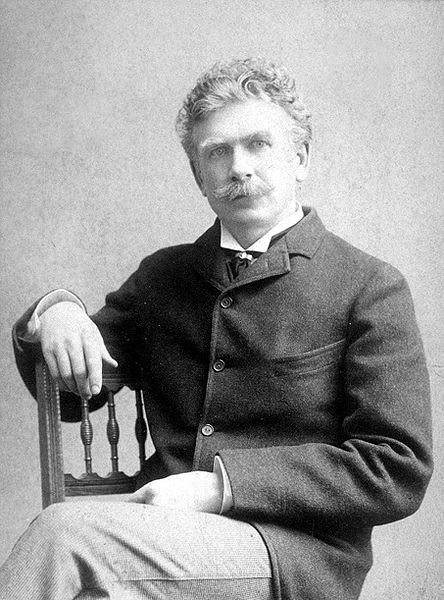
Bierce in 1892

Bierce in 1892

Ivy’s a ghost. Earlier this week, offline, I fielded a question about how ghosts function in Martha’s Children. Because, let’s face it, the popular conception of ghosts is even weirder than the popular conception of vampires. Let’s start with an “authority:” Ambrose Bierce (1842 – 1913?), author of “The Death of Halpin Frayser,” among other ghost stories. In The Devil’s Dictionary, a work exhibiting his cynical sense of humor, Bierce defined “ghost” as

The outward and visible sign of an inward fear. . . . Accounting for the uncommon behavior of ghosts, Heine mentions somebody’s ingenious theory that they are as much afraid of us as we are of them. . . . There is one insuperable obstacle to a belief in ghosts. A ghost never comes naked: he appears in a winding-sheet or “in his habit as he lived.” To believe in him, then, is to believe that not only have the dead the power to make themselves visible after there is nothing left of them, but that the same power adheres in textile fabrics. . . . And why does not the apparition of a suit of clothes sometimes walk abroad without a ghost in it?

There are other difficulties. How does an immaterial spirit speak? Why do they seem to be able to pass through walls at will, but typically treat floors, stairs, and the ground as absolutely solid? Why do they tend to hang around where they died? We should find Bierce’s ghost and ask him, if we can ever find out where and when he died. (He vanished in Mexico.)

In Martha’s Children, ghosts are the souls of dead people. Most people do not become ghosts; when they die, their souls go elsewhere, instead of sticking around on earth. The ghosts of normal people tend to act normally, which is to say they act the way they think ghosts should act. However, they are not material, and cannot alter the physical world beyond conveying their appearance and voice. (No doubt there is a culture somewhere that expects ghosts to smell of body odor, so ghosts in those cultures will typically have body odor.)

Ivy is exceptional, because she was a sorceress, and deliberately tried to conserve her powers when she was killed. Since sorcerers use their souls to draw magical power, sorcerer’s ghosts have a limited ability to do so, as well. That’s why Ivy can change her appearance and actually pick up objects. But it’s also why she can’t overpower any living sorcerer unless she can surprise them, trick them, or catch them at a significant disadvantage. She could plunder Love’s mind, because Love had made herself temporarily submissive in bespelling Kammen. She could take Martha by surprise, but in any fair fight that lasts for more than seconds, she’s going to lose. It was only because she needed only a few seconds that she was able to trick sorcerer Mitchell Foster long enough to have Sally Truax kill him.

By the way, ghosts over in the Dragon Lady world work a bit differently. They reside on the plane of magic when they aren’t appearing in the material world. And history records at least one magician who worked for the Office of Occult Affairs who destroyed her own soul in the last few years of her life, and thereby became one of the few people who could never be seen as a ghost or be summoned from her afterlife on the plane of magic . . . because her soul had died with her body, and, unlike 99.99% of the people, she had no afterlife of any kind.

Posted in Martha's Children, Writing fiction | Tagged , , , , , , , | 7 Comments

Chapter 25 of Martha’s Children a bit ahead of schedule

I’m going to be out of touch for a while, unable to get to the Internet. This is not quite the same as oxygen deprivation, at least not until I step up the voltage of my WiFi connection to electrolyze water into its constituent elements.

Rather than disappoint my readers, here’s the next chapter of Martha’s Children that would normally come out on the 9th. Chapter 26 should appear as scheduled on the 16th.

Posted in Martha's Children, Writing fiction | Tagged , , , , , , | Leave a comment

Chapter 24 of Martha’s Children and sorcerers therein

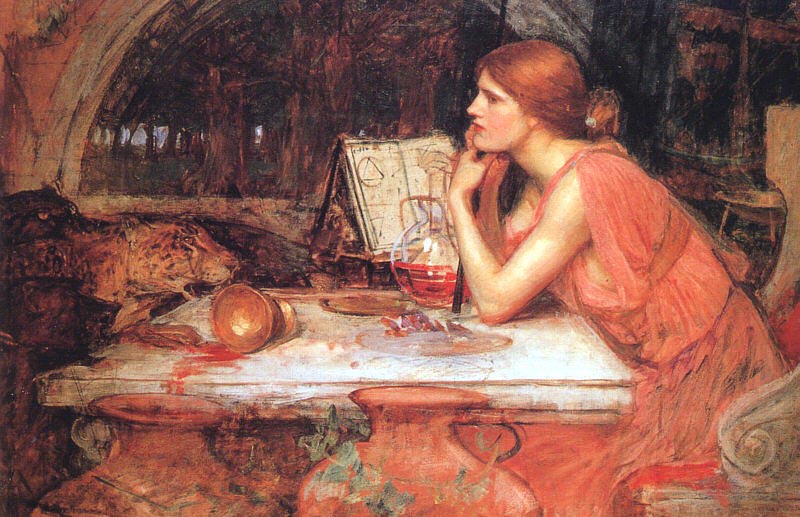
Ivy would like to think of herself like this

Ivy would like to think of herself like this . . .

This week begins Part III of Martha’s Children, entitled “Sorcerers.” The ghostly sorceress Ivy McIlwraith has prided herself on being one of the most knowledgeable sorcerers in the world. But in chapter 24, Ivy finds the root of her problems is a creature that’s not in any of her books, indeed a creature that shouldn’t even exist!

With the sorcerers of Martha’s Children taking center stage, a few words of explanation are in order. These are not the magicians of The Dragon Lady of Stockbridge; don’t assume that what applied to those magicians applies to these sorcerers and sorceresses. Sherlock Kammen set out the basic principles for sorcerers back in chapter 15.

while most of the council members think of themselves like this

. . . while most of the council members think of themselves like this.

The social and political organization of sorcerers is more complicated than that of vampires. Sorcerers are governed by the Conventions, first promulgated by the European Council in 1749 and since revised or adapted by all other councils. The councils serve as the main ruling bodies over the sorcerers. They are comprised of the most powerful sorcerers in a given area, which in 1969 is usually of continental scale. For example, there are councils for North America and Latin America in the New World. The tribunals are responsible for administering justice, and are organized on the same geographic basis as the councils. No one is allowed to have both a council and tribunal seat. Finally, there are the bearers of the rulers of justice, single sorcerers whose function is to serve as moral gadflies to the councils and tribunals.

In practice, all of these mechanisms have begun to break down in North America. The council has not met as an organized body since 1954. Although killing a council member is a capital crime under the Conventions, in practice sorcerers who successfully assassinate council members and take their place have their crimes overlooked. The tribunal has become subservient to the council, and ignores the bearers of the rulers of justice on any petition touching on the council’s members and their behavior. They are not yet lawless, the sorcerers of North America. But the more powerful among them do as they please.

Posted in Martha's Children, Writing fiction | Tagged , , , , , , | 12 Comments

Milestone

Oh, and we’ve hit a milestone today: one thousand comments on Sillyverse’s blog posts and pages! I thank my readers, who always have such interesting comments.

A special thanks to the top six comment contributors, according to WordPress’s count:

crimsonprose (whose fiction blog with two running fantasy stories (one actually in another blog, but they get linked) is similarly named),

russell (whose fiction blog is the story Edward and Amelia Versus the Vampire King),

danapeleg1 (who doesn’t have a blog that I know of, but is a nice person who can translate back and forth between English and Hebrew),

Judy (whose photographic blog features Florida birds these days),

E. J. Barnes (sometimes illustrator here, with her own blog of her work as a cartoonist),

and L. Palmer (whose main blog, I think, is about “the legendary adventures of everyday life, musings on pop culture, and products of an over-prolific imagination”).

Thank you again!

Hogarth's "The Laughing Audience"

Hogarth’s “The Laughing Audience”

Posted in Uncategorized | Tagged , , , , , | 11 Comments

When prophesy fails, and fails, and fails

Back when they were conveying knowledge to the masses, David Wallechinsky and his family produced The People’s Almanac (1975). For their very first chapter, they obtained predictions from many contemporary psychics. So, 38 years later, how did the psychics of the 1970s do?

Would you trust this man with the future?

Would you trust this man with the future?

In general, not too well. There are few successful predictions. David Bubar must have seen Nancy Reagan’s astrologer when he predicted that “[p]sychics will hold important government positions” in the 1980s. Criswell, he of Plan 9 from Outer Space fame (see at right), made a prediction that the devil will rule the earth from 1975 to 1978; that was a bit off for the Carter Administration. Joseph DeLouise said there would be an economic panic by 1980, but that’s kind of a given, sort of like predicting there will be earthquakes. Similarly, Ann Jensen wasn’t going too far out on a limb in predicting the Vietnam War would end by 1980. There were some other no-brainers that didn’t require psychic ability to predict.

On the other hand . . . Malcolm Bessant predicted that New York would be underwater “in a few years.” Several other psychics made similar predictions; I guess losing Miami to the same coastal flooding didn’t seem so important. David Bubar was certain the generation of the 1980s would be grotesquely tall; maybe he got confused and mistook height for weight. Criswell (1907-82) predicted an “Aphrodisiacal Era” in 1988-89 when clouds of aphrodisiacs would float over the United States. My love life could have used that. Jeane Dixon (1904-97), one of the few psychics mentioned whom I remember, went all Biblical Revelation with the Cold War going hot around Israel during 1988-2000. Ann Jensen saw a woman at the head of a world government by 2000. (Several other psychics thought the United States would have a woman President by now.) Olof Jonsson (1918-98) saw the automobile outlawed by 2000, presumably by that female-led world government, I suppose. And Alan Vaughan had apparently missed reading about Chappaquiddick, because he predicted Ted Kennedy would become President in 1976. That probably would have set back having a female President for a few more years.

Some of these people faded away before the Internet became popular, and so they’ve left little trace of their existence on the web. Others are still in business today, despite their inaccurate predictions. And it’s not as if these predictions have been forgotten; while writing this entry, I found at least two other articles on the web discussing this chapter of The People’s Almanac.

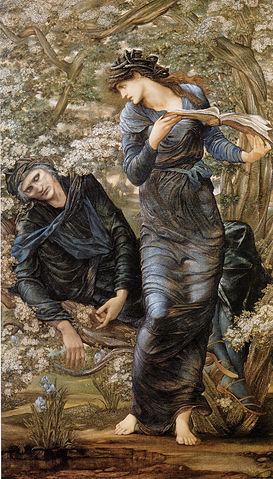
Is it fate or sex appeal that allows Merlin to be trapped like this?

Is it fate or sex appeal that allows Merlin to be trapped like this?

Personally, I’ve never been too keen on the idea of psychics predicting the future. If someone can reliably know the future, then that means the future is fixed. It also means the psychic either can a) obtain thoughts or sensory data from a large number of people in the future without their being aware of it, or b) have some form of transcendental mechanism that allows them to see and perceive things from perspectives unavailable to normal humans, or c) can grasp the entire working state of the universe and understand exactly how it will evolve over time.

And yet, I can see the lure. Prophesy implies that one’s actions are cosmically significant, and who wouldn’t want that? In real life, prophesy has been used to put a divine seal of approval on people and events; Suetonius is loaded with prophesies, portents, and omens about the rise and fall of the first twelve Roman emperors (counting Gaius Julius Caesar as the first). In fiction, prophesy can provide the protagonist with a destiny, a puzzle, a paradox, or even a curse. And the protagonist always has the choice, to accept or to try to defy a prophesy. It’s good drama. Just ask Éowyn and the Witch-king of Angmar in The Lord of the Rings.

It's 2013? Never mind.

It’s 2013? Never mind.

I’ll leave the last word to Mother Shipton (1488-1561): “The World to an end shall come / in Eighteen hundred and eighty-one.”

Posted in History | Tagged , | 8 Comments

Chapter 23 of Martha’s Children, and the Days of Rage

Public attention in Chicago shifts from the debut of the Vampire Bureau to the arrival of militant radicals and the “Days of Rage” in chapter 23 of Martha’s Children, “Therefore be o’ good cheer, for truly I think you are damned.” Not that that will stop Detective Sherlock Kammen. And in an unusual chain of events, the Days of Rage give him a solid lead on the vampire Martha Fokker and her sorceress sidekick.

Poster for the Days of Rage

Poster for the Days of Rage

The “Days of Rage” were an actual event, a protest that ran from October 8 to October 11, 1969. The “Days” were organized by the Revolutionary Youth Movement, a faction of the SDS (Students for a Democratic Society) that had split into the Weathermen and RYM II during the summer of 1969. These radical militants had been amazed by the attention the protests at the 1968 Democratic National Convention in Chicago had received. They decided to “redo” the event, this time to protest the continuing war in Vietnam and to promote social revolution at home. They timed the event to coincide with the trial of the “Chicago 8,” eight people charged with conspiring to cause the riots during the 1968 protests, to show support for the defendants.

The City of Chicago and Mayor Daley had already received bad press for their handling of protests and riots in 1967 and 1968. They were determined to shut down the Days of Rage. Daley mobilized the city police and called out the National Guard. In the event, the police and Guard greatly outnumbered the demonstrators, who amounted to only a few hundred.

The march on October 8 that Kammen describes was led by the Weathermen and intended to reach the Dalton Hotel, where the judge presiding over the Chicago 8 trial lived. They managed to cover about four blocks, smashing windows along the way, before they ran into a police barricade. The police threw them back, using their batons and tear gas, shooting six protesters and arresting sixty-eight.

That was the most violent confrontation during the “Days.” RYM II led a peaceful protest on the 9th, the Weathermen’s “Women’s Militia” rallied in Grant Park, and there was another Weatherman-led march on the 11th, but overall rage had failed to carry the day.

Far from igniting a social revolution, the Days of Rage marked the end of an era of SDS leadership in political protests. The organization was splintering and losing membership. The Weathermen had taken control of the national office of the SDS that summer, but they essentially abandoned and destroyed it when they decided to go underground and begin their bombing campaign in December. And with the shootings at Kent State on May 4, 1970, public perception began shifting from seeing campus protesters as subversive agitators to seeing them as “innocent” kids who might be your neighbor’s.

Posted in History, Martha's Children, Writing fiction | Tagged , , , , , , , , | 4 Comments

When the Devil went to law in America

He was a Yale man, class of 1919

He was a Yale man, class of 1919

Today, July 22, is the birthday of Stephen Vincent Benét (1898 – 1943). He rose to literary fame for his lengthy 1928 historical poem, John Brown’s Body, and remained a notable literary figure until his sudden death from a heart attack at age 44 during the Second World War. Since then, despite posthumously winning the Pulitzer Prize for another long historical poem, Western Star, he has become a forgotten figure. If he’s remembered at all these days, it is for two short stories, The Devil and Daniel Webster (1936) and By the Waters of Babylon (1937). They’re both worth a peek, so I’ve given hyperlinks to their texts.

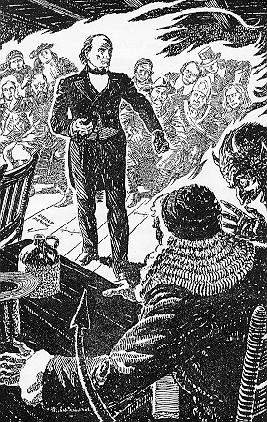
Daniel_Webster_and_the_Devil_argue_in_court

The Devil and Daniel Webster is a charming historical fantasy in which a larger-than-life Daniel Webster (1782 – 1852), the great antebellum lawyer and orator, takes on one Scratch, also known as the Devil, in a jury trial for the soul of Jabez Stone. Despite the presence of several dark figures from American history, the story is permeated with patriotism, while offering a simple truth about what makes life valuable. The story has remained very popular, having been turned into a play, twice made into a movie, and copied or parodied endlessly.

[Spoiler alert, in this paragraph only!] By the Waters of Babylon has never had quite the popularity of the earlier story, deservedly so, as it’s not as rich in personalities and details. It doesn’t help that its theme, the possibility that a priesthood will revive 20th century technology after an apocalypse, anticipates Fritz Leiber’s Gather, Darkness! (1950), and has been done to death in the decades since then.

I went looking for an appropriate picture to put on this post for By the Waters of Babylon. I found not just one, but a series of painting which were partially inspired by the story, done by an artist named Susanne K. Arnold. Rather than abuse her copyright by copying them here, I direct you to her blog where pictures of her paintings are posted. I think the first one in particular evokes Benét’s story.

Posted in History, Reading fiction | Tagged , , , , , , , , , , | Leave a comment

Chapter 22 of Martha’s Children, and Innocent Blood

The Vampire Bureau goes public! Criminals beware! But Sherlock Kammen is sitting on the sidelines, still trying to track down Martha and her sorceress Make Love Not War. Well, at least until a waitress starts asking questions. Watch Kammen take a crash course in public relations in “Men that hazard all do it in hope of fair advantage,” chapter 22 of Martha’s Children.

I try to keep an eye out for stories that resemble what I’m writing. This is partly curiosity to see how other writers tackled similar situations, partly interest in seeing the historical development of various aspects of my story. Last week, I went to the cinema to see a program that consisted only of movie trailers. Half the program was a competition between local teams designing trailers to a common theme for a fictitious movie, half a compilation of absurd trailers from the past to the present. Science fiction and horror were well represented in the latter section, ranging from the infamous Zardoz (1974) to the equally infamous Sharknado (last week).

Movie poster

Movie poster

Along the way was the trailer for a movie hitherto unfamiliar to me, Innocent Blood (1992)Innocent Blood doesn’t have a great reputation because it was a case of director John Landis going to the well once too often. He’d scored a success back in 1981 with An American Werewolf in London, and apparently was running short of ideas, as the overseas title of Innocent Blood indicates: A French Vampire in America. And unlike Werewolf, which successfully balances comedy and horror, Innocent Blood couldn’t balance its romantic, horror, and cops-and-criminals elements very well.

Still, the movie has some intriguing ideas. The lead actress, best known for her role in La Femme Nikita (1990), is a vampire who usually slays her victims, so they don’t rise as vampires. But she screws up, turning a Mob boss into a vampire. Rather like my vampires, he doesn’t have his act together at first. But it becomes a contest between him and his growing mob of vampire-criminals versus our protagonist and her cop lover, and death is the only way this is going to be resolved.

All in all, it was an amusing way to while away two hours. Not great, but some fun. The movie was rated “R” in the United States for nudity, sexual situations, and about as much violence and gore as you’d expect in a movie about vampires, criminals, and cops in 1991 (in other words, a bit less less than you’d see today).

Posted in Martha's Children, Reviews, Writing fiction | Tagged , , , , , | 2 Comments

One billion years plus forty: Brian Aldiss and the history of sci-fi

Brian W. Aldiss

Brian W. Aldiss

One of my constant readers, Judy (whose blog demonstrates her skills as a photographer), sent me a copy of Brian W. Aldiss’s Billion Year Spree: The True History of Science Fiction (1973), along with some cards featuring her photography. The Aldiss book was an informative and entertaining read, forcing me to think about what science fiction is and what I do. This post examines Aldiss’s historical situation and goals in writing the book, his definition of science fiction, and his treatment of the genre’s history.

But you want the fast version? Read the book: Aldiss is a writer with brains, and it shows.

Part 1: Historical context and aims

Aldiss’s book was published in 1973, so it was probably written a year or two earlier. It came toward the end of one of the more controversial periods in the genre. Emerging writers, especially in Britain, had created a “New Wave” by embracing diversity in styles, abandoning the old linear plots with objective viewpoints for more impressionistic avant-garde storytelling. They also expanded the range of the genre, leaving behind hard science and space opera for “soft science,” social sciences, politics, sexuality, and other topics previously largely ignored by genre writers.

At the same time, the science fiction community was struggling to become respectable. Authors, fans, and academics offered serious critiques of the field. The space race and Star Trek gave the field more visibility. It’s no coincidence that the Science Fiction Writers of America was founded in the 1960s.

Aldiss himself, as he notes in the introduction to Billion Year Spree, was by 1973 a recognized writer, editor, and critic of science fiction. In addition, he had an extensive background in Western literary history and contemporary literature, certainly more extensive than mine!

In Billion Year Spree, Aldiss undertakes to define “science fiction” and identify its proper place in legitimate literature. He’s also intent on defending the New Wave as a proper part of science fiction. These two aims are related. For Aldiss, the strength of the New Wave was that it expanded the range of science fiction by bringing in more mainstream techniques and concerns, and thus made science fiction more akin to mainstream literature.

Part 2: Defining science fiction

Aldiss defines science fiction as “the search for a definition of man and his status in the universe which will stand in our advanced but confused state of knowledge (science), and is characteristically cast in the Gothic or post-Gothic mold.”[i] There’s a lot to unpack in that definition. First of all, Aldiss is claiming science fiction is serious literature, because it deals with the “definition” or nature of man, ideally by depicting mankind in terms unavailable to other genres of fiction. Second, science fiction engages science and our present reality in a meaningful way, by using, extrapolating, or changing the scientific basis of reality in what are supposed to be scientifically plausible ways. Finally, Aldiss is making science fiction a subgenre of Gothic literature,[ii] by claiming its characteristic means of expression is invoking emotions connected to the distant and unearthly.

Note what this definition excludes. It excludes any literature written prior to the Scientific Revolution. Aldiss is explicitly excluding ancient legends and ancient and medieval fantasies.[iii] For him, the first story that qualifies as real science fiction is Mary Shelley’s Frankenstein (1818). Aldiss also excludes stories that do not explore human nature in any substantive way, by which he means to exclude “bad” science fiction, including the many third-rate space opera and sword-and-spaceship stories from the pulps.

I’ve a problem with any definition that excludes the bulk of the stories that were first called science fiction. I think Aldiss deliberately committed the fallacy of essences with that definition, in order to establish science fiction as a proper literary genre.[iv] Personally, I think it better to define “science fiction” historically by tracing its origin in the pulps of the 1920s-1940s, and then seeing how the term was extended over time. And in fact, Aldiss actually lays out all the necessary information for such a definition in his book![v]

But even if one rejects Aldiss’s definition as a definition, it is still worth considering as an analytic tool. It can do two things for us. First, with Aldiss, we can use it to explain why we feel uneasy about considering any story before Frankenstein as science fiction. More importantly, Aldiss’s definition can serve as a yardstick to measure the aspirations of serious science fiction.

Part 3: The history of science fiction

After two chapters evaluating Mary Shelley and Edgar Allan Poe as founding fathers of science fiction, the bulk of Aldiss’s book is a detailed examination of the history of science fiction, from the pre-Frankenstein forerunners that don’t qualify under Aldiss’s definition, to the Victorians, then to the pulps, and finally the 1950s and 1960s. Sit down and read this.[vi] I guarantee you will find a whole bunch of stories you will want to look up and read. Me, for example, I’ve been avoiding Edgar Rice Burroughs and A. Merritt, but after reading Aldiss, I know I have to tackle at least some of their books.

You’ll also pick up some ideas that will seem obvious in retrospect. Gulliver’s Travels is about as close to science fiction as you can get without a modern sense of science, and it even comes close to that. Poe’s science fiction stories are among his worst, but so many of his non-science fiction stories, thanks to their Gothic element, are borderline sci-fi. In fact, a number of writers straddle the border between fantasy and science fiction to the point of blurring the boundary. I knew H. P. Lovecraft did, but Aldiss points out that Bulwer-Lytton, he of “It was a dark and stormy night” fame, did likewise.[vii] H.G. Wells was torn between being a writer and an educator, and the educator won out, which is why his later books are little read.[viii]

Not that I agree with Aldiss 100% of the time. Claiming Thomas Hardy for science fiction strikes me as a stretch, I don’t care how much he was influenced by evolution; Aldiss is on stronger ground when he claims Nathaniel Hawthorne. His criticism of Clark Ashton Smith as unreadable, standing without further explanation, seems to be more due to Aldiss’s low opinion of Smith’s colleague Lovecraft than to anything Smith wrote.[ix] Conversely, I can understand why Aldiss thinks so highly of Olaf Stapledon’s cosmic sagas, but I found them lacking in human interest; I prefer Odd John and Sirius, which Aldiss considers lesser works, myself.

Once we hit the post-World War II era, Aldiss’s treatment changes. He is still trying to trace the changes in the field, most notably by showing how the New Wave legitimately fit into science fiction, often by standing the genre’s conventions on their heads. But it’s difficult to trace changes while they are going on. If I get around to reading Aldiss’s revision of Billion Year Spree, namely Trillion Year Spree (1986), I’ll be very interested in seeing how he has revised his treatment of science fiction after 1945. The other problem with these later chapters is that Aldiss seems determined to name-check as many post-1945 writers as he can, either because he was afraid of missing a notable name, was trying to please the sci-fi authors’ community, or just because he didn’t feel he could pick and choose which ones were notable.

Conclusions

I had never read a book-length treatment of science fiction’s history before. This was worth the trouble, both to gain a solid historical perspective and to use Aldiss’s definition of the genre to think about what science fiction is and should be. Oh, and let’s not forget thinking about the relationship between his definition and my own writing!


[i] Brian W. Aldiss, Billion Year Spree: The True History of Science Fiction (Garden City, N.Y.: Doubleday & Company, Inc., 1973), p. 8.

[ii] I’ve been leading up to this post by writing previous posts on the Gothic writers Mrs. Radcliffe and “Monk” Lewis, and providing an excellent example of a writer of Gothic novels, Daphne du Maurier, adding science fiction to her work in the novel The House on the Strand.

[iii] Before we go any further, I should note that Aldiss’s analysis is by and large confined to European literature and its American offshoots.

[iv] The fallacy of essences in this context is the belief that a term must have a basic definition that encompasses all legitimate examples of that term, and nothing else. But the English language doesn’t necessarily work that way. People often develop terms that apply to one set of examples, and then extend that term to other things that resemble the original set in significant ways. The philosopher Ludwig Wittgenstein argued that the term “game” evolved that way. When you think about it, there are quite a few English terms that are hard to define succinctly, but “you know it when you see it.”

[v] Aldiss, Billion Year Spree, chap. 7-11.

[vi] Or read Aldiss’s later and expanded version, Trillion Year Spree (1986), which I haven’t got to, yet.

[vii] I can’t believe I’m writing this, but thanks to Aldiss I have to read some Bulwer-Lytton!

[viii] A cautionary tale for this historian-author!

[ix] I’ve written a post on Clark Ashton Smith and his influence on me. What I can’t understand is how Aldiss is so critical of Smith, and yet can have a kind word to say for William Hope Hodgson’s The Night Land, which is well-nigh unreadable due to Hodgson’s use of archaic language.

Posted in History, Reading fiction, Reviews | Tagged , , , , , , | 15 Comments