Vampires in Chicago

Those of you who are reading the new story, Martha’s Children, realize it’s quite a bit different from The Dragon Lady of Stockbridge. It’s about vampires in Chicago. I don’t strive to provide cliffhangers at the end of every chapter. It’s not even in the same universe as Dragon Lady. So I owe you all a word of explanation why.

Let’s start with vampires. Why are vampires threatening? They’re killers, of course. They are seductive killers: they are able to mesmerize their prey, dominate them, and even get their prey to like being killed. And yet, they are still basically us, human, and suggest that, under the wrong circumstances, we might become evil creatures, too.

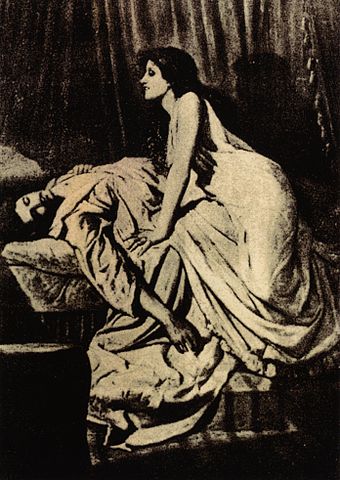
It’s no wonder they’ve acquired sexual connotations. I think J. Sheridan Le Fanu gets credit for that development with Carmilla (1872). Vampires become the sexual attraction we can’t deny, the bad sex we shouldn’t have, and the possibly nasty consequences thereof.
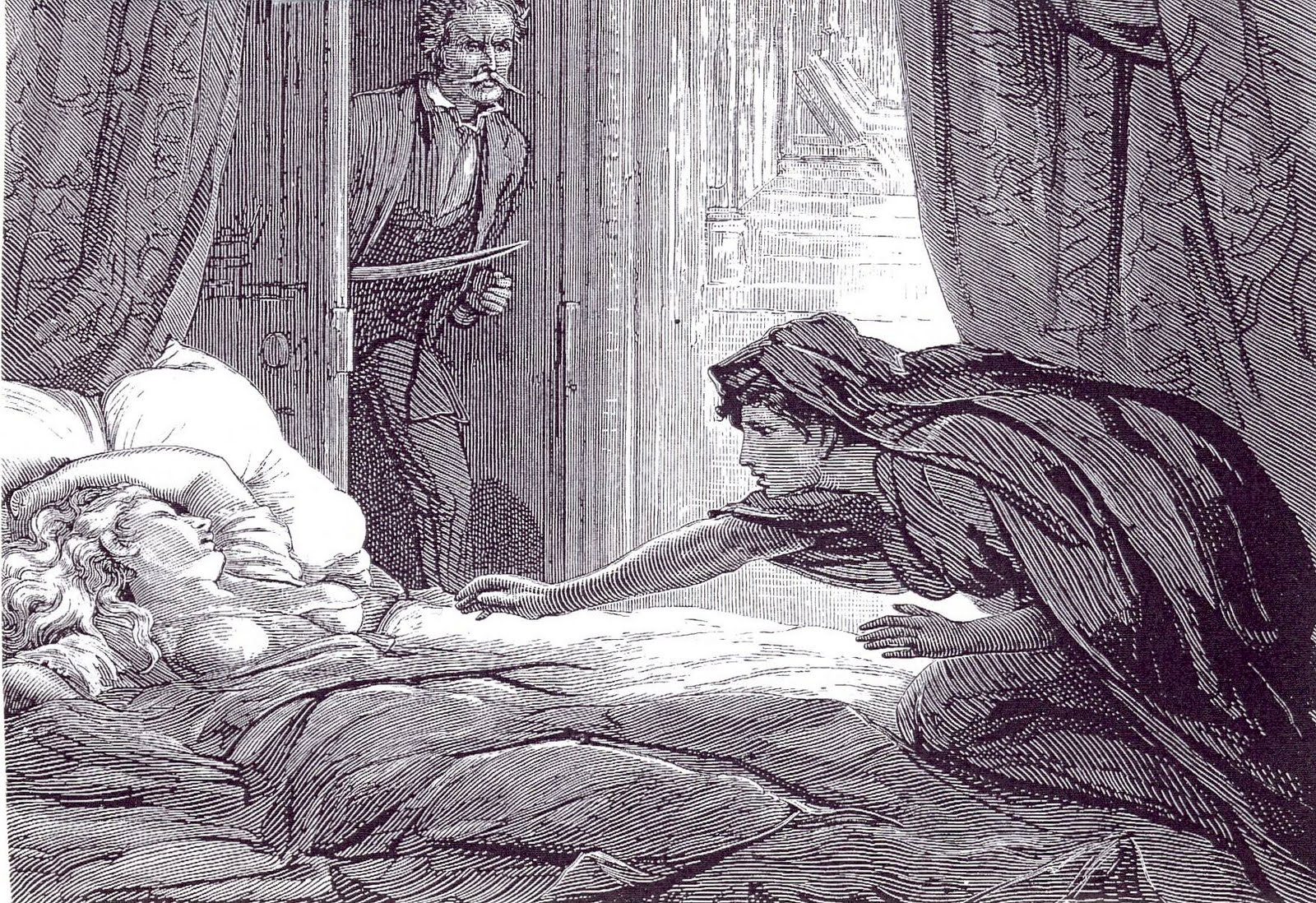
Do you see the sexual connotations?
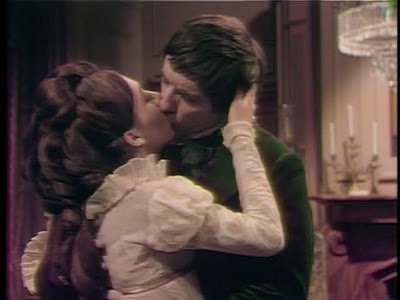
Do you see the sexual connotations?

It may look good for Barnabas, but it's still going to end badly

It may look good for Barnabas, but it’s still going to end badly

But just as sex doesn’t always have to be bad, vampires don’t always have to be evil. I’ve not read it, but I’m told that Varney the Vampire (1845-47) features the first remorseful vampire, one who regrets the evil he causes. His Twentieth Century successor, Barnabas Collins of the TV soap opera Dark Shadows (originally 1966-71) even hoped for a cure for his condition, so he could become a proper lover.

In Ned O’Donnell, the protagonist and narrator of Martha’s Children, I’ve put a basically good man in this evil situation of becoming a vampire, and explore how he deals with it. In the story, I intend to address all three of these major aspects of vampirism: the need to prey on others, the sexual element, and regret for one’s role. Ned’s efforts to cope with this are at the heart of the story.

Different writers have given vampires different attributes. Even Bram Stoker varied from the “standard” vampire in that Dracula actually could go about by day. My vampires, like most, are a mixture of magic and nature, traditional lore combined with some thoughts on evolution and sex, and structured so that vampires could exist in a world such as ours long enough and in sufficient numbers that a vampire society and culture exists. So Ned is going to mix with other vampires. Put baldly, that’s one reason Martha hangs around: she’s Ned’s trainer in vampire life.

Martha is no placeholder, though. She has her own agenda, and her own problems. And one of her problems is that she is in Chicago in 1968-69.

Chicago’s an interesting city. It’s a large metropolis that has almost every feature a city could have. And it’s been intensively studied: urban sociology began as a formal discipline in the United States with The City (by Robert E. Park et al., 1925), a study that used Chicago as its model.

More importantly for the story, for several years starting in the late 1960s, Chicago was at the center of the clash between the conservative Daley machine that ran the city, and various groups violently protesting the system. Whether it was race riots that burnt down parts of the city, the violent clashes at the Democratic National Convention in 1968, the Black Panthers, the “Days of Rage,” or just the escalating level of urban crime in that era, Chicago was a very violent place. And violence has been known to attract violent people, and to cause normally kind people to resort to extreme measures to cope with those who violate the law.

Just as Ned has to cope with being turned into a vampire, Martha has to cope with the violence of Chicago in 1969. Without giving away too much, it really is a problem for her. You’ll start to see why in chapter two. Martha’s problems and Ned’s are related, which is definitely not to say they will take the same view of them.

So all that is why I’m putting Martha’s Children in front of you. I’m telling the story in the first person because that’s what the purpose of the story demands, and because it gives me a chance to practice a different way to tell a story. And at least in the early chapters, each chapter is a night. Ned’s suspended in sleep between chapters, just as you, my readers, are held in suspense until the next chapter!

Posted in History, Martha's Children, Reading fiction, Writing fiction | Tagged , , , , , , , , | 17 Comments

A new story: Martha’s Children

After three weeks off, I’m beginning a new story, Martha’s Children. It’s another tale of the supernatural. In chapter 1, Chicago cop Ned O’Donnell wakes up, to find himself tied up in a dark room. And things just go downhill from there. Find out how, by reading chapter 1 of the story here. New chapters will follow every Friday, starting March 1, 2013.

Martha’s Children is a different type of story from The Dragon Lady of Stockbridge. It’s not in the same fictional universe. It’s not told the same way. In other words, it’s another experiment, just as Dragon Lady was.

For those of you who liked Dragon Lady, I hope Martha’s Children will also be to your taste. If it isn’t, the best I can offer right now is that I’m planning another history story set in the Sillyverse around 1930-34, when the Office of Occult Affairs undergoes a dramatic change. Parts of it have already been written, but I don’t know just yet when I will finish them or where they will appear.

Posted in Martha's Children, Writing fiction | Tagged , , , | 8 Comments

Another birthday – Pamela Colman Smith

I couldn’t let this day go by without saying a word about Pamela Colman Smith (February 16, 1878 – September 18, 1951), because she was connected to two topics on this blog: the occult and horror fiction.

Smith in her thirties

Smith in her thirties

Pamela had an exotic background. Born to an American father and Jamaican mother, she grew up in England, Jamaica, and the United States. Illustrator, artist, reteller of Jamaican folk stories, she sounds like an interesting person. And she got around, too, meeting a number of famous people.

The Two of Swords

The Two of Swords

Among the people she met was poet William Butler Yeats, who introduced her to the Hermetic Order of the Golden Dawn, the most notable British occult group of the era. She joined the Golden Dawn in 1901. There she met A. E. Waite, who commissioned her to draw the Tarot Deck he was devising. The result, published in 1909, was the most influential deck produced in the Twentieth Century, variously called the Rider-Waite or Waite-Smith deck. Odds are, if you’ve ever used a tarot deck, it either was a copy of the Waite-Smith deck or heavily influenced by it. The trumps (Major Arcana) are so familiar that I’ve posted a Minor Arcana card here so readers can study Smith’s work from a fresh perspective.

The "worm"

The “worm”

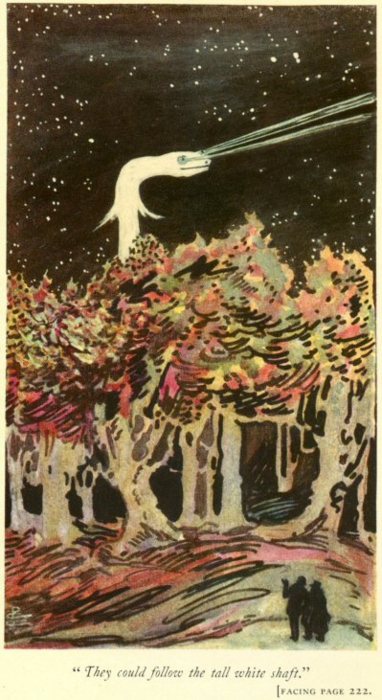
A few years later, in 1911, Pamela was commissioned to provide the drawings for Bram Stoker’s last novel, The Lair of the White WormLair is in the same mold as Dracula, but much less successful. Indeed, it’s so bad that it was rumored Stoker was dying of tertiary syphilis while he wrote it. Probably its strongest feature is the surreal nightmarish atmosphere that pervades the story. Smith must have recognized this, as her drawings certainly capture the surreal element.

Pamela Colman Smith’s career seems to have petered out with the coming of the First World War. After it was over, she received a legacy and moved to Cornwall, where she died many years later.

Posted in History | Tagged , , , , , , , , , , , , , , , | 5 Comments

It’s my birthday on February 14

Birthday rules

Rule #1: select your parents well. Mine weren’t rich, nor especially happy, but they dealt fairly with their children.

Rule #2: pick your birth date carefully. Being a Valentine baby led to all sorts of embarrassment when I was young. My family would go out to dinner on my birthday, and my father would say to the waitress, “Look at the wonderful valentine my wife gave me [xx] years ago.” I would duck under the table at that point. On the other hand, it was great having a birthday that fell on a holiday that is celebrated with candy and chocolate, and I have the cavities to prove it!

Rule #3: pick your birth time carefully. I raced a blizzard and won, with my mother going into labor and arriving at the hospital before the storm hit. Ever since, I have had a special relationship with bad weather. I’ve had lightning strike within twenty feet of me without harming me. I’ve outraced a rainstorm on a bicycle near Angla on the island of Saaremaa in Estonia. These events definitely prove I’m special, but I’m not sure whether that’s “special” as in “fortunate,” or “special” as in “stupid.”

The windmills of Angla, with the storm fast approaching

The windmills of Angla, with the storm fast approaching

Rule #4: Returning to the place of your birth is really overrated when it was in a hospital. It becomes even less appealing when the hospital is converted into a home for disturbed teenagers. Particularly when, as happened once in my early twenties, I was plagued with migraines and taking even more drugs than the teenagers were.

Rule #5: If there’s a person listed on Wikipedia for your birth date, but you’ve never heard of him or her, it’s like the date is still reserved for you to make it, eventually.

Posted in History | Tagged , , , , , , , | 23 Comments

The imaginative editor: Lessons in writing, part 4

Every writer needs an editor. Writers need someone to read what they wrote to see if the audience will understand and appreciate the writing. Trusted readers who can offer incisive criticism serve much the same purpose. Get yourself an editor, if you can.

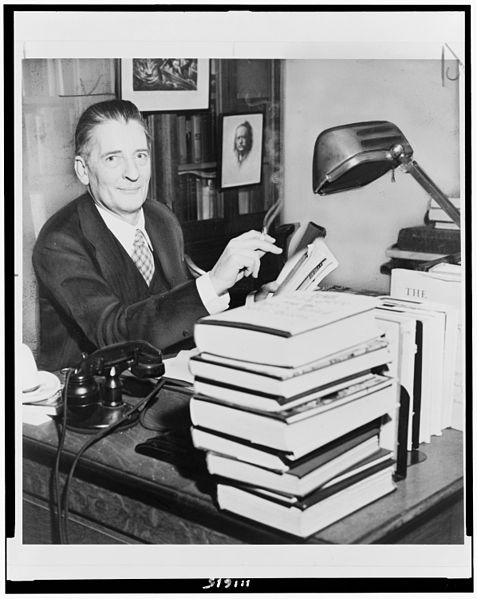
If only Maxwell Perkins could be your editor!

If only Maxwell Perkins could be your editor!

But whether you do or not, be your own editor. You can do part of the job yourself. And in one respect, you can do it much better than any other person. How? Imagination! You know your story better than anyone else. You can see possibilities in it that no one else can.

When I was writing The Dragon Lady of Stockbridge, my mechanism for being my own editor was to write three chapters ahead. This meant I got to read each chapter at least three times, one week apart, before I committed it to the blog. Ever gone back to read something you wrote after it’s been in a drawer for a while? You will see all sorts of things you missed, all sorts of things that can be improved. That’s what writing three chapters ahead did for me.

But it did one other thing for me. It saved Dragon Lady.

One of the fundamental principles of magic, and life for that matter, in the Sillyverse is that things change, people evolve, nothing is quite stable. Back in an earlier post, I put this in a simpler form: magicians learn. Indeed, in 1886, the Office of Occult Affairs is only four years old. Abigail and her colleagues have only some empirical knowledge of magic. Attempts to systematically explore magic are decades away. And a scientific theory of magic won’t exist before the late 1960s.

I hadn’t thought about how this might apply to the story of Dragon Lady within the story itself until I wrote the first draft of chapter 8, where Rebecca confronts the werewolf. I had imagined this scene several times before writing it. I loved it. I wrote it. And then I realized it violated everything I had established about Rebecca’s use of magic. My story was ruined.

Maybe not. What was Rebecca’s relationship to the walking stick? All I had established was that she was bound to it, that she accessed it magic using ceremonial operations, that she hadn’t used it for nine years, and that it had just misbehaved with Amy in chapter 5. What if that relationship was changing? What if the walking stick’s trick on Amy wasn’t a trick, but an honest attempt to be nice to Amy that had somehow backfired? What was the dragon’s motivation?

I had most of a week between when I first wrote chapter 8 and when I had to post chapter 6 to figure out just what was going on. I looked back at the story I had written so far. Rebecca was happy to be getting back to magic. Apparently so was the dragon! Things change; relationships evolve. After four years when they had worked together, and nine years when Rebecca hadn’t called on the dragon but was still bound to it, and it to her, how would they feel about each other? Well, married couples generally either have learned to live together or are spitting venom at each other by that time, so I felt the same had to be true for Rebecca and the dragon. And they clearly weren’t at each other’s throats. So they were not only bound to each other, they were in genuine alliance with each other.

This necessitated rethinking their relationship. That also meant rethinking the ending. I had figured Rebecca would have to give up the walking stick to rescue Patty, and then die while taking it back. That wasn’t possible now; she was bound to it and to the dragon.

Then, just like Rebecca, I had one shining moment where it all came together. For the rest of the story, I would drop clues about the relationship between Rebecca and the dragon. Rebecca herself would be having trouble understanding her relationship with her dragon. She would repeatedly ponder just what was going on, finally unraveling the clues and figuring out the truth only toward the end, under the pressure of resolving a dilemma.

Most importantly, Rebecca’s solution would not just be a way to save Patty. It would be a way for Rebecca to save herself. She was warm and loving, but she was also impulsive and self-centered at times in her life. She had lived with magic and without it. What did she want to be? What could she become? The choice before her would be clear and complex, both. She could live as she had and defeat Maverick, at the cost of Patty’s life. Or she could give up her old life for a new and stranger one, as the price for defeating Maverick while saving Patty. It would not be an easy decision, it would involve sacrifice either way, and which choice she made would define her very self, her character and moral code.

This new view of Rebecca’s relationship to her walking stick turned Dragon Lady from a simple pulp suspense story into Rebecca’s personal odyssey. Oh, it is still mostly a suspense story. If I were to rewrite it, Rebecca would get more time for introspection, and I’d offer more of Abigail’s thinking as a contrast. But even as it stands, Rebecca changes and grows. And that, for me, saved The Dragon Lady of Stockbridge. It made it more fun to write, and gave it a more satisfying conclusion.

Posted in Dragon Lady, Writing fiction | Tagged , , , , | 6 Comments

Chekhov’s gun control: Lessons in writing, part 3

In discussing writing with some other bloggers, we have recently been mentioning “Chekhov’s gun.” This is a rule cited by Russian author Anton Chekhov that if you include a gun in a story (Chekhov referred to a play), someone ought to think of using it, else it is irrelevant and shouldn’t be there. It might be better to call this Chekhov’s gun control. The idea is that every element of your story should contribute to its theme.

And just as there are those people who oppose gun control, so there are writers who oppose Chekhov’s gun control. I think most novelists fall into that category, whether they like it or not, because it’s rare that every detail contributes to the essence of the novel. A lot of most novels is color, to help establish a setting and mood. It’s hard to be strict with Chekhov’s gun control while writing that type of material.

Writing color in a novel is like firing an assault rifle

Writing color in a novel is like firing an assault rifle

More importantly, I think Chekhov’s gun control is a bad idea for writers while they are writing their first draft. This is especially true for writers with panzer tendencies. Every word you write opens up new possibilities, even if you are the most systematic of plodders. Some of those possibilities will offer new and exciting ideas. Some will allow you to connect elements of your story even more closely in ways you never considered before. And that, as I implied in the previous post, will make it a better story.

I had decided to write The Dragon Lady of Stockbridge as a weekly serial (as you can see from the schedule/table of contents), with only its main elements and connections worked out beforehand. I couldn’t be sure exactly which elements were going to contribute to the story and which were not. So I adopted the practice of writing Dragon Lady three chapters ahead of what I posted on the blog. This was my way of handling Chekhov’s gun control. I would be writing far enough ahead that I could follow out and decide which possibilities in chapter x would be fruitful in chapters x+1 and x+2. At the same time, if interesting ideas cropped up in chapter x+2, I could retrofit them into chapter x before it was ever posted.

With that system in place, I started writing Dragon Lady with absolutely no regard for Chekhov’s gun control. I liberally salted my story with all sorts of people and plot elements, all sorts of possibilities, without knowing for sure if they would contribute to the themes and main plot of the story.

I didn’t worry about violating Chekhov’s gun control for three reasons. First, I knew generally where the story had to go. I wasn’t going to introduce any elements unless I could see some way they could support the main story. Second, I was writing three chapters ahead. This meant I could see how an idea worked out over a few chapters, enough that I could eliminate ideas that quickly sputtered out. And third, I had been so successful in connecting the initial elements in “Troubles” together after I had written them that I was certain I could do the same with any interesting elements in Dragon Lady that got past the two previous censors.

In practice, this sometimes worked out, sometimes not. Amy was one of its successes. She was invented just as an incidental character in chapter 4. I soon decided to assign her a pivotal role in the crisis at the end of chapter 7, and her role in chapters 5 and 6 would be the basis for the more important role she would take on in chapters 19 and 23. Prudence Miller was one of its failures. She played a prominent role in the mob scene in chapter 13. That was supposed to set her up to be a leader of the riot that would occur just before the climax of the book. However, the sequence of events I set running in chapter 17 moved so quickly that I had to discard the riot, and Prudence never appears again.

James, the major-domo, was neither a success nor a failure. He plays a prominent and appropriate role, from chapter 1 all the way to the last chapter. Yet his conflict with Rebecca, which I had earlier used as a major engine to drive the plot, is left unresolved in chapter 19, thanks to Rebecca’s death. Well, real life is like that, too. Not everything gets resolved.

Despite repeatedly violating Chekhov’s gun control while I was writing it, Dragon Lady still reads reasonably smoothly. As I’ve said, that’s because I knew roughly where I was going, and because I tried to stay three chapters ahead. If I wrote material that didn’t seem as if it would lead to anything, there was usually plenty of time to discard it, or at least reduce its presence in the story. The best example of that is the story of what happened to Amy in New York, which Rev. Field describes in chapter 19. Originally, I was going to tell that story in more detail from the point of view of Beth or Amy in a chapter to be inserted between chapters 18 and 19. I tried writing it both ways. The chapter was intended to further demonstrate the relationship between the two women. But their relationship was so far from the main story line by that point, and the main story line was moving so very rapidly, that the planned chapter would have killed the story’s pace. In the end, I shortened it to what you read in chapter 19.

Writing three chapters ahead had two other advantages, which I’ll talk about in the last post in this series.

Posted in Dragon Lady, Writing fiction | Tagged , , , , , , | 10 Comments

Stories as constellations: Lessons in writing, part 2

Some people will tell you it’s characters that drive a story, others that it’s plot. A few will even claim it’s ideas. Truth is that it’s none of these. It’s connections. Your story is made up of how you connect your plot elements, characters, ideas, and whatnot, just as a constellation is made up of stars that sketch out an image. You use your skills as a plodder to connect all those elements into a framework for your story, and then hang your writing on it to flesh out the picture:

Constellation Argo Navis

Constellation Argo Navis

That’s a picture of the constellation Argo Navis. Properly speaking, you should see the lines connecting the major stars to form the framework of the image of the ship Argo, but let’s just say they’re hidden underneath the final image, OK? Just like the framework of your story is hidden in the results.

I faced this problem of how to construct a story after I finished writing “The Troubles of the Farnsworths,” as I mentioned in my last post. I had promised people a sequel, and had no idea of what was going to be in it.

So I started assembling my constellation, and immediately ran into trouble. The new story was going to have to be connected to Israel Farnsworth. Yet it couldn’t be about him. Israel was one of those mysterious characters, and telling too many stories about him would strip away that mystery.

The next obvious choice was to make a member of Israel’s family the lead character. But Israel didn’t seem to have a family. Men of mystery so rarely do. So I had to find one for him. I had left his cousin-by-marriage Deborah Farnsworth pregnant at the end of “Troubles,” so I settled on her unborn daughter. I’d connect her to “Troubles” by giving her the necronym of Rebecca. But how to connect her to Israel? Well, Israel lived in Boston, and even then Boston was a medical center, so I broke the new Rebecca’s leg, smashed it, even. (That ended up in chapter 2 of The Dragon Lady of Stockbridge.)

One of the advantages of using a protagonist who is just learning her trade is that it allows the author to engage in exposition and to work out the details of his/her universe while having the protagonist learn them. So I decided to write a story about the new Rebecca when she was young, when she was first starting out as a magician. I had brought in perfectionists to “Troubles,” so this time I thought I would bring in a different religious group, the Shakers. Rather than pin myself to a historical Shaker village, I decided to use Vardley, the fictional Shaker village invented by William Dean Howells in The Undiscovered Country (1880). That way, I could even borrow some of his characters.

Then my panzer took over. I wrote up this scene in which the Shaker sister in charge of the hotel sees what looks like an elderly woman with a walking stick and her Irish maid get off the train, only it turns out the elderly woman is really the young-but-gray-haired Rebecca. That is how Rebecca got her walking stick and gray hair (as seen in chapter 1 of Dragon Lady). And her servant became the origin for the four Leigh girls, one of whom would marry Israel (created a tangled set of family relationships described in chapter 6.)

My plodder took control again. I decided Rebecca would need some advice from a more experienced magician. It couldn’t be Israel, who for some reason couldn’t get involved, else it would be a story about him and not Rebecca. So I pulled Campbell Fitzhugh, my fictional magician in the Sillyverse working for the Secret Service in the 1870s, into the story to advise Rebecca.

Soon I ran into a problem. I could not make a go of the Shaker story. Eventually, I let it go. However, even though I abandoned the story, I retained several of its elements: Rebecca’s gray hair and walking stick, the Leigh sisters, and the connection to the Sillyverse. They were still points that I had connected into a framework I could still use, notwithstanding the loss of the Shaker element.

There’s a lesson there: be flexible in constructing your constellations of ideas, and don’t discard everything just because you get rid of some things. Remember the Argo Navis? You won’t find it on any modern star map. Why? Modern astronomers thought it was too big, and broke it up into several smaller constellations. Although, just as I retained story elements from the discarded Shaker setting, so too did astronomers retain the Greek letter designations for the stars from the original Argo Navis constellation, even after they broke it up.

Having discarded the Shaker story, I had a few false starts. Finally, I went back to take a look at the original story. Never hurts to make another connection. Although it was not specified, I had intended the original story to be set in the Berkshires. Well, it still could be set there, and so could the sequel I was trying to write. And what else were the Berkshires famous for? Rich people building “cottages” at the end of the 19th century. I even had a guidebook for the Berkshires from 1887, talking about who visited there in 1886. So I had a place and a date. Campbell Fitzhugh would no longer be available, as he left the Secret Service in 1880, but Abigail Lane would be available, and she was a much better match for Rebecca.

This put me into a chronological fix, however. While “Troubles” had no definite date, it had to be set between 1816 and 1860 for some of its references to make sense. If the new story was to be set in 1886, Rebecca could hardly be a young woman just starting out in magic; she couldn’t be under 26. So instead of Rebecca just starting out as a magician, I decided that she would be resuming the practice of magic after several years. To explain that, I invented her marriage, as explained in chapter 10. And with that Rebecca’s birth date was fixed in 1855. She would be 31 years old in Dragon Lady, married and a mother of four.

By this point, I had the basic story together. Rebecca was an out-of-practice magician who would have to resume using magic. She would need help, and get it from Abigail Lane. The story would somehow take her back to her home town and family, which would allow me to make all sorts of additional connections. She would have the youngest Leigh sister as an assistant. And the story would end with a confrontation between Rebecca and her enemy, a confrontation I figured Rebecca would not survive, but Abigail would. With that, The Dragon Lady of Stockbridge came into existence.

There was one last set of connections I made, just before I started writing the story. I wanted to make Rebecca Farnsworth Maxwell distinctive. Well, she had a walking stick. Magicians use wands. Why not make her walking stick her instrument of magical power? But that raised the question of where she got it. The natural answer was from Israel. But why would Israel turn over a powerful magical artifact to his young “niece” (actually cousin)? He wouldn’t, not without careful preparation. But suppose Rebecca, who could be quite willful, decided to try something she didn’t quite know how to do properly? There was a craze for Japanese culture in the early 1870s, so perhaps Israel acquired a Japanese walking stick charged with magic. Rebecca, as a beginner, would not know how to handle it properly, and end up doing something different than what she intended. Indeed . . . it cost her. I’d been wondering how to explain her gray hair, and now I had it: it was the fee the dragon took when they were bound together.

I had the basic framework of the story, my constellation of stars and the lines connecting them. Then I started writing, hanging the words on my framework, and things changed …

Posted in Dragon Lady, Writing fiction | Tagged , , , , | 1 Comment

Panzers and plodders: Lessons in writing, part 1

They’re the two types of writers. Didn’t know that? Neither did I. Found this out when I was at Arisia, the Boston sci-fi/fantasy convention in January.

You see, my hearing, like James Thurber’s eyesight, sometimes plays tricks on me. I was at all these writing panels, and they kept referring to panzers and plodders. Took me a while to figure out that what they were referring to were “pantsers,” people who write spontaneously, or “by the seat of their pants,” and “plotters,” people who carefully plot out a story before putting down a word.

Ausbildung, Überrollen durch Panzer

Panzer (German Federal Archive)

Plodders (Royal Irish Rifles)

Plodders (Royal Irish Rifles)

After thinking about it, I prefer my version. Panzers are writers who charge ahead with inspiration. Plodders slowly and systematically work out exactly what they are going to write. One’s the armor, the other the infantry of authorship. And just like in war, you’re going to need both.

At least it works that way for me. “The Troubles of the Farnsworths,” which you can find here on my blog, is an example in point. I began it as a panzer and finished it as a plodder, and it shows.

“Troubles” began because I was bored. I decided, purely for amusement, to start a story on Facebook. I was going to make it look as if it came out of some 19th century New England town history. I was not going to explain where I got it, so readers would be unsure if it was real or not. And it was going to deal with allegations of witchcraft. I borrowed some real history to support the story: the Year Without a Summer, various New England superstitions, and the fracturing of the Puritan church into orthodox (later Congregational) and unitarian factions. Good panzer that I was, I had no idea where the story was going.

That worked out fine, until I drove all my major characters off the stage. Rebecca had been driven out of town, and the two ministers were gone. My time as a panzer had run out; I had driven myself into a metaphorical cul-de-sac. At that point, I had to turn plodder. I’d written too much of the story and had too many readers (that is, more than one) to just simply drop it as a pointless experiment. Over the next two days, I worked out how the rest of the story was going to develop.

My first decision as a plodder was that the story was going to be deliberately unclear about whether the apparently supernatural incidents had natural causes or not. More by chance than design, I had not made that clear in the first part of the story. Now it became policy. Every subsequent event could be explained either way.

My second decision was to introduce Israel Farnsworth into the story. He was my Sherlock Holmes, my Van Helsing. He would be mysterious and knowledgeable, able to investigate, unravel, and defeat Rebecca Grimes Farnsworth’s machinations. To do that, he would call upon my knowledge of magic, pseudoscience, and religion from the 1840s. (All of which I explained in the author’s addendum to the story, included at its end.)

With those two ideas as the engine, I returned Rebecca to the story as a variant of the European “pest maiden,” spreading the white death of tuberculosis, much feared in those days. As with his models, Israel would fight his nemesis in mysterious ways, only explaining what had happened once Rebecca had been defeated. I didn’t have all the details worked out, to that extent I was still a panzer, but the design my inner plodder had worked out was an adequate guide to finish the story.

I did make one change, at the very end. I let Israel acknowledge that he and Rebecca had indeed practiced real magic. Why? Because one of my readers asked whether the magic was real or not, and I felt it would be cheating not to supply him with an answer. There are indeed reasons to listen to your readers, and one of them is that they can help keep you honest.

“Troubles” demonstrates the virtues and defects of being a panzer and plodder. If I hadn’t been a panzer, the story never would have been written. If I hadn’t been a plodder, it never would have been finished. Being a panzer kept it lively, at the cost of a meandering story line that includes one significant event that is never explained. Being a plodder meant I was able to tell a coherent story, though it means the last part of the story, when Israel explains everything, is rather dull.

Now, The Dragon Lady of Stockbridge? Had to be much more of a plodder for that, but my inner panzer got its licks in. But that’s a story for part 2.

Posted in Writing fiction | Tagged , , , , , , , | 6 Comments

Chapter 23, the end of “The Dragon Lady of Stockbridge”

Chapter 23, “‘ . . . but what we are becoming.’,” concludes The Dragon Lady of Stockbridge: A Tale of Magic in the Gilded Age. What has happened to Rebecca’s body? And what is Abigail going to do about it?

It’s been a long run, from August 31, 2012 until today, making sure a new chapter went up every week. I’m going to miss Rebecca Farnsworth Maxwell and her supporting characters. The Farnsworths have been living in my mind since April 18, 2012, when, bored and restless, I posted the first three paragraphs of what became “The Troubles of the Farnsworths” on Facebook. And yet now their story is over.

Rest in peace, Rebecca, if you can

Rest in peace, Rebecca, if you can

Although I’ve mentioned a few possibilities to various people, I’m still not certain what the next story on this blog will be, only that there will be a next story. Not immediately, no. For at least a week, possibly as long as a month, the blog is going off its customary schedule. I’ll put up a few posts about how Dragon Lady came to be, but that’s all that I have planned for now.

One of the reasons for this hiatus is that I want to rethink what sort of stories can best be told on a blog such as this one. The other major reason is that I need to spend some time working on a story I can’t put on this blog. It’s already 1/7 longer than Dragon Lady, and I’m going to be expanding it. More importantly, I’m going to have to go back and forth in revisions, and it would be a mess to read if I tried to post it here. What’s it about? Well, seems everyone is writing vampire romance stories these days. “My First Paranormal Romance,” which I posted just the other day, was an abortive attempt to criticize the genre. The story I’m working on is a grittier look at just how vampire romances might play out these days. Trust me, it’s not what you think.

Oh, and another reason for the pause? I have to catch up on reading other people’s blogs!

Posted in Dragon Lady, Writing fiction | Tagged , , , , , , , | 1 Comment

Paranormal romance, well, sort of

Extra post for the week! One of my readers mentioned how a relative writes paranormal romances. So I thought I’d let you all see what happened when I attempted that genre the second time around. It’s called My First Paranormal Romance and you can find it here.

This is NOT what happens in the story

This is NOT what happens in the story

Posted in Writing fiction | Tagged , , , , , , , , | 1 Comment